A Vietnamese phin turns a holiday-kitchen coffee into a small, satisfying ritual. There is no machine to decipher, and the filter is easy to tuck into a bag. You need coffee, hot water, a cup and a little patience. The challenge is making those simple things cooperate when the kettle is unfamiliar, the spoons are mismatched and your usual coffee grinder is at home.
The phin is a metal brewer that sits over a cup. Water passes through a bed of ground coffee, then drips through holes in the base. A small insert rests on the grounds; depending on the design, it either drops into place or screws onto a central stem. Once you understand how that insert, the grind and the water work together, you can adjust a disappointing cup without starting a complicated morning project.
Set up with what your holiday kitchen has
Choose a sturdy cup that supports the filter securely. If you are using a glass, make sure it is intended for hot drinks. Check that the phin’s base is clean and its holes are clear, especially if it has been travelling in a bag. Set the brewer somewhere level, away from the edge of the counter.
A small scale helps, but you can manage with a tablespoon. Use the same spoon for each attempt so your adjustments mean something. A kettle is useful; a saucepan with a careful pour will also do. Keep a second cup or saucer nearby for the hot filter when brewing finishes.
- A small phin and a heatproof cup
- Ground coffee, ideally a medium-fine grind suitable for a phin
- Fresh water and a kettle or saucepan
- A spoon, plus a scale if available
- Sweetened condensed milk, if you want a sweet, creamy drink
- Ice and a larger glass for an iced version
A robusta coffee or a robusta blend can give the bold, bitter edge often associated with Vietnamese coffee, but you do not need to find a particular bag to begin. Use coffee you enjoy. Avoid assuming that a darker roast needs more coffee: it may already taste quite forceful, especially when brewed in a small volume.
Load the filter evenly
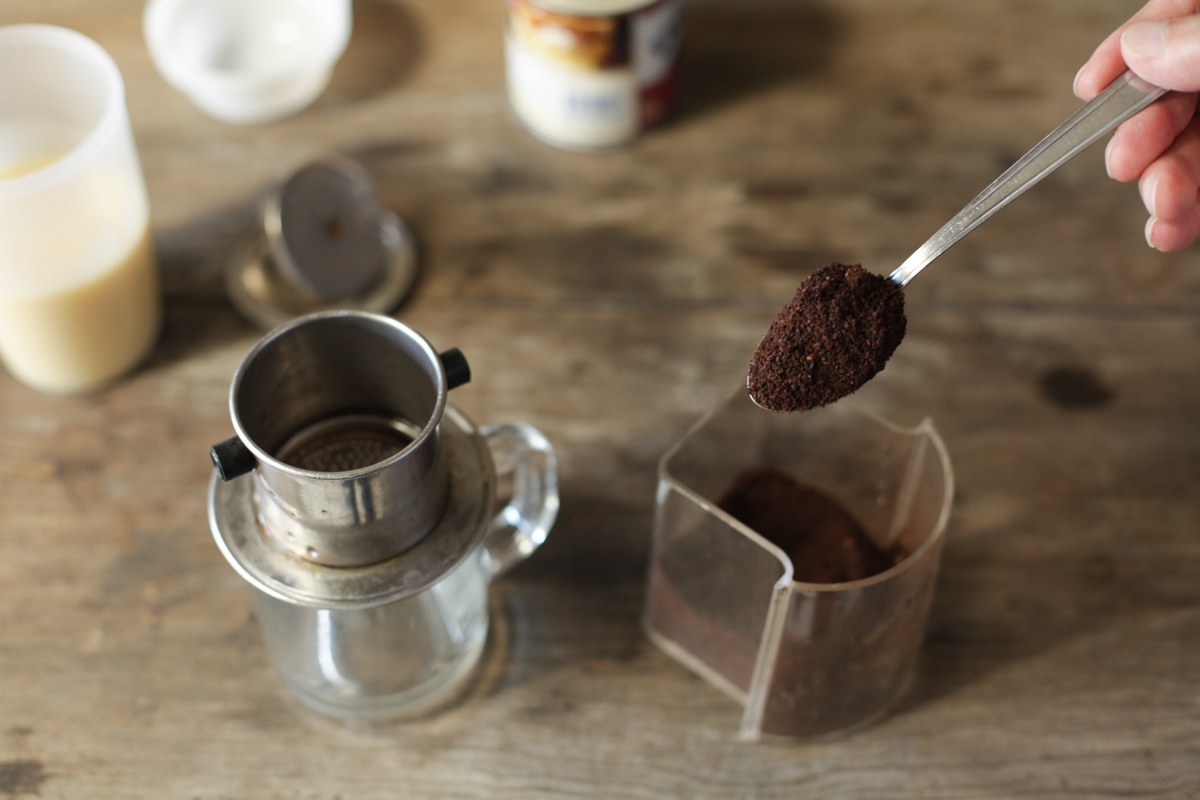
For a small single-serving phin, start with about 15 grams of coffee and 90 to 120 millilitres of brewing water. These are starting proportions, not a rule for every filter. Without scales, try roughly two level tablespoons of ground coffee and measure your water with a kitchen jug. Spoon measurements vary, so keep notes on what works with your own equipment.
Warm the cup and phin with hot water, then discard that water. Add the coffee to the brewing chamber and gently shake it level. You want an even bed so water does not immediately find one easy route through a thin patch. Brush stray grounds off the rim before fitting the insert.
With a drop-in insert, set it flat on the coffee and give it a light touch. Do not tamp the grounds as though you were making espresso. With a screw-down insert, turn it until it meets the bed gently, following any instructions supplied with the brewer. Tightening it hard can restrict flow and make later adjustments awkward.
The coffee bed should leave room for water above it. If your phin is much smaller than expected, reduce both coffee and water rather than forcing the suggested dose into it. An overfilled chamber is difficult to pour into and easy to spill.
Bloom before the main pour
Bring fresh water to the boil, then let the fierce bubbling settle before pouring. You do not need to chase an exact temperature in a borrowed kitchen. Start with hot water just off the boil, then keep that approach consistent while you work on grind and loading.
Pour a little water gently over the insert, enough to wet the coffee rather than fill the chamber. For the starting dose above, around 20 to 30 millilitres is a useful first splash. Wait about 30 seconds. Fresh coffee may release bubbles as it becomes wet; this brief bloom helps prepare the bed for the main pour.
A few early drops are fine. If that small splash rushes straight into the cup, check the loading and grind on your next attempt. If nothing appears yet, do not immediately tighten or press anything. Dry coffee can take a moment to wet through.
Add the remaining water slowly, keeping the total within your chosen amount. Pour close to the filter to avoid splashing and disturbing the insert. Put on the lid to help retain heat, then watch the first part of the drip.
Read the drip without chasing a stopwatch
Look for distinct, steady drops rather than a continuous stream. A small phin often takes several minutes, but there is no single finishing time that proves the coffee is right. The filter design, dose, grind and roast all affect the pace. Taste matters more than meeting an exact number.
Once the flow has dwindled to occasional drops, move the phin to your spare saucer. Take care: the metal and any remaining water will be hot. Stir the coffee before tasting, since the liquid collected early and late in brewing can differ in strength.
If the coffee runs through too fast
A quick flow with a thin or sharp-tasting cup usually calls for more resistance in the coffee bed. First check the simple things: was the bed level, was the insert seated correctly, and was there enough coffee for the chamber? Correct those before making several other changes.
On the next brew, try a slightly finer grind. If you only have pre-ground coffee, a modest increase in the dose may help, provided the chamber has room. With a screw-down model, a small increase in insert pressure may also slow flow, but avoid cranking it down. Change one thing at a time so you can tell what helped.
If the coffee barely drips
Very fine grounds, too much coffee or an insert pressed down firmly can all slow the brew. Check that the base holes are clean after the filter cools. For the next cup, loosen your loading technique, use a slightly coarser grind or reduce an overcrowded dose.
During a stalled brew, resist poking through the bed or repeatedly lifting a full, hot chamber. Let it drain somewhere secure. If your screw-down model allows safe adjustment, follow its instructions; otherwise, save the correction for the next cup. Pouring in more water will not fix a tightly packed bed and may cause an overflow.
Add condensed milk to suit the coffee
For a sweet milk coffee, spoon sweetened condensed milk into the cup before setting the phin on top. Start with one tablespoon, then stir thoroughly after brewing. Add more if you prefer. Beginning modestly gives you room to balance sweetness against the coffee’s bitterness.
Check the tin: evaporated milk is not the same ingredient and will not provide the same sweetness or thickness. Follow the storage instructions after opening, and refrigerate leftovers promptly. A small container is easier to manage than an uncovered tin in a shared holiday fridge.
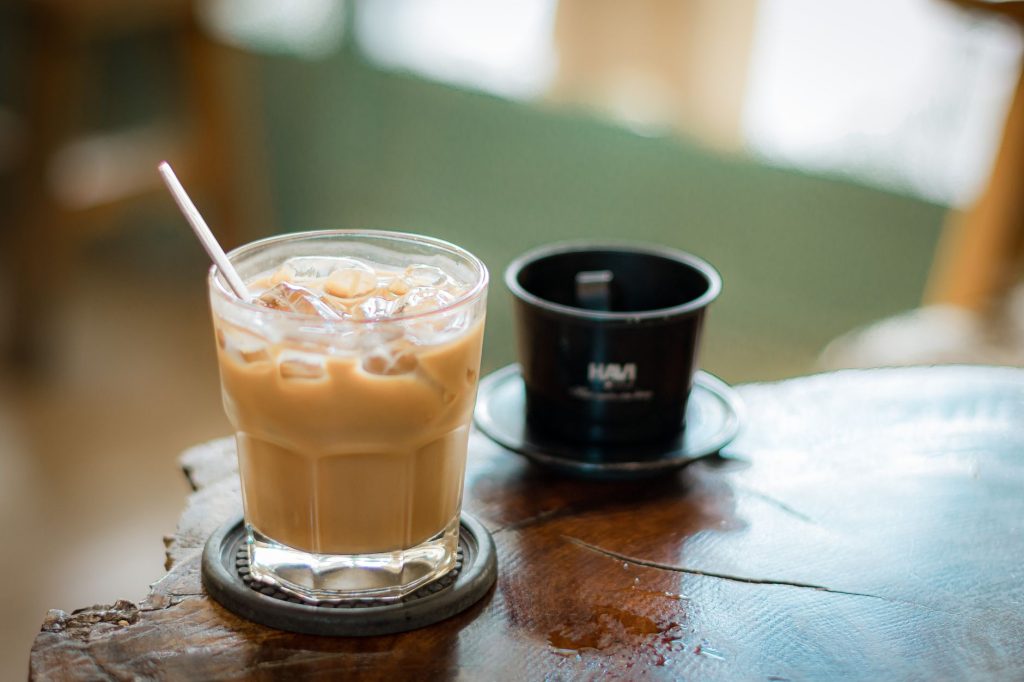
For iced coffee, brew over the condensed milk first and stir until completely combined. Then pour into a larger, heatproof glass with plenty of ice. Expect dilution as the ice melts; if the result tastes weak, use less brewing water next time while keeping the coffee dose steady.
Once you find a combination you like, jot down the spoonfuls, water amount and insert setting. That tiny note makes tomorrow’s cup easier, even with the same borrowed kettle and mismatched cups.