
A holiday rental kitchen rarely has everything you expect. There may be three mismatched mugs, a pan with a loose-fitting lid and no teapot at all. You can still make a satisfying masala chai: black tea brewed with milk, water and spices, then strained straight into your cups. An ordinary saucepan gives you enough control, provided you watch the heat and add the ingredients in a useful order.
The trick is to give whole spices time to release their flavour before the tea goes in. That way, you do not have to keep boiling the leaves while you wait for the cardamom to announce itself. Start with a small batch, taste it, and use the same mug to measure the next one.
Check the kitchen before you start
Choose a saucepan with a handle that feels secure and plenty of space above the liquid. Milk can foam up suddenly, so a pan filled close to the rim is awkward even for a small batch. A spoon and a fine sieve are the other useful tools. Put the sieve over a stable mug before you start pouring, rather than trying to balance everything while holding a hot pan.
If there is no measuring jug, use one mug for both water and milk. Precision matters less than keeping your proportions consistent. A small teaspoon is useful for the tea, although cutlery teaspoons vary. Treat the first brew as your guide to the equipment and ingredients in front of you.
Keep milk out of the electric kettle. The saucepan is where the brewing happens; the kettle can supply hot water if you want to speed up the start. Check that borrowed utensils are clean, especially anything left in an open drawer or beside the cooker.
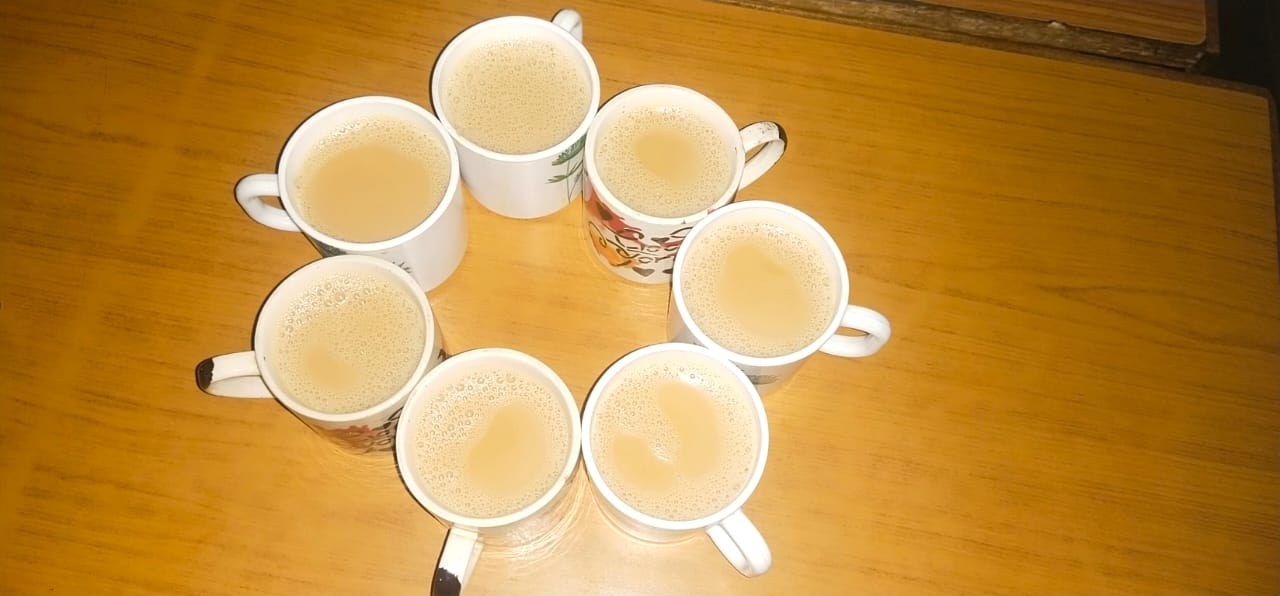
A starting recipe for two modest mugs
Masala chai has many household and regional variations. This version is a practical starting point for a temporary kitchen, with enough spice to taste without needing a cupboard full of ingredients.
- 300 ml water
- 250 ml milk, with a little extra available for adjusting
- 2 level teaspoons loose black tea, preferably a robust, small-leaf tea, or 2 ordinary black tea bags
- 3 green cardamom pods, lightly cracked
- 1 small piece of cinnamon stick, about 2 cm long
- 2 cloves
- 2 thin slices fresh ginger, lightly crushed, optional
- 2 teaspoons sugar, or enough to suit your taste
The finished amount will be smaller than the starting liquid because some water evaporates and the tea and spices retain a little. These are modest servings; check your mugs before promising two full large cups. Without a jug, use roughly one mug of water to a little less than one mug of milk, keeping the total comfortably below the pan’s rim.
Whole dairy milk gives a rounded result, but use the milk you enjoy. Plant drinks vary in sweetness and how they behave when heated. With an unfamiliar one, keep the heat gentle and expect the texture to differ. Start with less sugar if your milk alternative is already sweetened.
Brew the spices first, then the tea
- Open the spices. Press the cardamom pods with the back of a spoon until the shells split. Lightly crush the ginger if using it. You want exposed surfaces, not a fine powder. Leave the cinnamon and cloves in pieces that will be easy to strain.
- Simmer in water. Put the water, cardamom, cinnamon, cloves and optional ginger in the pan. Bring to a boil, then reduce to a gentle simmer for about 4 minutes. The water should smell noticeably spiced. If it barely smells of anything, give it another minute before adding tea.
- Add the black tea. Stir in the leaves or lower in the bags. Keep at a gentle simmer for about 1 minute. Small broken leaves release flavour quickly; larger leaves may need a little longer.
- Add milk and sugar. Stir well and bring the mixture back towards a simmer over moderate heat. Stay beside the pan. When foam begins to rise, turn the heat down immediately. Let it simmer gently for another minute or two, stirring across the bottom.
- Taste and strain. Cool a spoonful before tasting. Adjust sweetness or add a splash of milk if needed, then strain promptly into the mugs. Remove tea bags without squeezing them and strain out the spices.
Those timings are starting points, not a requirement to keep cooking once the chai tastes ready. A thin rental pan on a powerful hob can behave differently from a heavy saucepan at home. Follow the aroma, the colour and a cooled taste as well as the clock.
Control bitterness without losing strength
A strong cup should taste clearly of tea through the milk. Bitterness is the harsh edge that overwhelms the spice; astringency is the drying feeling that can linger in your mouth. Leaving tea in hot liquid for longer can push both further than you want. Milk softens the impression, but it does not give you unlimited brewing time.
If your chai tastes weak, first ask what is missing. For weak spice, extend the spice-only simmer next time or crack the cardamom more thoroughly. For weak tea, use slightly more tea in the next batch rather than boiling the same small amount for much longer. For a watery texture, try a little more milk relative to water.
If it is already too bitter, strain immediately to stop further extraction. Try a splash of warm milk and taste again. A little sugar may balance the cup, but adding spoonful after spoonful rarely rescues a severely overbrewed batch. Make the next one with a shorter tea stage.
A burnt taste is a different problem. Milk can catch on a hot pan base, especially if the hob runs fiercely. Lower the heat and stir along the bottom during the milk stage. If it scorches, avoid scraping the burnt layer into the drink.
Scale the pan, not just the cooking time
For four modest servings, double the water, milk and tea. You can double the spices too, although holding back a clove is sensible if you prefer a softer flavour. Use a larger pan with generous headroom. If the only saucepan is small, make two batches rather than filling it to the top.
A larger batch takes longer to heat, but it does not need twice as long with the tea leaves in it. Keep the spice infusion separate, then watch the tea stage closely. Taste as the milk heats: extraction continues during that warm-up, so you may be ready to strain sooner after the first simmer.
For a group with different preferences, keep the initial sugar modest and let people sweeten their own mugs. Strain the entire batch once it tastes right. Leaving leaves in the pan while everyone wanders in for breakfast makes the last serving much stronger than the first.
Keep the holiday version manageable
You do not need every spice on the list. Cardamom and ginger make a useful smaller combination; cinnamon and cardamom give a gentler cup. Cloves are assertive, so use them sparingly. Avoid emptying unidentified spice jars into the pan, and check ingredients with anyone sharing the drink.
Serve the chai while it is hot and rinse the sieve before the leaves dry into it. Let the saucepan cool enough to handle, then soak away any milk film. A short recipe, one measuring mug and a clean pan are enough to make the next morning’s brew easy to repeat.