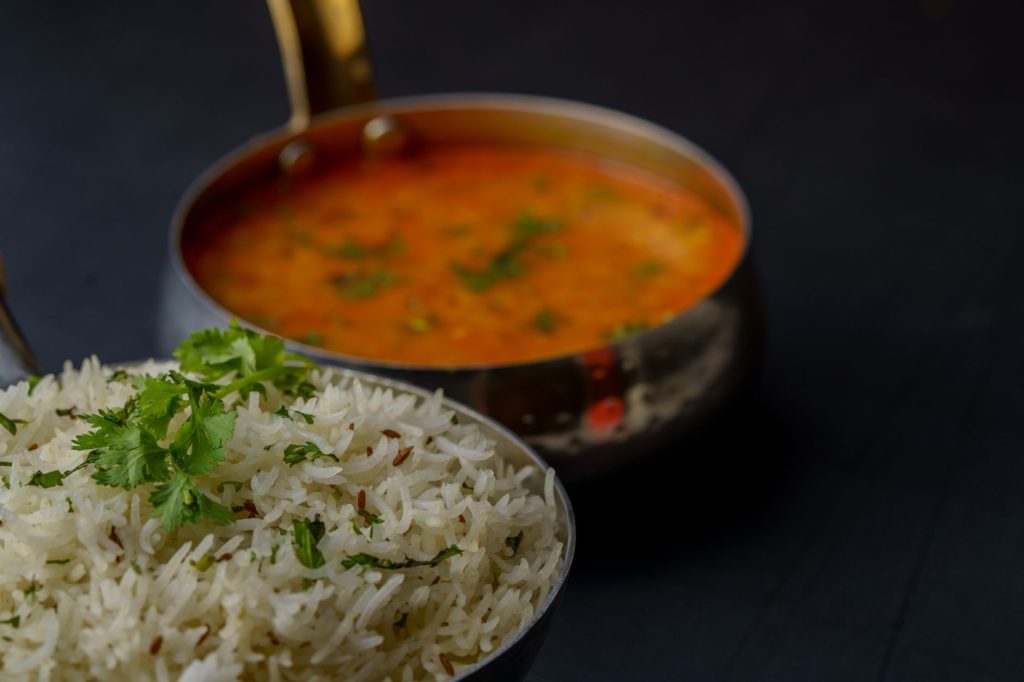
A bag of split red lentils earns its place in a holiday kitchen. It needs no overnight soaking, takes up little cupboard space and turns into a comforting supper in a single saucepan. When the kitchen has two rings, a blunt knife and barely enough room to put down a chopping board, that simplicity matters.
This dal is a practical version for a self-catering stay: gently spiced, easy to adjust and made with water rather than a stock cupboard’s worth of ingredients. Start it before you unpack the rest of the shopping, then eat it with bread, yoghurt or whatever fresh vegetables you have. The useful skills are rinsing the lentils, waking the spices in oil and learning when to add another splash of water.
What you need for two generous portions
Use split red lentils, sometimes labelled masoor dal. They look orange when dry and soften to a warm yellow as they cook. Whole lentils and other varieties behave differently, so this method is written specifically for the split red kind.
- 180g split red lentils
- 1 tablespoon neutral cooking oil
- 1 small onion, finely chopped
- 2 garlic cloves, finely chopped
- A thumb-sized piece of ginger, peeled and finely chopped or grated
- 1 teaspoon ground cumin
- 1 teaspoon ground coriander
- 1/2 teaspoon ground turmeric
- 1/4 teaspoon chilli flakes, or less to taste
- 750ml water, plus extra as needed
- 1/2 teaspoon fine salt to start, with more to taste
- Lemon juice, to finish
A saucepan of roughly two litres gives the lentils room to bubble without spilling. You also need a spoon, a knife and something to measure water. A sieve is useful, but you can rinse in the saucepan if the kitchen has none. Allow around 40 minutes overall; the lentils decide the finishing time, rather than the clock.
Rinse before the saucepan gets hot
Check the dry lentils for any small stones or other debris, then put them in a sieve and rinse under cold running water. Move them around with your fingers so water reaches the whole batch. The runoff will look cloudy at first. Rinse until it becomes less cloudy; it does not need to turn perfectly clear.
Without a sieve, cover the lentils with cold water in the saucepan, swirl them gently and pour away the cloudy water while holding the lentils back with your hand. Repeat a few times. Drain as thoroughly as you can, tip them into a bowl or clean mug, then dry the saucepan before adding oil. There is no need to soak them.
Build the flavour in the same pan
Set the saucepan over a medium-low heat and add the oil and onion. Cook for about six to eight minutes, stirring regularly, until the onion is soft and beginning to turn golden at the edges. If it catches before softening, lower the heat and add a teaspoon of water to loosen the browned bits.
Add the garlic and ginger and stir for about a minute. Keep them moving: garlic can go from fragrant to bitter quickly in a thin holiday-let pan. Have the measured water beside you before adding the spices.
Turn the heat low. Stir in the cumin, coriander, turmeric and chilli for about 20 seconds, just until fragrant. This brief contact with warm oil is the spice bloom. You want the spices to smell fuller, without darkening or smoking. Immediately add the drained lentils and water, then stir thoroughly, scraping the bottom.
Ground spices are convenient here because they need no extra equipment. If you only want to buy one spice blend for the stay, use two teaspoons of a curry powder you enjoy instead of the four separate spices. Check whether the blend contains salt or chilli before adding more of either.
Simmer gently until the lentils collapse
Add the salt and bring the saucepan to a gentle boil. Stir, then reduce the heat to a steady simmer with small bubbles breaking the surface. Leave the lid off initially so you can watch the pan. If pale foam rises, skim it away if you wish; it is no reason to discard the batch.
Cook for roughly 20 to 25 minutes, stirring every few minutes and more often towards the end. Sweep the spoon across the bottom and into the corners. Lentils can stick beneath an innocent-looking surface, especially on an electric ring that holds its heat.
If water is disappearing while the lentils still have firm centres, add a splash and partly cover the saucepan. If the mixture threatens to boil over, lower the heat and leave the lid off. The finished lentils should crush easily against the side of the pan, with no gritty bite. Older lentils may take longer, so keep simmering and checking.
Adjust the thickness before serving
Dal is forgiving about consistency. For something to scoop with bread, let it become soft and spoonable. For a bowl to eat as a light supper, loosen it until it flows gently from the spoon. Stir firmly to break up the lentils; you do not need a blender.
Too thick: add water a few tablespoons at a time, stirring and letting it return to a simmer before deciding whether it needs more. Too thin: simmer uncovered for a few minutes, stirring frequently. It will also thicken as it stands, so stop slightly looser than you want it on the plate.
Take the pan off the heat and add a small squeeze of lemon. Taste, then adjust the salt, lemon or chilli in small steps. Adding the lemon at the end also keeps acidity out of the way while the lentils soften. Rest for five minutes, stir again and serve.
Scale it to your kitchen and appetite
For one generous portion, halve everything and begin with 375ml water. Use a smaller saucepan if possible: a shallow layer in a wide pan loses water quickly. The cooking time will remain broadly similar, so judge softness rather than halving the minutes.
For four portions, double the ingredients and start with 1.5 litres of water in a substantially larger saucepan. Leave plenty of headroom for bubbling and stirring. If the only pan is small, keep to the original batch and serve it with more substantial accompaniments. Crowding a saucepan makes cooking awkward.
Bread keeps this a one-saucepan meal. Add sliced cucumber, tomatoes or a spoonful of plain yoghurt alongside. If you have leftover cooked vegetables, stir them into the dal near the end and heat them through. A handful of washed spinach can wilt directly in the saucepan during the final few minutes.
Keep leftovers useful
Only save leftovers if you have a working fridge. Transfer the dal into clean, shallow containers, let the steam subside briefly and refrigerate promptly, within two hours of cooking. Do not leave the saucepan on the hob overnight. Eat refrigerated leftovers within two days, or freeze them in individual portions once cooled.
Reheat only the amount you intend to eat. Put it in the saucepan with a little water, stir thoroughly and heat until steaming hot throughout, bringing it to a bubbling simmer. Cold dal can set quite firmly; loosen it gradually as it warms rather than adding lots of water immediately. Reheat a portion only once.
The next bowl may need another squeeze of lemon and a little salt after dilution. With bread for dipping and a few fresh bits on the side, it becomes an easy lunch before heading out again, without another complicated shopping list.