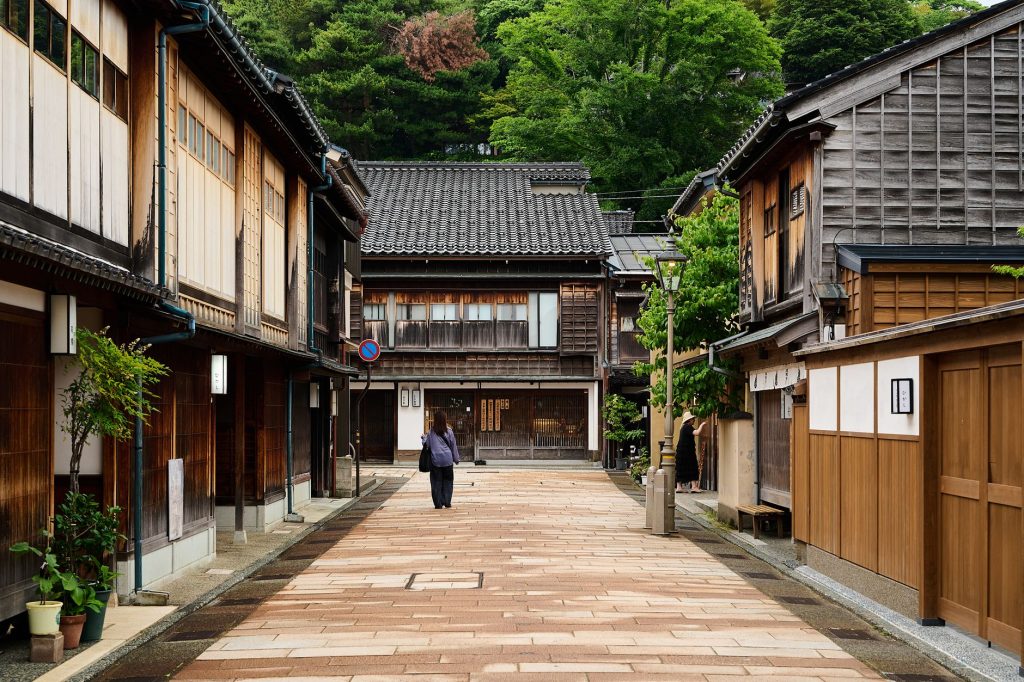
A machiya stay in Kanazawa can sound like the obvious choice: timber rooms, a small courtyard and space to settle into a neighbourhood. Yet the house that looks most appealing in photographs may not suit the way your party sleeps, showers or arrives. A hotel can make a busy sightseeing trip easier; a well-chosen machiya can give a slower visit a comfortable home base.
For a useful comparison, treat a machiya as a particular building, not a promise of a particular service. The term describes a traditional townhouse, but guest accommodation varies in layout, renovation and management. Some properties are rented as a whole house; others offer individual rooms. Before booking, compare the actual sleeping arrangements, winter equipment, bathroom plan and arrival process with those of your hotel alternative.
Start with a normal evening, not the photographs
Imagine returning after walking around Kenrokuen or exploring the streets near Higashi Chaya. One person wants a shower, another wants to read, and someone else is ready for bed. Will everyone be comfortable following different routines, or does the whole group need to move through the house together?
A whole-house rental can offer a separate living area and somewhere to prepare breakfast. However, sliding partitions do not necessarily provide the privacy of separate hotel rooms. Sound may travel between sleeping areas, and a route to the toilet might pass close to another person’s bedding. Ask for a floor plan rather than relying on a room count.
For a couple keeping similar hours, those compromises may barely register. For friends with different bedtimes, or a family with a light sleeper, the division of space can matter more than the total floor area.
Check exactly what “bedding provided” means
Do not assume every machiya has floor bedding or every hotel has Western beds. Look for an explicit description of each sleeping space. A house might combine beds upstairs with futons on tatami downstairs; a hotel might also offer a Japanese-style room.
If futons are involved, find out whether they are laid out before arrival, set up by staff each evening, or left for you to arrange. In a self-contained rental, putting them away may be your responsibility too. That matters if the sleeping room doubles as your daytime sitting room.
- Getting up: Anyone with sore knees or difficulty rising from the floor should confirm bed height and access.
- Night-time movement: Check the route from each sleeping space to the toilet, including stairs and changes in floor level.
- Children’s bedding: Establish what is included for every child rather than assuming an extra sleeping place will appear.
- Privacy: Ask whether bedrooms have solid doors, sliding screens or an open connection to another room.
For a short stay, familiar bedding may be worth prioritising over atmosphere. If everyone is happy with futons and shared sleeping space, a machiya becomes a more straightforward option.
Ask where the heating actually reaches
Kanazawa’s colder months make heating a practical booking question. A renovated traditional house may have excellent equipment, but “air conditioning” in a listing does not explain whether the hallway, changing area and toilet will feel comfortable. Nor does an attractive bath photograph tell you how warm the room is before you get into the water.
Ask which rooms have heating, what type is provided and whether bedrooms can be controlled separately. Confirm whether the host prepares the house before your arrival. If your party includes someone who gets cold easily, ask specifically about the route between the bedroom and bathroom.
A hotel room often concentrates sleeping, dressing and washing into a smaller area, making temperature management simpler. Still, check whether you control the room temperature yourself. The useful distinction is between a comfortable, workable layout and one that depends on everybody tolerating the same conditions.
In warmer weather, apply the same reasoning to cooling. If one air-conditioning unit serves connected rooms, closing a partition for privacy may affect airflow. Clear answers about individual rooms are more helpful than a general statement that the property is climate controlled.
Count bathrooms against your morning routine
A house that sleeps your entire group may still have only one shower or bath. Separate toilets help, but they do not solve a queue when everyone wants to wash before leaving. Check the number of bathing rooms, toilets and washbasins independently.
Also establish whether the bath and shower share one room. If they do, someone enjoying a long soak may prevent another guest from taking a quick shower. Ask whether the washing area is private within your rental or shared with other guests, particularly when booking a room rather than the whole house.
Multiple hotel rooms can buy your party separate bathrooms as well as separate beds. That may be useful for friends preparing for an early departure. A machiya works better when people are happy to stagger showers, bathe in the evening or leave at different times.
Check laundry facilities with equal care. A washing machine is useful only if you know where clothes can dry and whether using it fits your schedule. Do not assume there is a dryer, detergent or a convenient place to hang a full load.
Match check-in to your actual arrival
Host check-in deserves as much attention as the house itself. A machiya booking might involve meeting someone at the property, collecting a key elsewhere, using an entry code or completing registration before receiving access instructions. These arrangements are not interchangeable when your train is delayed or your phone battery is low.
Before committing, establish the arrival window, the process for reporting a delay and how you can contact someone if entry fails. Save the address and instructions somewhere accessible without a live connection. If key collection happens away from the accommodation, include that extra journey in your arrival plan.
A hotel with reception operating during your arrival hours may make an uncertain itinerary easier. Confirm those hours rather than assuming every hotel has an overnight desk. With either format, ask about luggage storage before check-in and after checkout; a whole-house rental may have no staffed place to leave bags.
Compare the full stay, including household jobs
For a useful budget comparison, compare the total accommodation charge for your party, including any stated cleaning or other compulsory fees. Then consider which facilities you will actually use. A kitchen offers little value if everyone wants breakfast out and you return only to sleep.
If you plan to cook, confirm the equipment you need. A kitchen photograph does not establish that there is a hob, enough tableware or suitable cookware. Ask about rubbish sorting, checkout tasks and any restrictions on food preparation. These are ordinary parts of some house rentals, but they take time.
Location also affects effort. Compare the walk from transport with luggage, the approach after dark and access to the places you intend to visit. A characterful lane can be lovely for wandering while being less convenient for repeated bag transfers. Choose around your itinerary rather than assuming either accommodation format has the better address.
Choose the format that lets everyone rest
I would favour a machiya when the group wants shared meals, relaxed evenings and time inside the accommodation, provided the bedding and stairs suit everyone. It is especially appealing when people enjoy sharing space and can adapt their shower times.
I would favour a hotel when arrival is uncertain, the stay is brief, or privacy and independent routines matter most. Before paying, make the final decision together: agree on beds, bathroom access, temperature needs and arrival logistics. The right Kanazawa stay is the one that makes an ordinary evening comfortable, as well as making the trip feel special.