A tray of roasted vegetables and a bowl of couscous make a useful first dinner in a holiday rental. You can buy familiar ingredients, work with a small collection of utensils and turn what remains into lunch. The trick is to let the vegetables take their time while you prepare everything else, then hydrate the couscous only when the tray is nearly ready.
This version serves two generously, or makes three lighter portions. It uses ordinary instant couscous, the small kind that softens under a cover with hot liquid. Pearl couscous needs a different cooking method, so check the packet before you start. You can use either a kettle or a saucepan for the liquid; the oven does most of the cooking.
Check the kitchen before you shop
Look for an oven tray, a sharp enough knife, a chopping board, a fork and a heatproof bowl with something to cover it. A plate works well as a lid. If you have no suitable bowl, use a saucepan with its lid. You will also need a mug or measuring jug and a spoon for mixing the dressing.
Check that the oven works and that the tray fits before cutting anything. If the rental provides oil, spices or stock cubes, inspect their condition rather than assuming they are usable. A small bottle of olive oil, a lemon and one spice will carry this meal without requiring a cupboard full of seasonings.
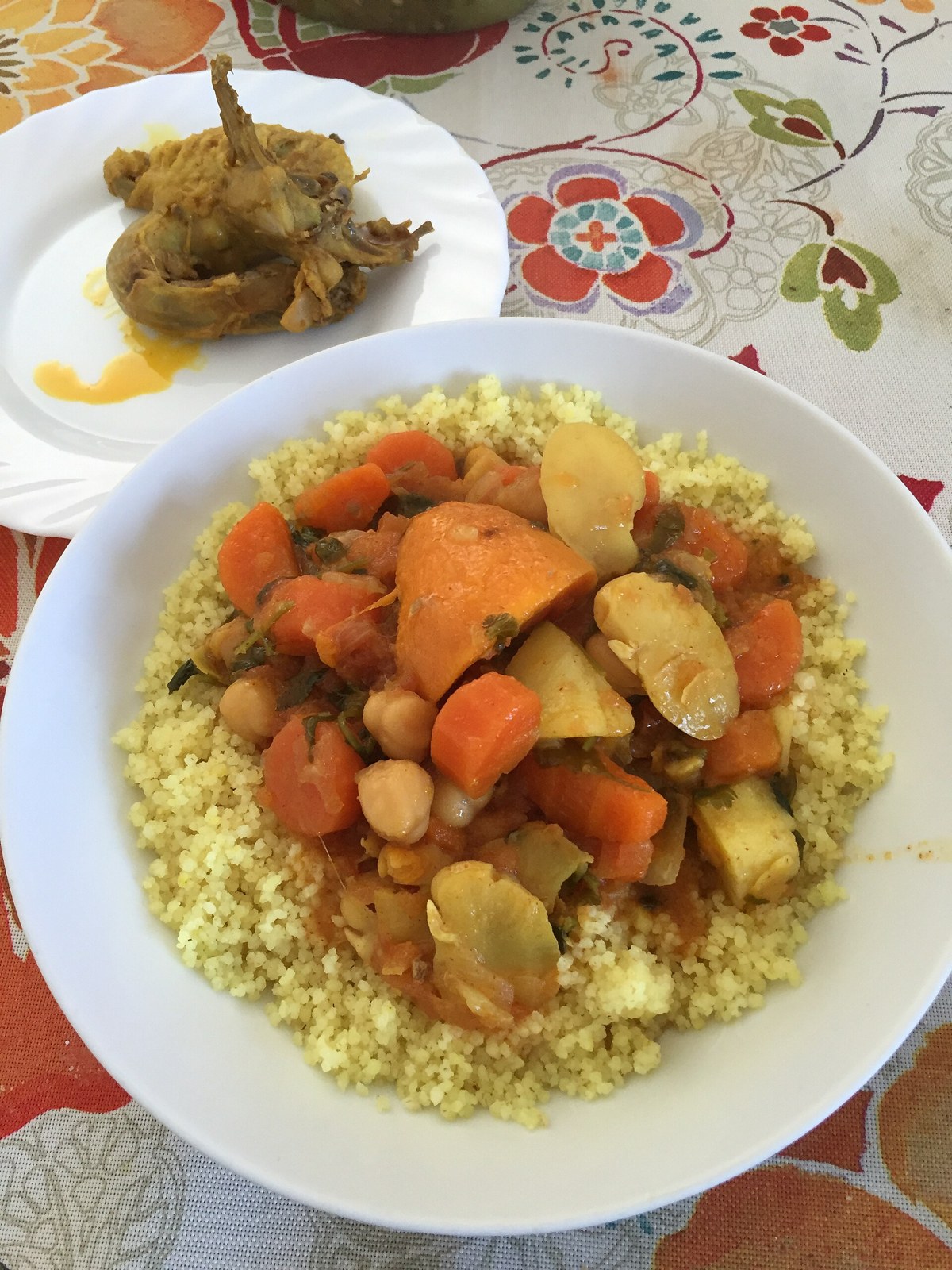
Ingredients for two generous servings
- 150g instant couscous
- Hot water or vegetable stock, in the quantity specified on the couscous packet
- 1 medium courgette
- 1 red or yellow pepper
- 2 medium carrots
- 1 red onion
- 1 tin of chickpeas, roughly 400g before draining
- 3 tablespoons olive oil, divided between the tray and dressing
- 1 lemon
- 1 teaspoon ground cumin, divided
- Salt and black pepper
- A small handful of parsley or mint, optional
- Plain yoghurt or crumbled feta to serve, optional
The vegetables should weigh roughly 700–900g altogether before trimming. Precision is unnecessary here: tray space matters more than matching an exact weight. Choose firm vegetables that can roast together, and leave delicate leaves for another meal. Drain and rinse the chickpeas, then let them dry while you chop.
Start the tray first
Heat the oven to 220°C conventional or 200°C fan. Cut the carrots into slim batons, about a finger’s width, and the courgette and pepper into larger bite-sized pieces. Peel the onion and cut it into wedges, keeping a little root attached if you want them to hold together. Smaller carrot pieces help them finish alongside the softer vegetables.
Put the vegetables on the tray with 1½ tablespoons of olive oil, half the cumin, a little salt and several turns of pepper. Toss thoroughly, then spread into a single layer. Give the pieces some breathing room. A deep mound traps steam and produces soft vegetables with little browning; if your tray is small, roast less and save the extra vegetables for another meal.
Roast for about 30–40 minutes, turning after 20 minutes. Add the drained chickpeas when you turn the vegetables, stirring them through the oil on the tray. They need to heat through and pick up some flavour, rather than become completely crisp. Rental ovens vary, so start checking early: the carrots should yield to a knife and the pepper and onion should have browned edges.
Use the roasting time for the dressing
In a mug, mix the remaining 1½ tablespoons of olive oil with 1 tablespoon of lemon juice, the remaining cumin and a pinch of black pepper. Add a small pinch of salt if your couscous will be made with water; use less if you have salty stock or plan to add feta. Stir vigorously with a fork.
Taste a drop on a piece of chickpea or a small piece of bread, if available. Straight from the spoon, lemon dressing can seem sharper than it will once mixed through the meal. If it tastes flat, try another small squeeze of lemon or a pinch of salt. If it is too sharp, add a little more oil. Keep the remaining lemon for adjusting the finished bowl.
Chop the herbs now, if using, and clear the board. This is also a good moment to find containers for tomorrow’s lunch. Having them ready makes it easier to set aside a portion before everyone starts serving themselves.
Make the couscous as the vegetables finish
Wait until the vegetables look nearly cooked before heating the couscous liquid. Follow the packet’s liquid ratio and resting time: different brands absorb different amounts. Measure the couscous and liquid with the same mug if you have no scales, using the volume directions on the packet. Avoid guessing from weight alone.
With a kettle
Put the couscous in a heatproof bowl. Measure the required freshly boiled water into a jug, dissolve any stock in it, then pour it over the grains. Stir once and cover immediately with a plate or lid. Leave for the packet’s stated time, usually around five minutes. Use only a bowl intended for hot liquids.
With a saucepan
Bring the measured water or stock to the boil in the saucepan. Remove it from the heat, stir in the couscous and cover. Let it stand off the heat according to the packet instructions. Instant couscous generally needs soaking, not continued simmering, which can leave it sticking to the base.
Uncover and loosen the grains with a fork, working gently through any clumps. If they are still firm and the liquid has disappeared, sprinkle over a little more boiling water, cover and give them another minute or two. Add water gradually; a large splash can make the whole batch soggy.
Bring everything together
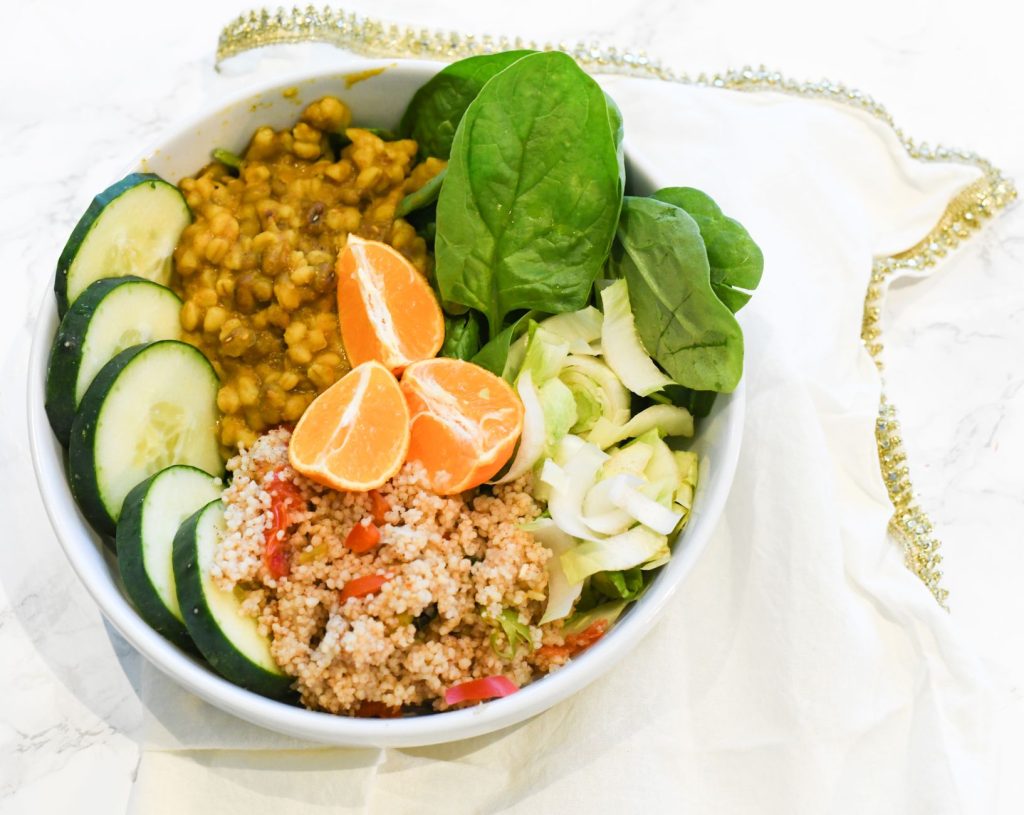
Fold about half the dressing into the warm couscous. Add the roasted vegetables and chickpeas, including any flavourful oil left on the tray. Mix gently so that the courgette keeps some shape, then taste a forkful containing both grains and vegetables. Add more dressing, lemon or salt as needed.
Scatter over the herbs just before serving. A spoonful of yoghurt softens the lemon and cumin, while feta adds a salty finish. Both are optional: the chickpeas already give the dish substance. If serving straight from the saucepan, fold in the vegetables in batches so you have room to mix without spilling.
Scale it for lunch tomorrow
For four generous servings, double the ingredients but use two trays, or roast in batches. Doubling the vegetables on one crowded tray changes the result more than doubling the couscous does. Measure the extra couscous liquid according to the packet, and start with less than double the salt and dressing; you can adjust after mixing.
Set aside the lunch portion before adding yoghurt or delicate herbs. Transfer leftovers into shallow containers, let the heavy steam escape briefly and refrigerate promptly, within two hours of cooking. Keep the fridge at 5°C or below and eat within two days. If you are leaving the rental, take leftovers only if you can keep them chilled during the journey.
For a cold lunch, loosen the couscous with a little olive oil and lemon, then add the reserved herbs. For a hot meal, add a splash of water, cover loosely and microwave in a suitable container, stirring partway through, until steaming hot throughout. Reheat only the portion you intend to eat, and only once.