It’s getting to that point in the year when the weather feels cooler and I start swapping salads for soups and slow cooked recipes. I love making a good porridge in the morning, but there are times when I still want something warming for breakfast or lunch without getting a saucepan out. That’s where the porridge and congee from Mr Lee’s come in: handy cupboard options for the days when cooking feels like one job too many.
The appeal is much the same as with the company’s cup noodles. You have something easy to store and straightforward to prepare, with room to make it more substantial using whatever is already in the kitchen. I particularly like that these cups cover both sweet and savoury tastes. Sometimes fruit and oats are exactly what I want; on a chilly lunchtime, a savoury rice bowl sounds much better.
What to expect from the porridge
The porridges described here are made with gluten free oats, coconut milk and fruit, and are vegan friendly. The three varieties are So Very Berry, Salted Caramel and Original. They are good on their own, although I particularly like adding more fruit and nuts for a little crunch. Check the packaging of the cup you buy for its ingredients and dietary information, especially if you need to avoid a particular allergen.
Original is the most useful starting point if you like choosing your own toppings. A sliced banana, some chopped apple or a spoonful of berries can give it a different character without making breakfast complicated. If you are sharing a kitchen, it also means everyone can finish their own bowl differently while using the same few ingredients.
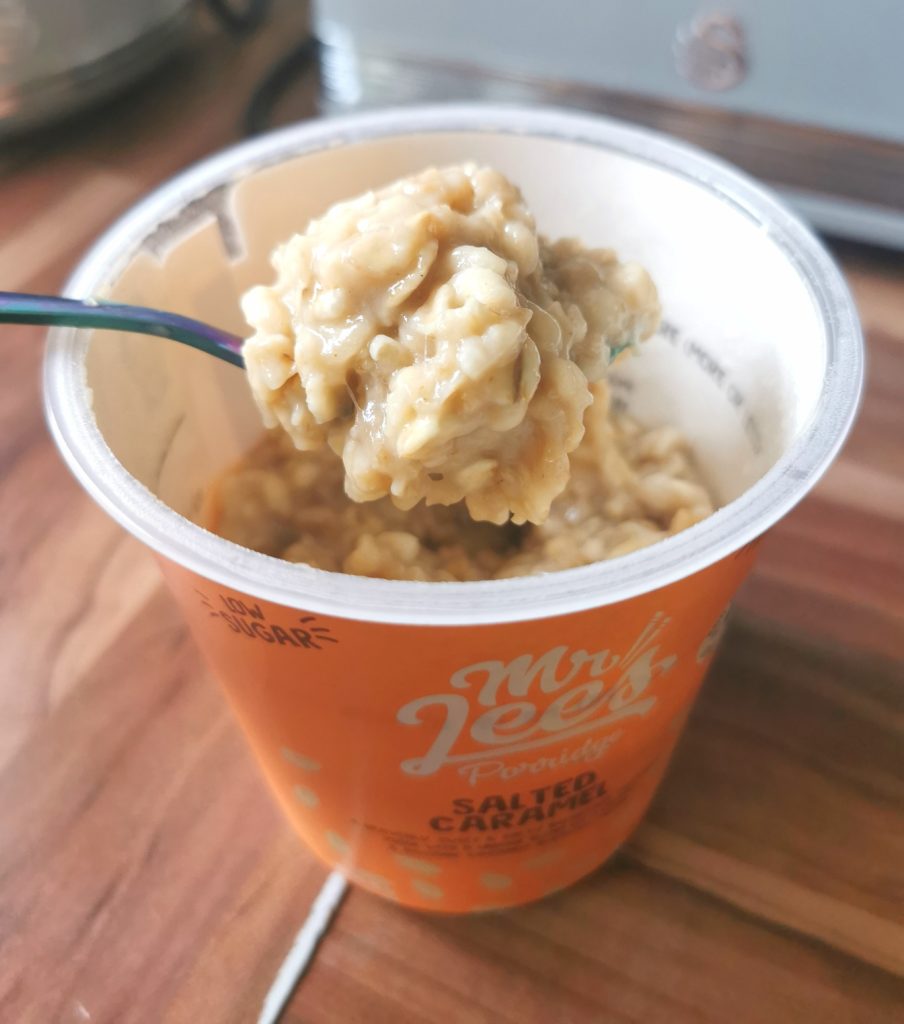
Salted Caramel suits the mornings when I fancy something sweeter. I like pairing it with tart fruit to balance that sweetness: raspberries or a few slices of crisp apple would be my first choices. More syrup or sugar would be something to consider only after tasting it. Adding sweetness is easy; taking it away once everything is stirred together is rather harder.
So Very Berry tastes less sweet to me, thanks to the freeze dried goji berry. It is a good option when I want fruit in the porridge itself rather than relying entirely on toppings. Fresh berries make a natural addition, but you don’t need to buy a whole selection just to dress up one breakfast. A little of whatever fruit you already have is enough.
Making an instant cup properly
Convenience food still benefits from a little attention. Follow the water quantity and standing time printed on your particular cup, rather than guessing from another product. Different mixtures absorb water differently, and an extra splash at the beginning can leave you with a much looser breakfast than you intended.
- Read the preparation instructions before opening the cup, including whether the lid needs to be replaced while it stands.
- Put the cup on a stable surface and add the water as directed. Keep your hands clear of the steam.
- Stir thoroughly, reaching the bottom and edges so that dry mixture does not stay trapped underneath.
- Let it stand for the stated time, then stir again and check the texture before adding toppings.
- If it is thicker than you like, stir in a small splash of hot water at a time. Allow it to cool enough to eat comfortably.
I would prepare the base before piling anything on top. That makes it easier to see whether the oats have softened and whether the consistency needs adjusting. Nuts added at the end keep their crunch, while fruit stays more distinct instead of disappearing into the mixture.
If you prefer eating from a bowl, prepare the cup according to its instructions and transfer it carefully afterwards. Don’t assume the packaging is suitable for a microwave, and don’t put an instant cup in one unless the label specifically allows it. A kettle and a spoon may be all you need, but the packet remains the guide.
Toppings that earn their place
The easiest way to make these breakfasts feel more varied is to think about texture as well as flavour. Soft porridge with soft banana is comforting, but a scattering of chopped nuts gives you something else to bite into. You only need a modest amount, especially when the cup is already quite full.
- For Original: try sliced banana with chopped walnuts, or diced apple with a little cinnamon.
- For Salted Caramel: try tart berries and a few unsalted nuts, tasting before adding anything sweet.
- For So Very Berry: add fresh berries or chopped pear, with seeds for crunch if you enjoy them.
These are serving suggestions, so adapt them to your appetite and any allergies. Nut butter can be stirred through if you like a richer bowl, although it will change the texture as well as the taste. Start with a little. If you want to keep breakfast vegan, check any yoghurt, chocolate or other extras you choose rather than assuming the finished bowl has the same dietary suitability as the unopened cup.
Congee for a savoury breakfast or lunch
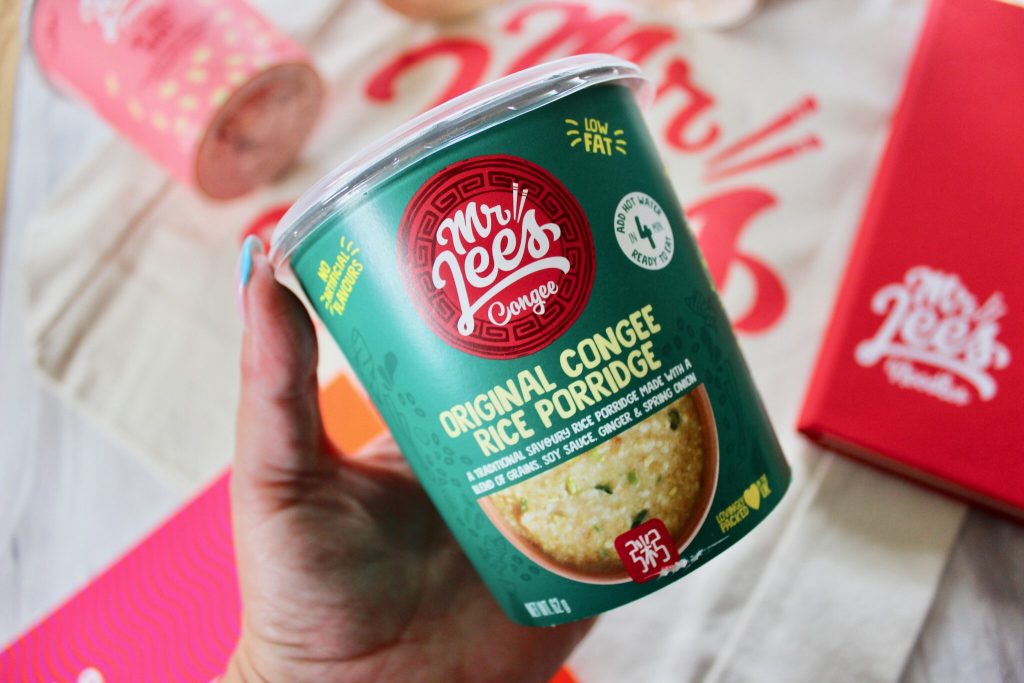
Congee is often described as a savoury rice porridge. It has a soft, spoonable texture that makes it particularly appealing when I want something warming. Traditional versions vary across Asia; the Mr Lee’s version described here uses a blend of corn semolina, rice and gluten free oats. That is the particular product’s mixture, rather than a definition of what all congee contains.
The options here are Original and Chicken. Chicken is my favourite, with a warming richness that suits cool weather beautifully. I would start by tasting it plain before reaching for seasonings. With a savoury cup, it is easy to add several salty toppings and lose the flavour that made it appealing in the first place.
Original is a useful base for adding meat or stirring vegetables through. Think of those additions as a way to use something already cooked: a little shredded chicken, some tender peas or finely chopped cooked carrots. Cut everything into small pieces so it is easy to eat with a spoon and doesn’t overwhelm the soft base.
The hot water used to prepare a cup is not a substitute for cooking raw meat, raw egg or firm vegetables. Cook additions separately and follow the relevant storage and reheating instructions for leftovers. If all you have is a kettle, choose toppings that are ready to eat rather than trying to turn the cup into a cooking pot.
Keeping it practical at home and away
These cups make sense as a cupboard fallback, but they can also be useful for a simple breakfast in accommodation with limited cooking facilities. Before packing them, check that you will have access to suitable drinking water, a kettle and somewhere stable to prepare food. Bring a spoon too; it is the small thing that is easiest to forget.
For a short stay, I would keep the extras simple. A banana travels more easily than a collection of chilled toppings, and a small container of nuts can cover more than one breakfast. Follow the cup’s storage instructions and keep perishable additions appropriately chilled. Buying lots of extras for a single serving can undo the convenience, especially when you are trying to avoid food waste.
I still enjoy homemade porridge when there is time, but these are handy for busy mornings and low effort lunches. My preference remains fruit and nuts on the porridge, with Chicken congee for something savoury. Prepare the base carefully, taste before adding extras and use what you have: that is enough to turn a cupboard cup into a warming pause in the day.