A cheese board can turn an evening in a holiday apartment into a meal that feels considered without requiring much cooking. The challenge is making it fit the stay: a small fridge, unfamiliar utensils, a table that doubles as kitchen workspace, and a departure day that arrives before you have finished everything. I start with the evening itself, rather than with the cheese counter.
Decide how hungry everyone will be, what else you want to eat, and when you will next have a chance to use the leftovers. Those three decisions do more for a relaxed supper than an elaborate spread. You can build a generous-looking board from a modest amount of food if bread, fruit and cheese have clear roles.
Decide whether this is supper or a small extra
A board before dinner needs restraint. If a cooked meal is coming, offer a few pieces per person and keep most of the bread for the table. When the board is dinner, give it more substance through bread and something fresh, rather than simply multiplying the number of cheeses.
As a flexible planning allowance, think of roughly 75–100 grams of cheese per adult for a light meal with plenty alongside, or around 30–50 grams if it is a small course. These are starting points, not requirements. Adjust for appetite, other dishes and whether anyone would rather fill up on bread or fruit. Children may want a small familiar portion rather than a share of everything.
For four adults having a simple supper, that might mean 300–400 grams altogether, divided between two or three cheeses. Looking at the total first helps you avoid buying several sizeable pieces just because each one seems reasonable on its own.

Choose contrast without creating a tasting marathon
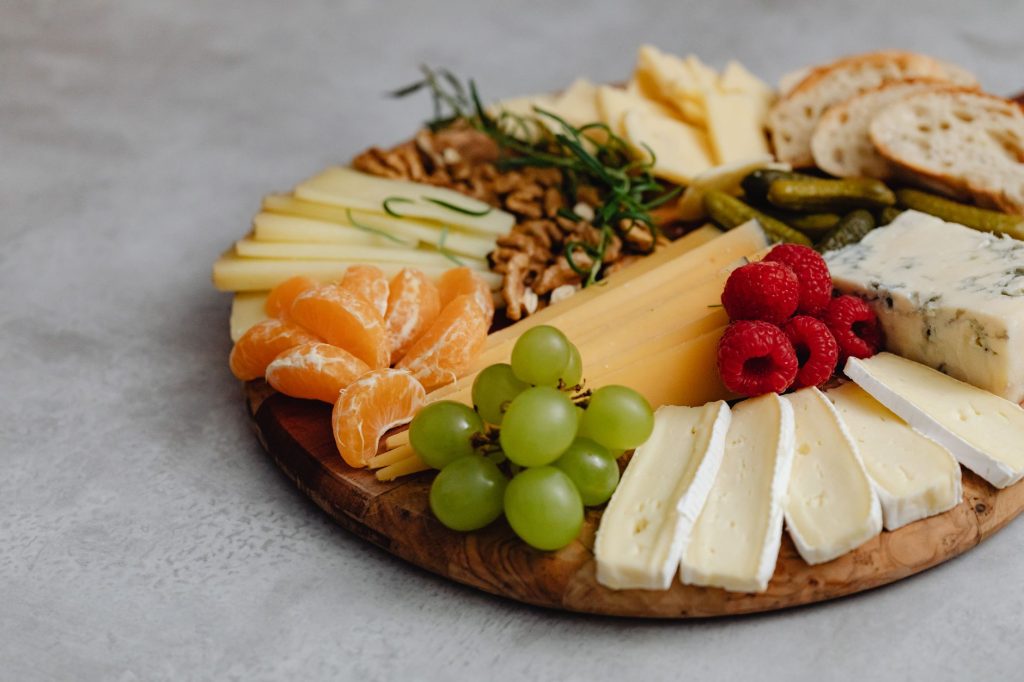
Two cheeses can be enough. Choose one that slices easily and another with a different texture or flavour. A firm, mellow cheese beside a softer, fuller-flavoured one gives people a choice without leaving you managing five open packages. Add a third only if somebody particularly wants it or you have another meal planned around it.
Let the people sharing the apartment guide the choice. If nobody enjoys blue cheese, there is no missing slot to fill. If a soft cheese makes serving awkward in a warm room, choose something firmer. Ask about allergies and dietary requirements before shopping; vegetarian preferences can also affect which cheese is suitable, so check the label rather than assuming.
At a staffed counter, ask whether a smaller piece can be cut. With packaged cheese, compare the actual amounts and consider how you will store an opened portion. A slightly less varied board that gets eaten is more useful on holiday than an impressive selection that follows you through the week.
Make bread and fruit work together
Bread provides the backbone of the meal. Choose something people can comfortably tear or cut with the equipment available. A very hard crust is less appealing when the apartment has only blunt table knives. Slice some bread for the first round and leave the rest covered so it does not dry out while you linger.
Think about the following morning before choosing the amount. Bread that can become toast or accompany eggs has a clear second use. If there is no toaster or oven, buy closer to what you expect to eat that evening. Crackers can offer a little crunch, but you do not need a separate bread or biscuit for every cheese.
Fruit should make the board easier to eat, not harder to assemble. Choose a manageable amount that is ripe enough for tonight. Wash it before serving and dry it so water does not spread across the plate. Cut apples or pears near serving time; prepare grapes in small clusters so guests can take a few without handling the whole bunch.
Balance is more useful than abundance. Juicy fruit brings freshness beside rich cheese, while plain bread gives stronger flavours some space. If you already have a sweet accompaniment, you may not need dried fruit as well. Keep wet or sticky extras in a small bowl, especially if the bread is sharing the same platter.
Check the fridge before you unpack
Holiday apartment fridges often have less usable space than they first appear to. Drinks, breakfast supplies and someone else’s leftovers can quickly fill the shelves. Before shopping, identify a clean space for the cheese and a container or plate that will fit there. Keep ready-to-eat food separate from raw meat and anything that might leak.
Follow storage instructions on the packaging. If the fridge does not seem to be keeping food properly cold, resolve that with the host before relying on it for perishables. A board is meant to simplify the evening; it should not depend on hoping a struggling fridge will recover.
Keep cheese wrapped until you need it, retaining any storage and use-by information. Once opened, rewrap it as directed or use a clean food container. Give strong-smelling cheese its own enclosure, and avoid squeezing delicate pieces under bottles or heavy cartons. Leave room for leftovers before you fill the fridge with drinks.
Set up with the apartment’s equipment
You do not need a wooden board. A clean dinner plate, shallow serving dish or a couple of smaller plates will do. Two plates can be particularly useful on a narrow table: one for cheese, another for bread and fruit. Keep fragile glasses away from the cutting area.
Check the knives before laying everything out. Pre-cut part of a firm cheese if sharing one knife would otherwise hold up the meal. Give a soft or strongly flavoured cheese a separate utensil when possible. For someone with an allergy, a shared board and shared knives may be unsuitable; agree on separate preparation and serving arrangements beforehand.
Put out small plates and napkins, and leave a clear spot for wrapping things afterwards. A board crowded right to its edges can be difficult to use. Space around each piece lets people cut a portion without pushing fruit onto the table.
Serve in stages and keep track of time
Some cheeses are more enjoyable when they have lost their refrigerator chill, but that does not mean leaving the entire supply out all evening. Set out the amount you expect to eat first, following any serving guidance on the label, and keep the reserve refrigerated. In a hot apartment, bring out smaller portions and replenish as needed.
If you want to explore the flavours, begin with the mildest cheese and work towards the strongest. Explain that casually rather than turning supper into a lesson. Keep bread within easy reach and put pungent cheese slightly apart so it does not coat every knife or piece of fruit.
Keep perishable food out of refrigeration for no more than two hours in total, or one hour when the temperature is above 32°C. Count preparation and serving time together. Set a phone reminder if you are likely to lose track over conversation, and discard anything that has exceeded that window rather than saving it for breakfast.
Give leftovers a destination
Before sitting down, decide what tomorrow’s remaining cheese could become: toast, a sandwich for lunch, or part of another meal in the apartment. Wrap and refrigerate suitable leftovers promptly, keeping the original label where useful. Store bread separately from damp fruit, and avoid returning handled serving scraps to an untouched reserve.
On the last evening of a stay, scale down again. There is little pleasure in packing half a cheese while cleaning the kitchen and checking departure instructions. The right board leaves everyone comfortably fed, the fridge manageable, and the next morning easy.