A cranberry orange spritz is easy to make for one person and surprisingly easy to flatten for a crowd. The trouble starts when everything goes into a jug together: by the time the last glass is poured, the sparkling wine has spent too long exposed to air, the ice has melted, and the orange tastes tired. My approach is to batch only the still ingredients, get everything cold, and finish each glass when someone is ready to drink.
This also makes a gathering easier to manage. You can measure the tart, fruity base ahead, leave space in the fridge for the bubbles, and give a helper a simple pouring formula. Keep an alcohol-free base in a separate labelled bottle and both versions can follow the same service routine.
The rule that keeps the fizz
Build the drink in two stages. Cranberry juice, orange juice and orange liqueur belong in the advance batch. Sparkling wine and soda water stay sealed until service. Ice belongs in the glass, rather than in the storage bottle or jug.
Cold liquid holds its carbonation better than warm liquid, so chilling is part of the recipe. A cold base also reduces how much ice melts while you assemble the drink. Use clean, smooth glasses and avoid vigorous stirring once the sparkling ingredients are added. You need to bring the flavours together, not beat air into them.
A still base for eight cranberry orange spritzes
This recipe gives each glass a measured fruit-and-liqueur base, followed by sparkling wine and a little soda. Choose a dry sparkling wine you enjoy drinking on its own. Prosecco, cava or another dry sparkling wine can work; sweetness varies, so taste the finished proportions before committing to the whole batch.
For the still base
- 400 ml cranberry juice drink or cranberry juice cocktail
- 160 ml orange juice, strained if pulpy
- 160 ml orange liqueur
For service
- 720 ml chilled dry sparkling wine, allowing 90 ml per glass
- 240 ml chilled soda water, allowing 30 ml per glass
- Plenty of firm ice cubes
- Eight small orange twists or thin half-slices
- Optional simple syrup, added only after tasting
The still base totals 720 ml, giving eight 90 ml portions. Use a glass with room for the 210 ml drink, ice and a little headspace. This is a wine-based cocktail with liqueur, so offer smaller servings if that suits your gathering and keep drinking water available.
Check your cranberry before mixing
The word “cranberry” covers very different bottles. This recipe starts with a sweetened cranberry drink, not a bottle of pure, unsweetened cranberry juice. Check the label: a cranberry blend containing apple or grape may taste noticeably sweeter than another cranberry drink, even when both look similar.
If you have pure unsweetened cranberry juice, begin with a small trial using some juice diluted with water, then sweeten gradually. Do not substitute it straight across and expect the same balance. Its concentrated sharpness can dominate the orange and make a dry sparkling wine seem severe.
For a useful trial, make one full glass using 50 ml cranberry drink, 20 ml orange juice and 20 ml orange liqueur, then add the sparkling ingredients in the serving amounts above. Taste it cold. If it needs sweetness, try 5 ml simple syrup. If it feels too sweet, try a small squeeze of lemon. Record the adjustment and multiply it by the number of portions you are batching.
Prepare the base and the serving station
- Mix the still ingredients. Combine the cranberry drink, strained orange juice and orange liqueur in a clean bottle or covered jug. Add any adjustment you established in the trial glass.
- Refrigerate promptly. Make the base earlier on the day of serving, or the evening before, and keep it covered and refrigerated. Fresh orange juice is best kept cold and used promptly.
- Chill the sparkling ingredients. Refrigerate the wine and soda before guests arrive. Keep spare bottles cold so a replacement does not warm up the next round.
- Prepare the glasses and garnish. Chill clean glasses in the fridge if space allows. Cut modest orange garnishes and keep them covered and refrigerated.
- Set out a measure. A small measuring cup or jigger makes it easier to keep portions consistent when someone else takes over pouring.
Orange juice may settle in the batch. Gently turn the closed base bottle over a couple of times before the first round, or stir the still base briefly. Do this before adding any bubbles. Avoid shaking the sparkling wine or the finished drink.
Finish each glass at service
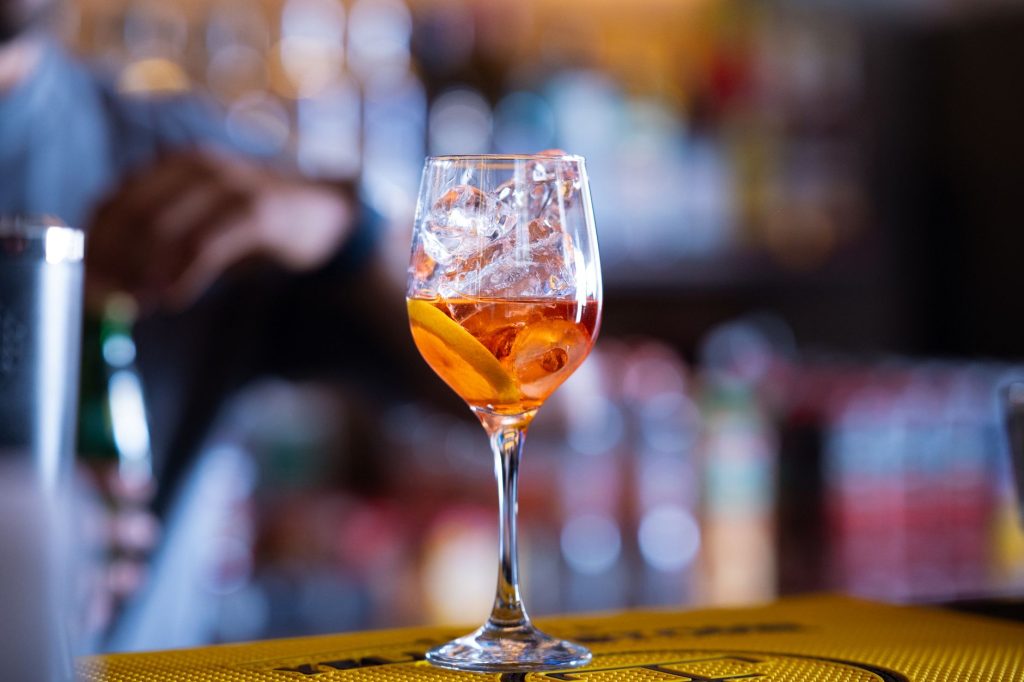
Fill a chilled glass generously with ice. Measure in 90 ml of the still base, then slowly add 90 ml sparkling wine and 30 ml soda water. Pour close to the inside of the glass to limit splashing. Give the drink one gentle lift with a spoon if needed, add an orange twist or half-slice, and serve immediately.
Open sparkling bottles as you need them. Between rounds, keep an opened wine bottle cold with a proper sparkling-wine stopper fitted, and recap soda promptly. Smaller soda bottles can be convenient when drinks are being served slowly. A spoon in the neck of a wine bottle is no substitute for a stopper.
If you need to serve a table together, line up the iced glasses, measure the base into all of them, then finish with the sparkling ingredients. Work in rounds you can hand out promptly. A large finished pitcher may look festive, but it trades away the main benefit of this method: fresh bubbles in every glass.
Build a separate alcohol-free balance
Simply removing the liqueur and wine leaves a different drink. You lose sweetness and orange aroma from the liqueur, along with the wine’s acidity and dry finish. For an alcohol-free spritz, build a base that tastes slightly concentrated, then assess it with the sparkling mixer you actually plan to use.
For one trial glass, combine 50 ml cranberry drink, 25 ml strained orange juice, 5 ml lemon juice and 5 ml simple syrup. Pour over ice and add 100 ml chilled sparkling water. Express a small piece of washed orange peel over the surface for aroma, then use it as the garnish.
- Too sharp? Add syrup in small increments, tasting after each addition.
- Too sweet or soft? Add a little more lemon juice before increasing the sparkling water.
- Too diluted? Reduce the sparkling water slightly on the next glass.
- Using a sweet sparkling mixer? Leave out the syrup initially and reassess the lemon after mixing.
Once balanced, multiply only the still ingredients by your serving count. The starting formula makes 85 ml of base per person, or 680 ml for eight. Label this bottle clearly and use a separate measure. If the drink must contain no alcohol, check mixers and flavourings rather than assuming that every wine alternative or botanical product qualifies.
Keep the last round as good as the first
Leave the main base in the fridge and bring out only what you need for the next round. Replenish ice with fresh cubes instead of topping up glasses full of meltwater. Store any untouched base covered and refrigerated; do not pour unfinished glasses back into it.
The useful preparation happens before anyone arrives: a balanced still base, cold bottles, ready glasses and a clear serving measure. Once those are in place, finishing a cranberry orange spritz takes only a few moments, and each guest gets the bright orange aroma and lively fizz that make it worth pouring fresh.