A counter covered in pintxos can make you order dinner before you have decided what you actually want to eat. In San Sebastian, the trick is to make your first order small enough that you can change your mind. Start with a drink and one pintxo per person, understand how that particular bar works, and leave room for something cooked to order.
You do not need a complicated route or a checklist of famous bites. A compact visit to a couple of nearby bars can be more satisfying than a long crawl, especially when you are trying to keep both your spending and your appetite under control. Here is how to manage the counter, the hot orders and the bill without turning every stop into a full meal.
Decide what this visit is for
Before you enter, agree whether you are having a snack, making a meal of pintxos or stopping for a drink with something small. That decision matters more than choosing an exact number of bars. If you are eating dinner later, treat the first stop as a snack rather than the beginning of an open-ended tasting session.
For a simple evening, choose one small area and keep a second bar as an option. The Parte Vieja is an obvious area to explore, while Gros offers another neighbourhood setting; neither name guarantees a particular atmosphere or budget. Look at the menu and the room before committing. A crowded counter may be lively, but it may also make a careful first order harder.
Within your group, agree that nobody will order a round of food for everyone without checking. Sharing can help you taste more, but only if each person knows what is coming. Two people independently ordering “a few things for the table” is an easy way to double the meal.
Read the counter before reaching for food
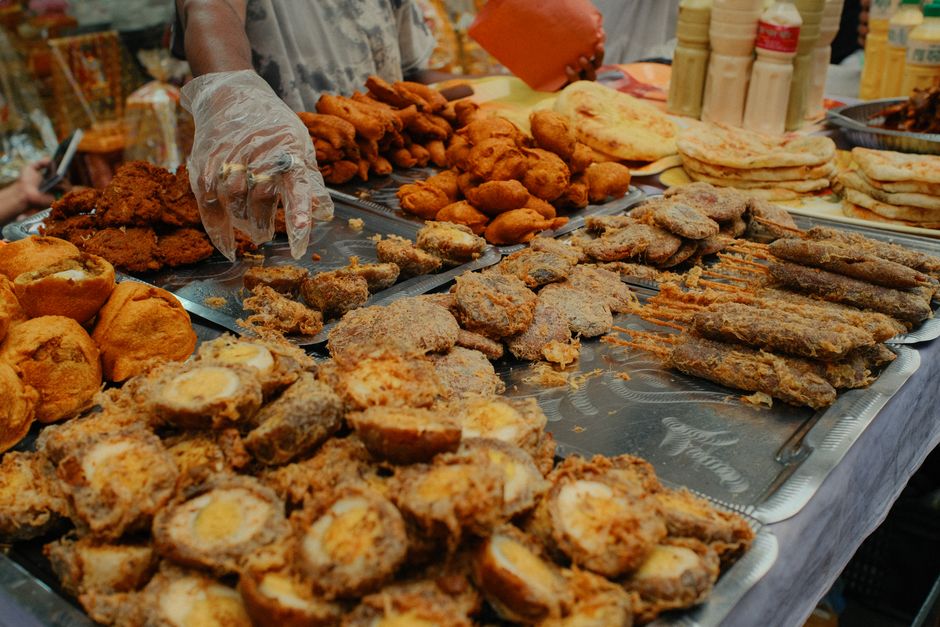
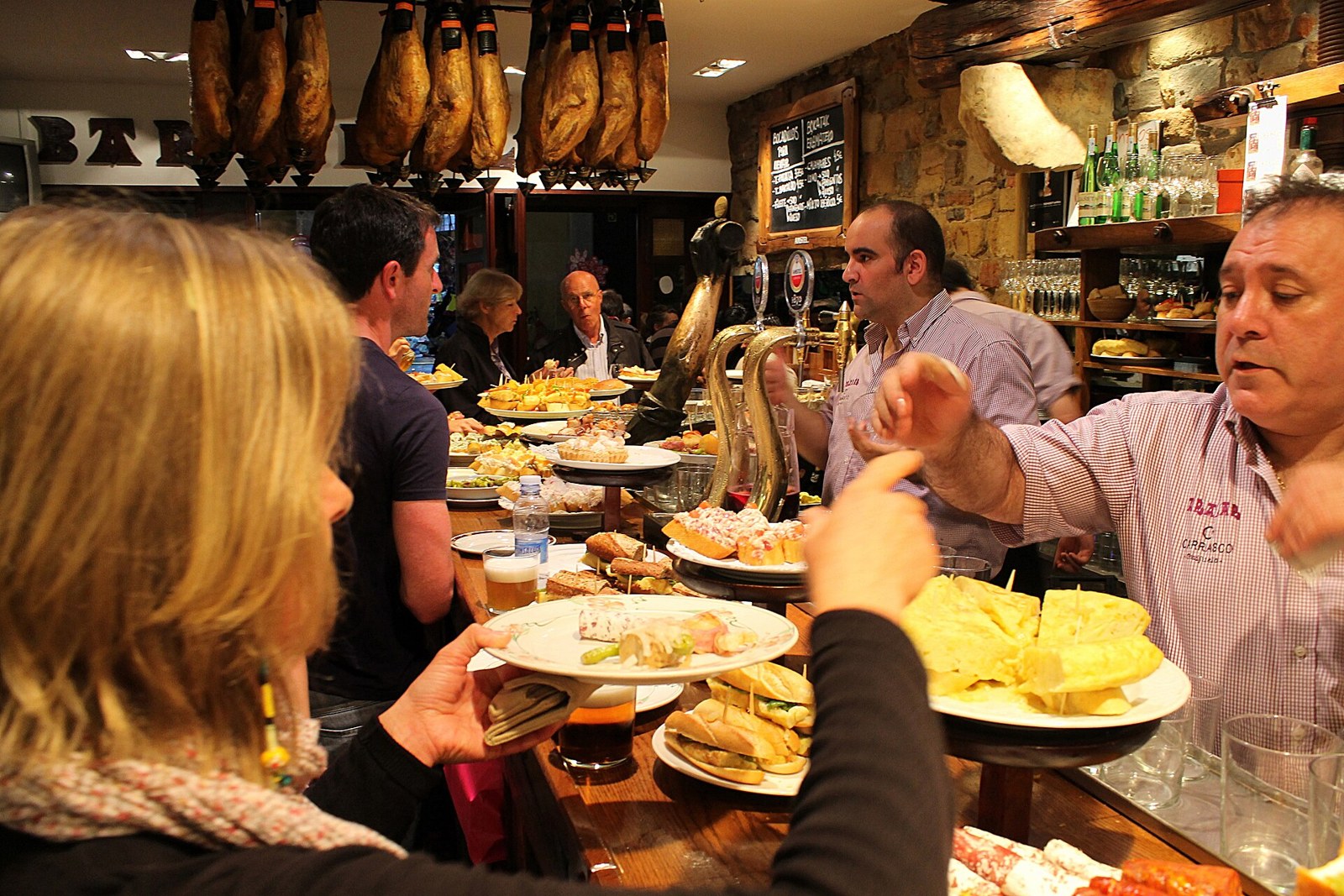
Pintxos are small bar dishes, sometimes served on bread and sometimes held with a skewer. The format is flexible: not every dish will be a single mouthful, cold or displayed on the counter. Some of the most tempting choices may appear only on a board or menu.
Do not assume that a display means self-service. Pause and watch how staff are serving people, then ask if you are unsure. A simple “¿Se pide aquí?” asks whether you order here. If you want to know whether you can take something yourself, “¿Puedo coger uno?” makes the question clear. Pointing politely works well when you cannot identify a dish.
Wait for acknowledgement rather than pushing a plate or money between other customers. Have the first part of your order ready, keep bags out of the passage and avoid spreading coats over spare stools. If you secure a standing spot, leave enough counter space for staff to pass plates and drinks.
Ask about ingredients before ordering if you have an allergy or dietary restriction. Appearance is not enough to establish what is in a sauce, filling or garnish. Explain the specific restriction and ask about preparation where necessary; a short translated note can be more useful than trying to discuss it over the noise.
Make the first order deliberately small
Order your drinks and one item each, then stop. This is a starting point, not a rule about how much anyone should eat. It gives you time to see the portion size, taste the food and decide whether you want another counter bite or a hot dish.
Be precise about quantity. Point to the item, say how many you want and check whether you are ordering an individual pintxo or a larger portion. Words such as ración and media ración indicate portion formats that deserve a closer look. Do not assume everything on the same menu is designed as a small individual bite.
If prices are not clear, ask before committing. “¿Cuánto cuesta?” is enough to start that conversation. For a dish you intend to share, also ask about its size. You do not need to make the interaction elaborate: a clear question is easier for everyone than an uncomfortable surprise when the bill arrives.
Ask about hot pintxos early
The visible counter is only part of the decision. Look for a hot-food list or ask what can be ordered from the kitchen. “¿Qué pintxos calientes hay?” asks what hot pintxos are available. Availability and kitchen service can differ from what you see written down, so confirm the dish you want.
Once you choose something hot, ask whether there is a wait. Order it while you still have a little of your first drink or bite left, rather than after you have finished and become impatient. If staff indicate a substantial wait, decide whether you want to stay before placing the order.
Keep pending food in mind. A hot order that has not arrived still counts towards your meal. Resist buying several counter items simply because the kitchen plate is taking time. In a group, have one person remember what is outstanding so that someone else does not accidentally order a replacement.
Check how collection works, too. Staff may bring the dish, call you or expect you to remain within easy reach. Do not wander outside with your drink and assume they will find you. If you move to a different spot, let them know.
Use a pause instead of another automatic round
When the first food is finished, take a moment before ordering again. Ask yourself whether you are hungry for another dish or simply enjoying the activity of choosing. Rich fillings, bread and fried bites can add up before you notice, particularly if you are eating quickly while standing.
For two people, a manageable first stop might be a drink each, one counter pintxo each and one hot dish to share if its size suits sharing. That is an example, not a target. After it arrives, decide whether to stay for something else, move on or finish the visit there.
You also do not have to order alcohol at every stop. Choose a drink you actually want, and avoid treating each new bar as a compulsory repeat of the previous round. Keeping food and drink decisions separate makes it easier to pace the evening.
Keep the bill easy to settle
Bars can handle payment differently. You may be asked to pay immediately, or staff may keep a running account. Follow their lead and clarify at the first order if it is not obvious. Do not assume that toothpicks, plates or your place at the counter are being used to track what you have eaten.
If you add another item, make clear that it belongs to your existing order. Keep a simple mental tally of drinks and food, especially when several people are ordering. If you move between the bar and a table, check whether that changes how you should order or pay.
When you are ready, catch a staff member’s attention and ask “¿Nos cobras, por favor?” or request “La cuenta, por favor.” Check that the items make sense and raise any question calmly before paying. For a group, agree who is settling up in advance; if you want separate payments, ask whether that is possible before everyone presents a card.
Leave room to enjoy the next stop
Settle the account before leaving and check that no ordered food is still outstanding. Then take a short walk before deciding what comes next. A second bar should offer something you want, rather than merely fulfil a plan made when you were hungry.
The useful habit is simple: order a little, notice what is still coming and make the next decision after eating. You can always ask for another pintxo. Keeping that option open is what lets a compact San Sebastian bar visit feel relaxed, varied and comfortably within your appetite.