A car-free weekend in Victoria works best when you choose your bed around the journeys at either end of the trip. A room that looks close to the waterfront may still leave you with an awkward arrival, while a slightly less central address can work well if it puts you beside a useful bus connection. Before comparing rooms, picture yourself arriving with your bag, finding dinner and leaving again after checkout.
For this guide, Victoria means British Columbia’s capital on Vancouver Island. The key distinction is between arriving at Swartz Bay, north of the city, and arriving by passenger ferry at the Inner Harbour. Those are very different starts to a weekend. Match your overnight base to your actual arrival point, then build the food stops and sightseeing around it.
Start with the ferry terminal, not the room rate
If you travel as a foot passenger on a ferry from the Vancouver area to Swartz Bay, you still have an onward journey into Victoria. Swartz Bay is not a downtown terminal. Allow room in your plan for disembarking, finding the bus stop, waiting and travelling south. A ferry arrival time should never double as the time you promise to meet someone for dinner downtown.
Check the bus journey for your intended arrival and departure days before booking accommodation. Look at the destination, whether the journey requires a transfer, and the stop nearest your lodging. Save the relevant details somewhere you can read without a data connection. For the return, work backwards from the ferry operator’s foot-passenger boarding requirements, adding a buffer for the bus journey.
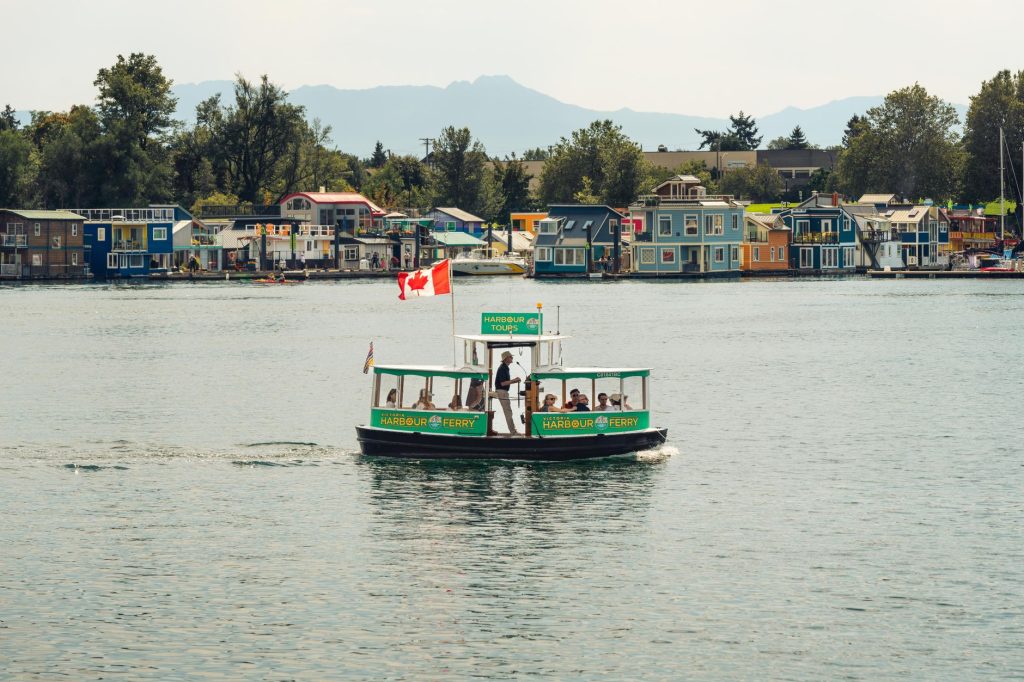
A passenger ferry arriving at the Inner Harbour gives you a different calculation. You may be able to walk to your accommodation, but check the exact terminal and entrance rather than relying on the word “harbour”. If your journey crosses the international border, include the arrival formalities in your plans. Keep your first meal flexible so a delay does not turn into a missed reservation.
Choose between three useful overnight areas
The Inner Harbour and southern downtown
This is an easy starting point if you want waterfront walks and a short route back to your room between outings. It is especially convenient when your passenger ferry uses a nearby terminal. You can organise much of a short stay on foot, with food stops woven into walks rather than treated as separate journeys.
The trade-off is that a waterfront address does not automatically offer the best value. Compare the complete room cost with accommodation a few streets inland. Also check whether the property entrance faces the street you expect: a map pin beside the water can disguise a longer walk around a building. Ask about steps or lift access if carrying your bag upstairs would be difficult.
Central downtown, towards Chinatown and Old Town
This area suits a weekend built around eating, browsing and returning to your room without a long detour. Chinatown, Old Town and the harbour can form parts of the same walking day. Being close to several food options also makes it easier to change plans if somewhere is full or you simply want a modest takeaway meal.
For a Swartz Bay arrival, compare the walk from your intended bus stop to each property. A room near the right stop can be more useful than one with a harbour view. Check recent guest descriptions for street noise, particularly if you prefer an early night. Centrality helps with convenience; it does not guarantee quiet.
James Bay
James Bay is worth considering if you prefer a more residential setting within reach of the Inner Harbour. Depending on the address, you can combine neighbourhood food stops with walks towards the waterfront or Beacon Hill Park. It works particularly well when you enjoy walking and expect to spend the evening near your accommodation.
Look closely at the final stretch from your arrival stop or terminal. “James Bay” covers more ground than a listing description may suggest, and a pleasant daytime stroll feels different with luggage in rain. Choose a specific street and route, rather than assuming every property in the neighbourhood offers the same convenience.
Compare the whole stay, not just the nightly charge
A cheaper room farther away can still be a good choice, provided the transport fits your weekend. The useful question is how often you will need to travel back and forth. If you want to drop off shopping, rest before dinner or change after wet weather, a central base may save considerable effort.
Before committing, make a small comparison for each address:
- The complete accommodation charge, including any mandatory fees.
- The arrival journey and the walk from the final stop.
- The journey back after your likely evening activities.
- Nearby options for breakfast and a simple evening meal.
- Check-in arrangements and luggage storage before and after your stay.
A kettle, fridge or breakfast provision can be useful, but read the room description carefully. Do not assume that a shared kitchen is available or that breakfast starts early enough for your departure. Choose facilities you will actually use rather than paying extra for an attractive list of extras.
Let food stops shape a walkable Saturday
For a first visit, keep Saturday geographically compact. Start with breakfast near your base, then walk towards the Inner Harbour. From there, choose either a longer outing towards James Bay and Beacon Hill Park or a day exploring downtown, Old Town and Chinatown. You can connect these areas, but there is no prize for covering all of them before lunch.
Use lunch as a pause near wherever you already are. If you are browsing around Chinatown, eat in that part of town instead of crossing the centre for a single recommendation. Read menus before sitting down and check whether the listed options suit your appetite and budget. A substantial lunch followed by a lighter supper can fit a walking day well, without making every meal an occasion.
Leave space for weather and tired feet. A café stop is more useful when it offers a comfortable break along your route than when it requires another bus journey. Carry a water bottle and a small day bag so you can leave heavier belongings at your accommodation. For dinner, choose an area with alternatives nearby and check opening hours before setting out.
Arrange checkout storage before you book
The easiest final day begins with a clear answer about your bag. Ask the property whether it can hold luggage after checkout, whether there is a charge, and when collection is possible. Confirm that the arrangement applies to your booking. Small guesthouses and self-contained rentals may have different staffing and storage arrangements from a hotel.
Then plan Sunday around collection. Leave the bag, take a final walk and eat near a route that brings you back naturally. Avoid ending your afternoon across town if you must return to reception before travelling to Swartz Bay. If storage is unavailable, make your last outing manageable with luggage or choose accommodation that better supports your departure.
Keep travel documents, medication, valuables and a weather layer with you. Collect your stored bag with time to spare, then begin the departure journey. A successful car-free weekend is less about squeezing in another stop than choosing a base that makes arrival, meals and the trip home feel straightforward.