Choosing a hostel in Busan starts with a simple question: which journey will you make most often? Staying near your arrival train can make the first evening easy while leaving you crossing the city for every swim. A beach base reverses that bargain. The shoreline is close, but departure day takes more planning.
I would sketch three ordinary days before booking. Count beach visits, trips to other districts and journeys with luggage. Then choose a base around those patterns. A hostel that saves one transfer every day can be more useful than one that looks perfectly placed for your arrival.
First, define what train access means
Busan Station serves intercity trains, including KTX services, and connects with metro Line 1. A hostel beside a different metro station may be convenient for sightseeing without being particularly convenient for your onward train. Check the actual station name, line and entrance rather than relying on a description such as “near transport”.
Also separate the railway concourse from the metro platforms. Reaching the station area does not put you beside your departure platform. Allow for moving between levels, finding the correct entrance and navigating with your bag. For an early departure, a straightforward walk can be worth more than a journey that looks short but involves changing trains.
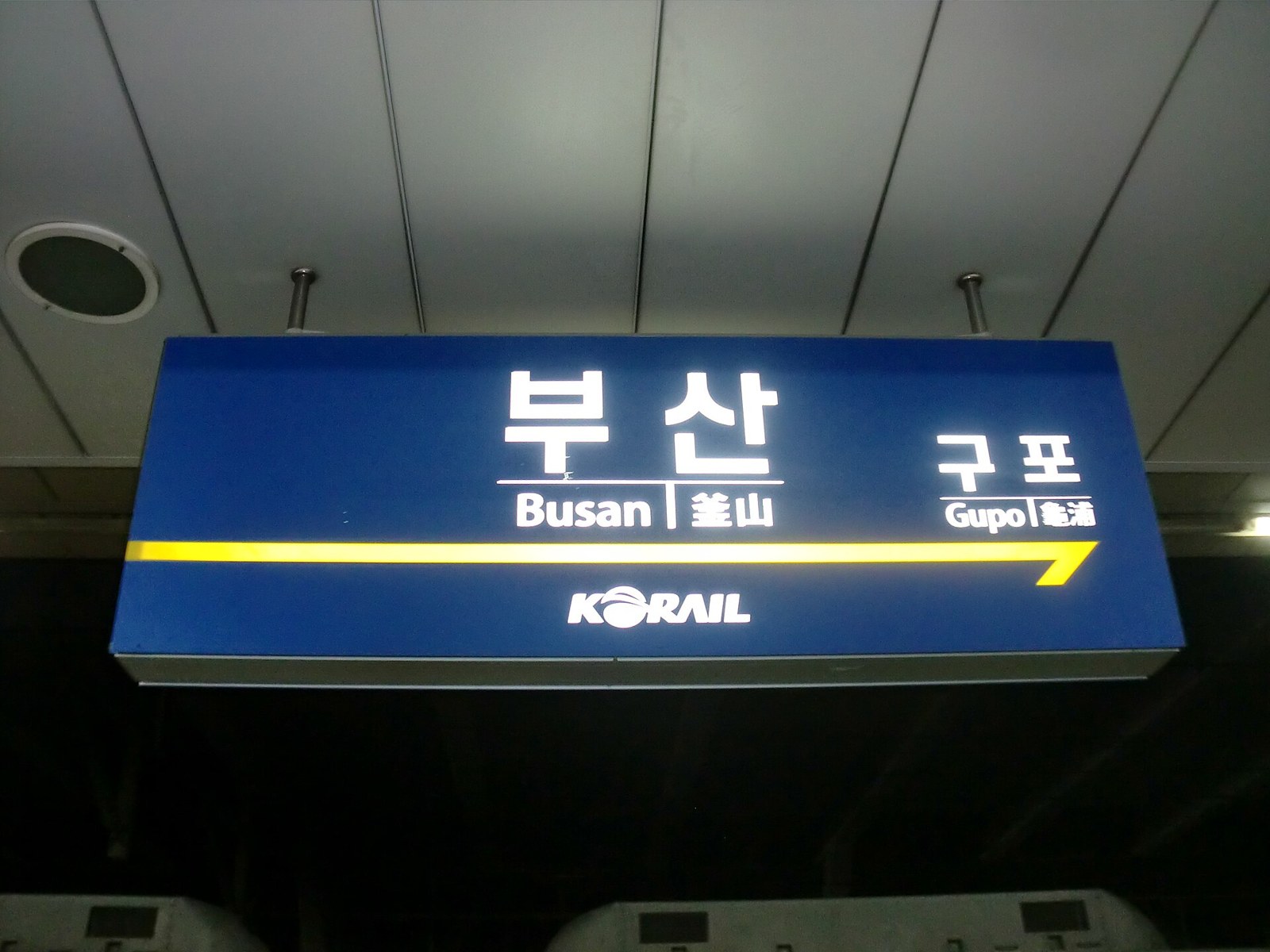
Busan Station: choose it when luggage shapes the trip
The station area is a sensible starting point for a brief visit, late arrival or early onward train. You can leave your bag and explore, provided the hostel accepts luggage at that hour. Line 1 also gives you a direct metro route towards Nampo and Seomyeon.
The compromise becomes clearer if you want to visit the beach every day. Neither Gwangalli nor Haeundae sits beside the main railway station. Travelling towards them by metro generally means taking Line 1 to Seomyeon and changing to Line 2, followed by a walk at the coastal end. That is manageable for an afternoon outing; repeating it for every swim changes the feel of your stay.
Look beyond the distance from the station when assessing noise. Ask whether your room faces a main road, an internal courtyard or the common area. A rear room might avoid traffic yet pick up conversations from the lounge. The position of your particular dorm matters more than a broad claim that the building is quiet.
Seomyeon: useful for days in different districts
Seomyeon works well when your plans point in several directions. Lines 1 and 2 meet here. You can travel to Busan Station on Line 1 and towards Haeundae or the Gwangalli area on Line 2. Staying close to the interchange removes a change from several common journeys.
This is a practical choice if you leave after breakfast, explore for most of the day and return once in the evening. It becomes less attractive if you want to return to your room between beach visits. You still need a train journey before reaching the coast, however convenient the interchange feels on a map.
Check reviews for specific descriptions of nighttime noise. Nearby nightlife, people returning late and music inside the hostel are separate issues. A side street may help with outdoor noise but cannot fix a dorm beside a busy kitchen. Ask when the lounge closes and whether quiet hours are enforced.
Gwangalli: balance two walking routes
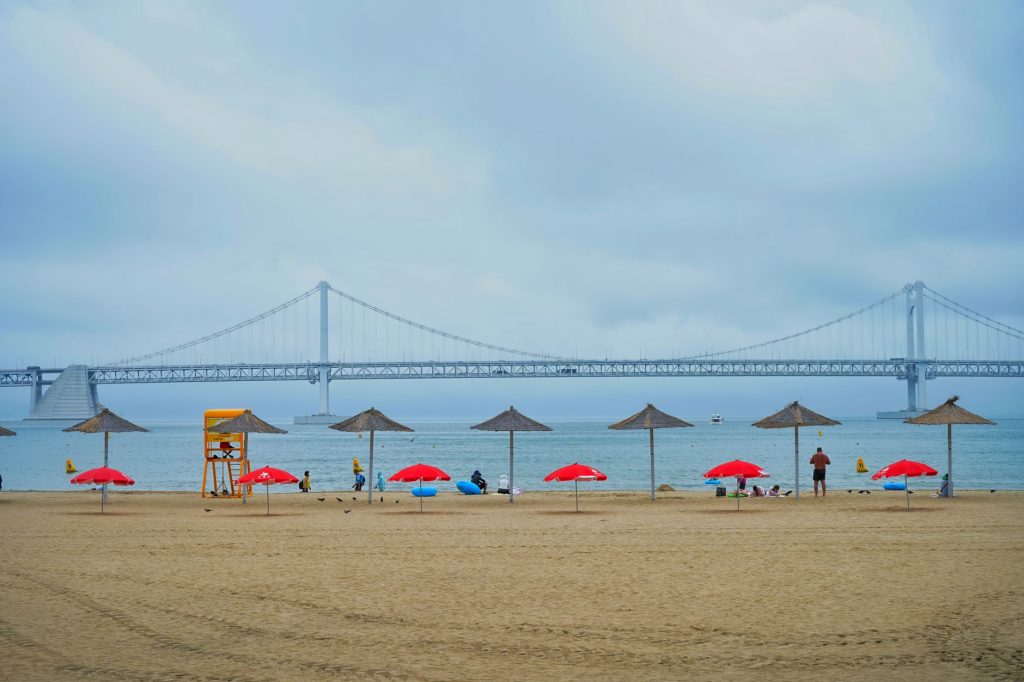
Gwangalli suits days built around beach time and evenings near the water. When comparing hostels, trace the walk from stations such as Gwangan or Geumnyeonsan as well as the walk to the beach. A beach-area address does not necessarily mean a waterfront building, and a listing’s station distance may refer to an entrance that is awkward with luggage.
A location between the metro and the sand can work well for a mixed itinerary. A place closer to the waterfront becomes more appealing if you expect to walk out repeatedly: before breakfast, after a swim and again after dinner. Those small journeys are where beach proximity earns its keep.
For trips towards Busan Station, factor in the change at Seomyeon. For sleep, ask about the room’s orientation and ventilation. Evening conversations and road noise can matter more when windows need to stay open. A sea view is a pleasant extra, but it does not tell you how quiet the room will be.
Haeundae: strongest when the beach leads your plans
Haeundae makes sense when the beach is the main reason for your stay. Being able to return for a shower, change clothes or rest makes a different daily routine possible. Compare the hostel’s distance from Haeundae metro station on Line 2 with its distance from the sand. These are two separate measures of convenience.
The trade-off is the journey back towards Busan Station and other destinations reached through Line 1. A hostel beside the metro reduces the walking portion but does not remove the transfer. Before booking an early onward train, think through packing, checkout and the trip from your hostel door.
Room noise deserves the same attention here as elsewhere. A building away from a busy street may still have thin doors or a social space next to the dorms. Look for reviews describing room position and sleeping conditions, rather than treating a lively atmosphere as either automatically good or automatically bad.
Make luggage storage part of the comparison
Storage can change which base works best. Ask whether bags are accepted before check-in and after checkout, whether there is a charge, and when you can collect them. Restricted reception hours can turn an easy final day into a race back across the city.
- Confirm where bags go. A controlled storage room is different from an open corner beside reception.
- Ask about stairs. Check whether there is a lift and whether steps remain between the street and the room.
- Check locker size. A locker for valuables may not fit your main bag. Ask whether you need your own lock.
- Trace the collection trip. Retrieving a suitcase from the beach before going to Busan Station may add a substantial detour.
Do not build your departure around finding an empty station locker. Availability and bag fit are uncertain until you arrive. A confirmed hostel arrangement is easier to plan around, especially when you need access early or late.
Choose around the journey you repeat
Before paying, compare your shortlist using the same three checks: the route you will repeat most, the room conditions you need for sleep, and the bag arrangements on arrival and departure days. Include walking, transfers and reception hours rather than comparing only station names.
For a short rail stop, I would lean towards Busan Station. For varied sightseeing, Seomyeon offers a useful interchange. For repeated beach visits, Gwangalli or Haeundae can justify a longer arrival journey. Choose the base that makes your ordinary days easier, then confirm that the room and luggage arrangements support that choice.