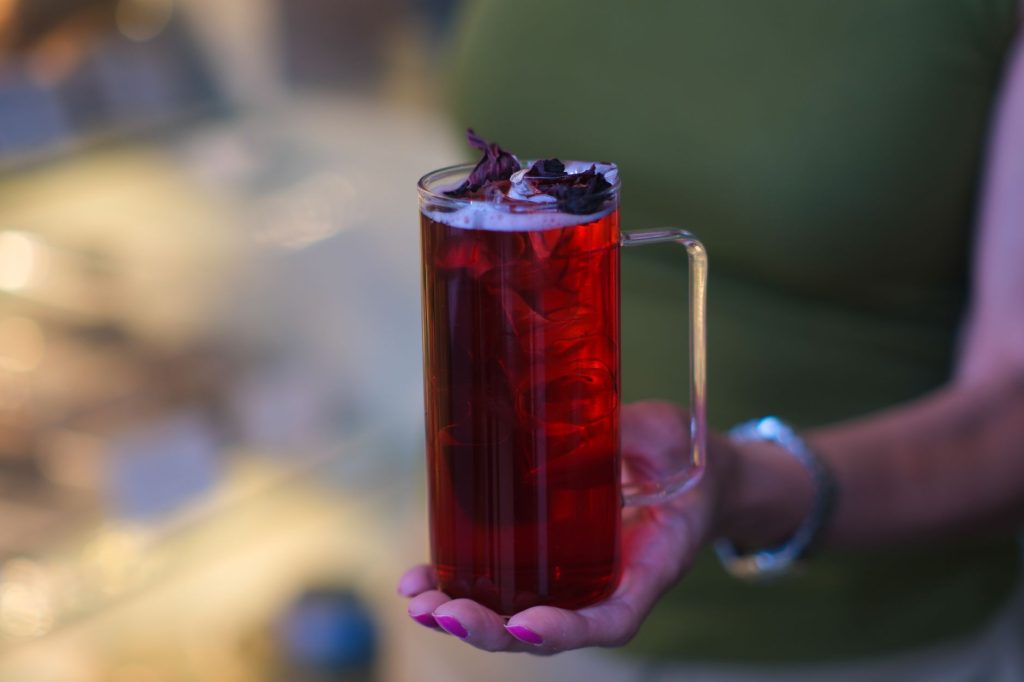
Iced hibiscus tea should be bright, tart and refreshing, with enough body to hold its own over ice. When the finish turns harsh, adding more sugar can leave you with a drink that is both too sweet and still unpleasant. A better starting point is to control how much dried hibiscus you use, how long it sits in hot water and when you remove it.
This is a useful drink for a shared kitchen: one saucepan, one strainer and a labelled jug are enough. The method below makes a litre of tea before serving ice, with sweetness kept adjustable so everyone can pour a glass they enjoy.
First, separate tartness from bitterness
Hibiscus naturally has a sharp, fruity acidity. Think of the mouthwatering edge of a cranberry rather than the sweetness of a berry cordial. That tartness belongs in the drink. Bitterness is a different sensation, while a dry, puckering finish is often described as astringency. You may notice more than one at once.
Before changing your recipe, taste a small spoonful diluted with an equal amount of water. If it becomes pleasantly fruity, the original batch may simply be too concentrated. If an unpleasant finish remains, look at steeping time, fine sediment or other ingredients, particularly citrus peel and tea leaves.
Use food-grade dried hibiscus intended for drinks, often sold as hibiscus flowers, flor de Jamaica or dried roselle calyces. Choose a plain ingredient for your first batch. A blend containing black tea, spices or citrus makes it harder to identify what needs adjusting.
A repeatable one-litre batch
Weighing the hibiscus is helpful because large pieces and crushed fragments fill a spoon differently. The quantities here are a starting recipe, not a promise that every packet will taste identical.
- 10 g dried hibiscus intended for brewing
- 600 ml freshly boiled water
- Cold drinking water to bring the strained tea to 1 litre
- 25 g white sugar, optional, with more sweetness added by the glass if wanted
- Ice for serving
You will need a heatproof brewing vessel, a fine-mesh strainer, a measuring jug and a clean storage jug or bottle. Use a saucepan, stainless-steel bowl or heatproof glass vessel rather than a reactive metal container. Make sure your storage jug has room for the full batch and a lid.
If you have no scales, choose one measuring spoon and record how many level spoonfuls you use. It is less precise, but it gives the next person a reference. Avoid alternating between loosely filled spoonfuls and tightly packed ones.
Steep briefly, then remove the hibiscus
- Measure before heating. Put the hibiscus into the brewing vessel and have your strainer ready. Set a timer for five minutes.
- Add the hot water. Pour 600 ml freshly boiled water over the hibiscus. Stir gently once to wet any floating pieces, then leave it off the heat to infuse.
- Taste before extending. At five minutes, lift out a teaspoonful and let it cool enough to taste. Look for a clear, tart flavour. If it seems weak, give it another minute, then taste again.
- Strain promptly. Pour through the fine-mesh strainer into a heatproof measuring jug. Let the liquid drain naturally without grinding or pressing the wet hibiscus through the mesh.
- Add the optional sugar. Stir 25 g sugar into the warm, strained liquid until dissolved. Then add cold drinking water to reach a total volume of 1 litre.
Five minutes is a manageable first setting because you can extend it deliberately. Leaving the saucepan unattended until someone remembers it gives you no useful reference for the next batch. Deep red colour arrives readily, so colour alone is a poor guide to when the tea is ready.
Do not keep simmering the hibiscus to make the drink stronger. For this method, strength comes from the measured quantity and controlled infusion. If a batch tastes thin after dilution, record that observation and increase the hibiscus slightly next time while keeping the timing steady.
Strain for a cleaner finish
A kitchen sieve catches the larger pieces, but fine dust can slip through. If you see a noticeable layer of particles, strain again through a finer tea strainer or a clean, food-safe filter. A paper coffee filter can work, although it may drain slowly. Let gravity do the work.
Removing the solids gives you a clear stopping point for the infusion. Leaving them in the storage jug means the brewing conditions keep changing as the drink cools. It also leaves the final glass full of sediment.
Keep the straining step simple enough that a housemate will repeat it. A fine strainer that fits securely over the jug is more useful than an elaborate arrangement that needs three hands and spills red tea across the counter.
Chill without losing track of dilution
Once you have topped up to a litre, cover the tea and cool it promptly. You can stand a suitable heatproof vessel in a basin of cold water, keeping the water outside the rim, before transferring the tea to its storage container and refrigerator. Avoid sudden temperature changes with glass that is not designed for them.
Do not leave a large warm batch sitting around the shared kitchen while you wait for everyone to finish cooking. Divide it into smaller clean containers if that makes chilling easier. Store it covered in the fridge, make an amount your household can finish soon, and pour servings rather than dipping used cups into the jug.
Add serving ice to the glasses instead of the storage jug. Otherwise, melting ice changes the strength for whoever arrives later. If you want to use ice during preparation, count its melted volume towards the final litre rather than adding it on top of the recipe.
Adjust sweetness when the tea is cold
Warm tea only tells you part of the story. Taste the chilled batch before deciding whether it needs more sugar, and taste a serving over your usual amount of ice. That is the drink you are actually going to finish.
For easy individual adjustments, dissolve equal weights of sugar and hot water in a separate clean container. Cool this syrup and refrigerate it, clearly labelled. Start with a teaspoon in a glass of tea, stir and taste. This avoids gritty sugar collecting beneath the ice.
If the tea is sharply sour, a little syrup may bring it into balance. If it feels heavy or drying, try a splash of cold water first. Sweetness can soften the impression of tartness, but it cannot reliably rescue an over-extracted or muddled batch.
Keep lime juice, citrus slices and herbs out of the first shared jug. Hibiscus already brings acidity, and citrus peel can add its own bitter edge. Offer garnishes separately once the base tea tastes right.
Leave a recipe the next person can follow
Put a short note on the fridge: hibiscus weight, hot-water volume, steeping time, final volume and sugar added. Label the jug with its contents and the day it was made, including whether it is sweetened. Store syrup separately so an unsweetened serving stays an option.
Change one detail at a time. If the first batch is too intense, reduce the hibiscus slightly or shorten the steep on the next attempt. Keep everything else consistent so you can tell which adjustment helped. Once the balance suits the household, the same jug and timer make it easy to repeat: steep, strain, dilute, chill and sweeten to taste.