A Spanish neighbourhood bar can look wonderfully straightforward until you try to order breakfast. Someone is calling for coffee, another customer is eating toast at the counter, and nobody seems to be waiting beside a sign marked “order here”. The trick is to watch the room briefly, then make a small, clear request.
You do not need fluent Spanish or an elaborate breakfast vocabulary. You need to establish where to order, choose your toast, describe your coffee and find out when to pay. Customs vary between regions and individual bars, so treat the phrases below as useful starting points, with the staff’s cues guiding the rest.
Read the room before choosing a seat
Start with “Buenos días” as you enter. Then look at how other customers are being served. Are people ordering directly at the counter? Is a member of staff carrying orders to tables? Are customers waiting near a till? A few seconds of observation can save you an awkward move across the room with a hot cup.
Counter service is common, but a table does not automatically mean you should order at the bar first. If the arrangement is unclear, ask, “¿Se pide aquí?” meaning “Do you order here?” If you would like to sit down, “¿Podemos sentarnos?” works for a group, while pointing towards a table makes your intention clear.
Choose a space that leaves room for staff and other customers. A gap between two people may be a working area rather than an invitation to squeeze in. At a busy counter, make eye contact and wait for acknowledgement. If you cannot tell who arrived before you, “¿Quién es el último?” asks who is last in the queue; it is most useful where people are clearly waiting to order.
Find out what breakfast includes
Before ordering separate items, look for a breakfast board or a short menu near the counter. A bar may offer coffee and toast together, but the combination can depend on the bread, topping or drink. Do not assume that everything on display belongs to one breakfast deal.
Ask “¿Qué incluye el desayuno?” to find out what the breakfast includes. If you cannot see prices, “¿Cuánto cuesta el café con una tostada?” asks the cost of coffee with toast. This is especially useful when travelling on a budget: you can make your choice before extras arrive.
If staff answer with several unfamiliar options, narrow things down. “Una tostada con tomate, por favor” is much easier to resolve than a long question about every possible breakfast. You can then confirm the bread or portion if they ask. There is no obligation to order a full spread just because other customers have one.
Choose the toast, then clarify the topping
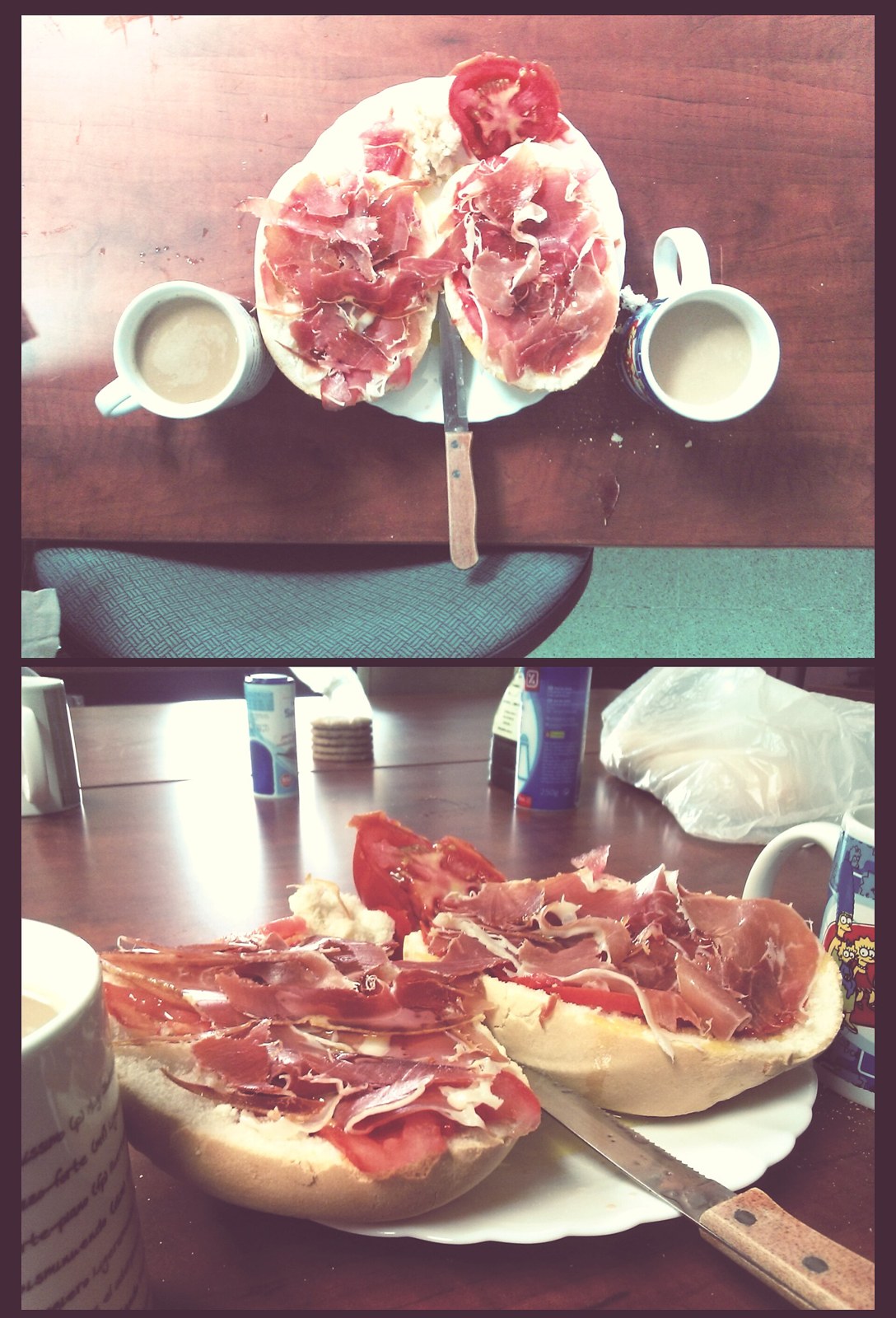
A tostada is toast, but its shape and size vary. It might be a slice from a loaf or part of a bread roll opened lengthways. Some bars offer a choice of breads; others use one standard bread for breakfast. Pointing to bread you can actually see is more reliable than expecting a particular shape from a name.
You may be asked “¿Media o entera?” A media is a half portion and an entera a whole portion within that bar’s serving system. Neither tells you an exact weight or guarantees how filling it will be. If the distinction matters, ask to see the bread or gesture towards another serving and say, “¿Una como esa?” meaning “One like that?”
For a simple savoury order, “Una tostada con tomate y aceite, por favor” requests toast with tomato and olive oil. Depending on the bar, the tomato may arrive already spread or separately, and you may add oil yourself. Wait to see what comes with the plate before asking for anything missing.
If you prefer butter and jam, ask for “mantequilla y mermelada”. State the topping with the toast order rather than assuming plain toast comes with a selection. Additional toppings may cost extra. If staff suggest an addition you do not want, a friendly “No, gracias” is enough.
Dietary needs deserve a direct question before ordering. “¿Lleva leche o mantequilla?” asks whether something contains milk or butter. For an allergy, explain the allergy itself and ask about preparation as well as ingredients. Choosing toast without an obvious topping does not establish that it is suitable.
Give your coffee order a little detail
“Un café” can leave the person serving you needing more information. A few familiar terms make the order easier:
- Café solo: a small black espresso.
- Café con leche: coffee with milk, a straightforward breakfast choice.
- Cortado: espresso with a smaller amount of milk than a café con leche, though proportions vary.
- Americano: espresso diluted with hot water, useful if you want a longer black coffee.
These names describe broad styles rather than identical recipes everywhere. If milk quantity matters, describe what you want: “Con poca leche” means with a little milk. For decaffeinated coffee, ask for “descafeinado”. Staff may ask whether you want it from the machine or a sachet; availability varies.
You can also request “leche templada” for warm milk or “leche caliente” for hot milk. If you need a plant drink, ask whether they have the specific one you want, such as “¿Tienen bebida de avena?” for oat drink. Do not assume every small bar stocks alternatives.
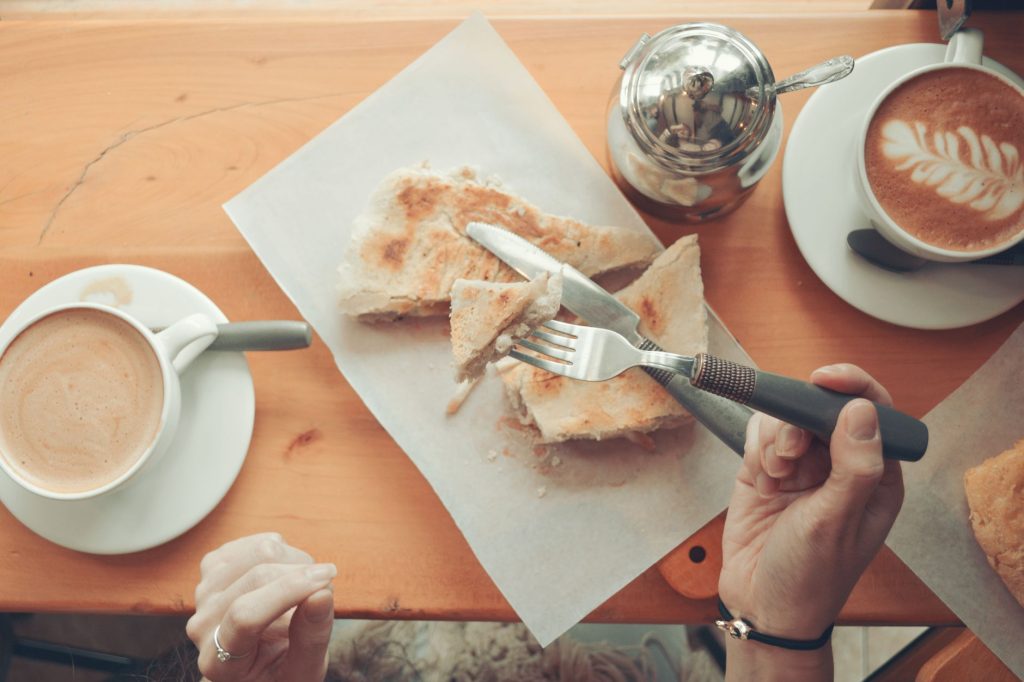
Order food and coffee together when possible: “Un café con leche y una tostada con tomate, por favor.” It gives staff a complete request, although the coffee and toast may arrive at different moments. For two people, let one person give the whole order if that keeps things clearer.
Handle the short follow-up questions
Breakfast ordering often becomes a quick exchange rather than one perfect sentence. You might be asked about the size of the toast, the milk or whether you are eating in. Listen for the part you recognise and answer that part. “Para tomar aquí” means to have it here; “para llevar” means takeaway.
If you miss something, say “¿Puede repetir, por favor?” You can add “Más despacio, por favor” to ask for slower speech. Pointing at the menu while repeating your choice is perfectly practical. There is no need to pretend you understood and hope the right breakfast appears.
Once served, check the order before adding oil, sugar or other extras. If something is wrong, explain it promptly and simply: “Perdone, lo pedí sin leche” means “Excuse me, I ordered it without milk.” Keep your receipt or order slip if the bar uses one.
Pay when the bar expects payment
Some bars take payment when you order; others keep track until you finish. Follow the staff’s lead. If they place breakfast in front of you and move on, you can usually settle afterwards, but ask “¿Pago ahora?” if you are unsure. It means “Do I pay now?”
When you are ready to leave, catch someone’s attention and say “La cuenta, por favor”. At the counter, “¿Me cobra, por favor?” is another useful way to ask to settle. If paying by card matters, check before ordering with “¿Se puede pagar con tarjeta?” Carrying some cash gives you flexibility without assuming how any particular bar operates.
For a shared breakfast, deciding beforehand who will pay makes the final exchange smoother. Ask about separate payments before presenting several cards. Tipping is discretionary; there is no need to calculate a fixed percentage for a simple counter breakfast. Finish with “Gracias” and leave space for the next customer. On your next visit, the same few phrases will already feel easier.