Booking a room in Ghent during a festival is about more than finding a bed close to the action. The same central address that makes an afternoon concert easy can leave you listening to departing crowds after you have switched off the light. A room a little farther away may suit you better, provided you can reach it on foot and get through the door when you return.
I would choose accommodation by working backwards from bedtime: decide when you need to sleep, map the events you actually want to attend, then check the route and room position. This is especially useful around the Gentse Feesten, but the method works for smaller festivals too. Treat each event’s layout as its own puzzle rather than assuming all of central Ghent will feel the same.
Start with your sleep needs, not a neighbourhood label
Before comparing rooms, agree on what a successful night looks like. Are you happy staying out until the final performance, or do you want to be asleep while the programme continues? Will you need an afternoon nap? Are children, an early train or a work call setting your morning schedule?
These answers change what counts as a convenient location. If you plan to stay out late, a short walk home may outweigh some street noise. If you want an early night, paying for immediate access to the festivities could mean paying for proximity you cannot enjoy.
- Early sleeper: prioritise distance from late-running activity and ask for a room away from the street.
- Late finisher: prioritise a straightforward return route and reliable overnight entry.
- Mixed group: choose somewhere the first person home can enter independently, without taking the only key.
Set a walking limit you would accept when tired, in rain and after standing for hours. Your cheerful sightseeing pace is a poor measure of the journey you will tolerate at the end of the night.
Read the programme as a map of possible noise
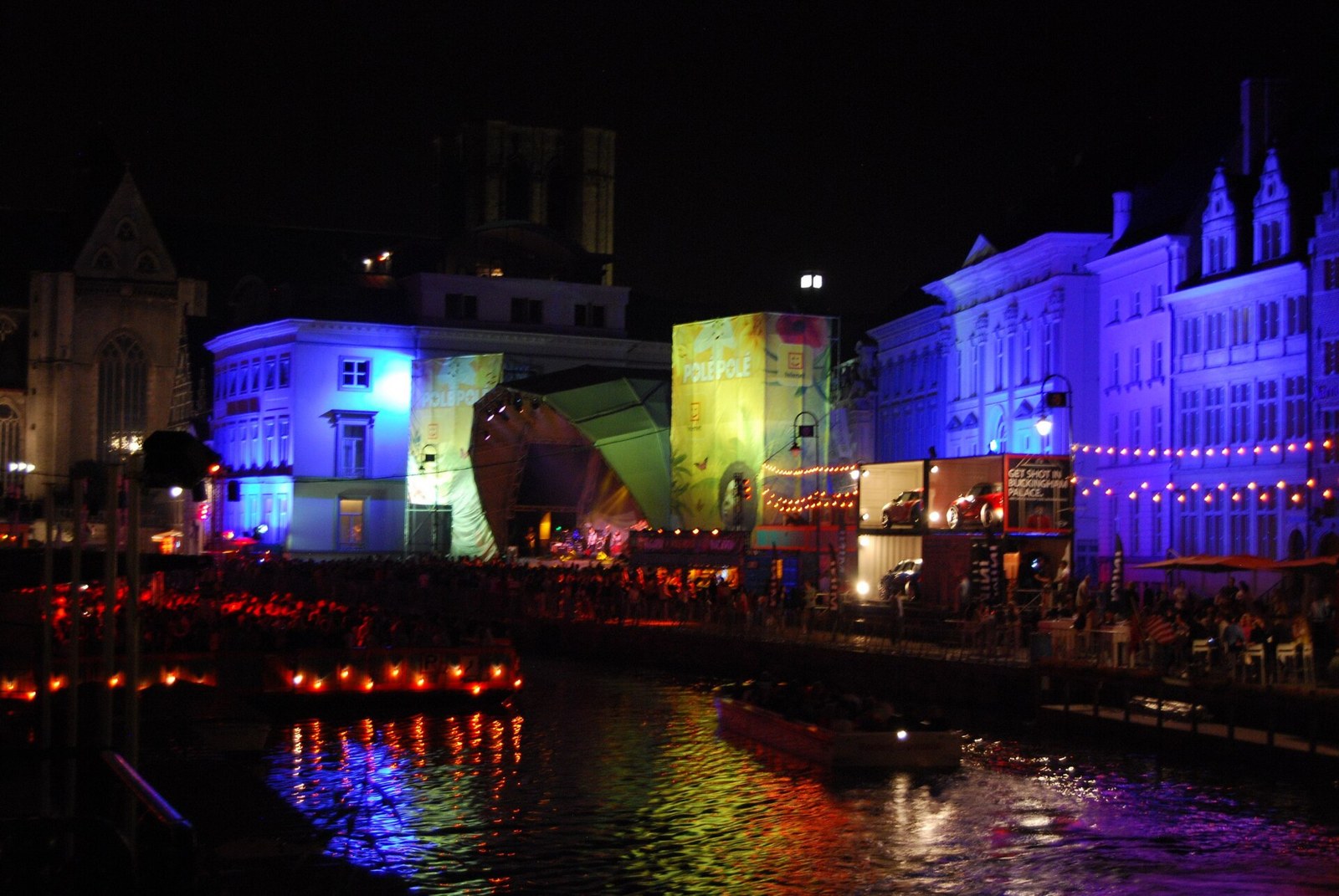
Use the festival’s own programme and access information when planning your booking. Look for the locations and finishing times of the events you want, alongside any published information about entrances, closures and pedestrian routes. An early outline helps you shortlist accommodation; check again when fuller details become available.
Mark individual event spaces rather than drawing one broad circle around the historic centre. Public squares such as Sint-Baafsplein and Vrijdagmarkt can help you orient yourself, but their relevance depends on the particular programme. Do not assume that a familiar square hosts the same activity, on the same schedule, at every festival.
Next, consider what lies between the performance and your pillow. A room may face away from a stage but overlook a busy route to bars or transport. A side street may avoid amplified music yet carry conversations, deliveries or people gathering outside an entrance. An event’s finishing time is therefore a useful clue, not a promise that the area immediately falls silent.
For each shortlisted address, ask three questions: what happens nearby, when does it finish, and where are people likely to walk afterwards? You cannot predict every sound, but you can spot an obvious mismatch with your bedtime.
Compare the room as carefully as the address
Two rooms in the same building can offer very different nights. Ask which side your actual room faces, what floor it is on and whether it overlooks a street, courtyard or shared terrace. A rear room is worth requesting, but a courtyard containing seating or a smoking area may not provide the quiet you imagine.
Ask how the room stays comfortable with the windows closed. If you need an open window to sleep comfortably, even good glazing offers limited help. Do not assume that air conditioning, ventilation or a fan is available simply because the accommodation looks modern in photographs.
Recent guest comments can reveal recurring issues such as street-facing bedrooms or noise from a shared staircase. Read the circumstances, not just the overall score: a complaint about a festival weekend may be more relevant to your stay than several peaceful midweek reviews. Equally, another guest’s tolerance may differ from yours.
When comparing costs, include the room features you actually need. A cheaper room is less appealing if you already expect to leave it exhausted. Avoid stretching the budget for an unconfirmed promise of quiet, however; ask what the property can genuinely guarantee.
Get specific answers before committing
A broad question such as “Is it quiet?” invites a broad answer. Give the accommodation your dates and intended bedtime, then ask about the room and access arrangements. This makes it easier for staff or a host to identify a problem.
We are visiting during the festival and hope to sleep around 11 pm. Does the available room face an event area or a busy pedestrian street? Can you confirm its position, and explain how we enter if we return after reception closes? Could festival barriers affect access to your entrance?
Keep the reply with your booking details. Check whether a quieter room is confirmed or merely requested, and read the cancellation terms before choosing a restrictive rate. If room allocation remains uncertain, flexible terms may be worth considering while you clarify the programme.
Confirm late entry separately from late check-in
Arriving after reception closes and returning late after checking in are different situations. A property may allow guests to come and go overnight but require first arrival within a fixed window. Another may offer self check-in with instructions you must receive in advance.
Confirm your expected arrival time, how to report a delay and whether everyone in your group can enter independently. Ask whether the street door locks, whether there is a separate night entrance and what to do if a key or code fails. Save the instructions offline and keep any access code private.
If you are bringing luggage, ask whether festival arrangements affect the final approach. Do not build your plan around a taxi reaching the doorstep: pedestrian restrictions or crowds may mean completing part of the journey on foot. Get an identifiable meeting point or approach direction from the property if its entrance is difficult to find.
Plan two walking routes home
Map a primary route from your likely final event to the accommodation, then identify an alternative that avoids the busiest square or a potential access restriction. A route that looks shortest on a map may pass directly through a performance area, a queue or a tightly packed gathering.
Prefer clear streets and recognisable junctions over complicated shortcuts. Check that your alternative reaches the correct entrance, particularly if the building has doors on more than one side. Keep an offline map, the address and the property’s contact details available without relying on mobile reception.
Walk the final stretch in daylight after checking in. Find the door, try the key and notice where you could turn if your planned approach becomes crowded. Where a route follows a canal, consider whether you would feel comfortable using it late at night; choose another route if it feels unsuitable.
Make a final check on arrival
Before unpacking fully, confirm the room matches any agreed position and ask about that evening’s access arrangements. If something is wrong, raise it while staff are available. Changing rooms may be impossible during a busy festival, but asking early gives you more chance of resolving a practical issue.
Earplugs can be useful if you already sleep comfortably with them, but they should support a sensible booking rather than rescue an unsuitable one. The aim is to enjoy Ghent’s festival atmosphere on your own schedule: a room that suits your sleep needs, a door you can open late and two workable ways to reach it.