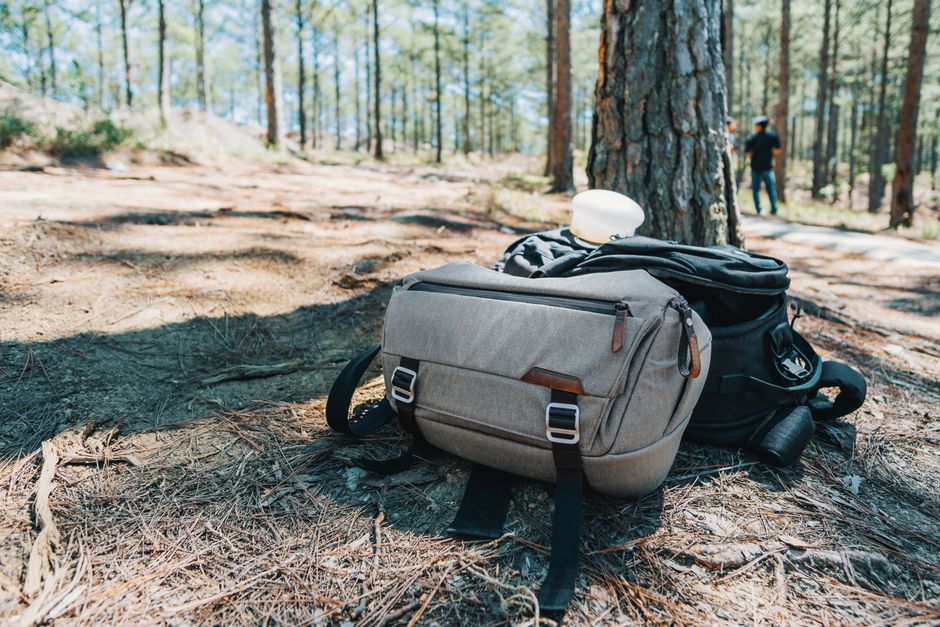
A rail trip asks different things of your luggage at different moments. On the station stairs, you need balance and a free hand. At your seat, you want lunch without emptying your clothes into the aisle. In a sleeper compartment, you need a toothbrush while everyone else is trying to settle down. Packing the Peak Design Travel Backpack 45L or a Nomatic Travel Bag around those moments makes more sense than filling every available space.
For a European itinerary linking budget rooms, hostels and an overnight train, I would use the same packing list in either bag, then change where things live. This is a practical packing rehearsal you can repeat at home. Nomatic Travel Bags come in different versions and sizes, so match the suggested zones to the openings and pockets on your particular bag.
Start with the journey, then lay out the kit
Picture leaving an upstairs guesthouse, walking to the station, changing platforms and boarding before reaching your next accommodation. Your bag needs to work throughout that sequence. Check the luggage conditions for your booked trains and the storage information for any sleeper reservation; a capacity label alone cannot tell you whether a packed bag will fit.
Lay everything on the bed before choosing compartments. For a trip with laundry stops, a workable starting point is a small rotation of tops, underwear and socks, spare trousers, sleepwear, a light insulating layer and a rain shell. Wear your main walking shoes. Add another pair only when they have a clear purpose.
- Main luggage: clothes, spare footwear if needed, wash kit and laundry bag.
- Journey pouch: charging cable, power bank, earphones, tissues and a small snack.
- Overnight pouch: toothbrush, sleepwear, earplugs, eye mask and essential toiletries.
- Close valuables: passport or identity document, payment cards, phone and any essential medication.
Keep drinks securely closed and away from electronics. A packed lunch can save an unplanned station purchase, but choose food that will tolerate the journey and travel without leaking. Leave enough room to put your shell away when the weather clears.
Pack the Peak Design 45L for movement first
With the Peak Design, use the main opening to establish a simple layout before experimenting with other access points. Put dense items close to your back and around the middle of the load. Keep a laptop, if you need one, in its intended sleeve, and avoid building a heavy lump far from your body.
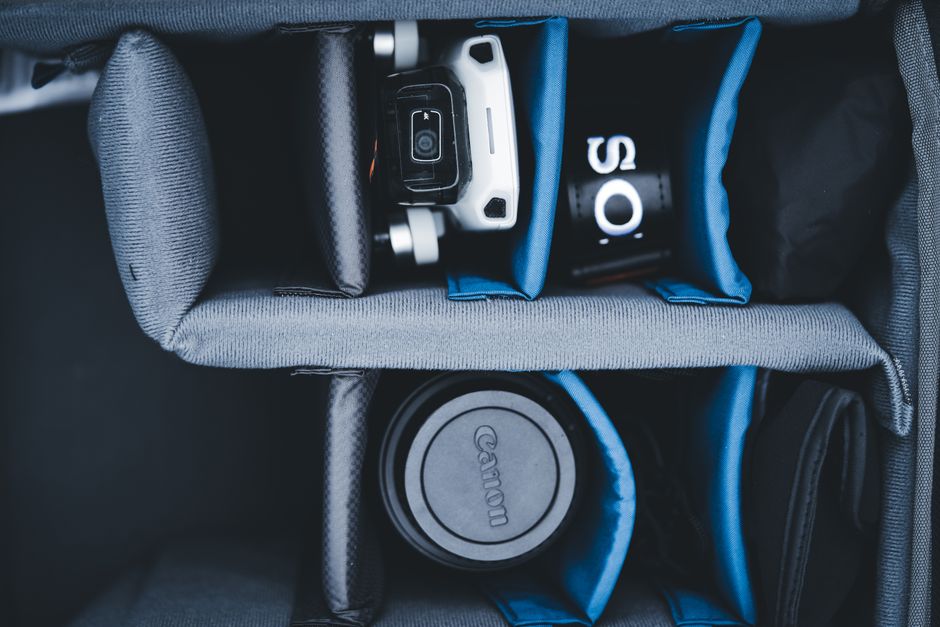
Place a clothes cube in the lower main area and your overnight pouch above it. Put soft layers around awkward gaps without forcing the zip closed. If you carry camera equipment, use suitable protective padding and keep its weight close to your back; do not let loose lenses migrate into the outer edges.
Then choose one accessible route to the journey pouch. If you intend to use a side opening, position the pouch directly behind it and practise retrieving it with the bag safely resting on a surface. A side zip offers little benefit when a tightly wedged clothes cube blocks everything behind it.
Keep the packed bag at the smallest configuration that comfortably holds your kit. Extra room is useful for packing, but it need not become an invitation to add another outfit. Before leaving your room, close every access point and secure loose straps so they cannot trail across steps.
Pack the Nomatic around a fixed pocket routine
For the Nomatic, begin by assigning jobs to the pockets your version actually has. Give the journey pouch one location, toiletries another, and charging equipment another. Resist spreading similar objects across several small spaces: remembering which pocket holds the cable becomes harder when a platform change is announced.
Load the main compartment with the same clothes and overnight kit used in the Peak Design layout. Keep denser equipment towards your back when carrying it as a backpack. If your model has a separate footwear section, remember that filling it can reduce the space available elsewhere. Pack shoes in a washable sack and keep damp soles away from clean clothes.
Place the overnight pouch immediately inside the opening you will use once the bag is stowed. Check that you can remove it without disturbing the footwear or loosening the whole load. Built-in organisation is most useful when each pocket has a predictable purpose, rather than becoming storage for miscellaneous extras.
If your Nomatic offers different carrying arrangements, set it up for the station walk before checkout. Changing straps beside a busy carriage door is an avoidable distraction. Use whichever arrangement lets you carry the load securely while keeping a hand available for a rail.
Rehearse the stairs and platform change
Pack fully, put on your travel jacket and walk around at home. Try a short flight of stairs where it is safe to do so. If the bag pulls you backwards or makes you reach for support with both hands, remove weight or rearrange it before departure.
For either bag, use both shoulder straps during longer station walks and adjust any fitted support straps to suit you. Keep your phone and ticket accessible without holding them throughout the walk. Pause somewhere clear of foot traffic to check departure information.
A useful rehearsal is to put the bag down, retrieve your ticket, replace it and shoulder the bag again. Repeat after moving the journey pouch. With the Peak Design, this checks whether your chosen opening is genuinely useful. With the Nomatic, it checks whether your pocket routine is memorable. The successful layout is the one you can operate calmly.
Board once, then make space
Before boarding, take out what you expect to need at your seat: water, food, a layer and the journey pouch. Keep these together in a small foldable tote if that helps. Avoid turning a second bag into another heavy load; it should be easy to put away when you leave the train.
Storage varies between European trains and carriages. Look at the available rack before lifting. If an overhead space is unsuitable or the lift feels unsafe, use an appropriate larger luggage area instead. Do not force either bag into a gap or leave it obstructing the aisle, doors or another passenger’s seat.
For the Peak Design, close all access zips before lifting and use the appropriate handles. For the Nomatic, check that external pockets and any alternative carry straps are secured. In either case, stow the bag in a stable position and keep valuables with you, particularly when the main luggage is away from your seat.
Set up overnight access before bedtime
Remove the overnight pouch before settling your main bag into the compartment’s luggage space. Add tomorrow’s underwear and socks to that pouch in advance. Keep your sleepwear reachable, and use a small separate bag for clothes you take off so they do not spread across a shared compartment.
With the Peak Design, this means lifting out the top pouch before the clothes cube becomes awkward to reach. With the Nomatic, it means using the opening you planned around, rather than searching several pockets in dim light. Neither routine should require laying the entire bag open on a berth.
Keep your ticket, valuables and essential medication accessible according to your needs, and follow staff instructions about documents and compartment arrangements. Put the morning wash kit back into its pouch after use. A contained routine makes an early arrival much easier.
Reset at the next cheap room
At your hostel or guesthouse, unpack by task: laundry out, toiletries to the bathroom, electronics to charge. Refill the journey pouch and prepare the overnight kit before the next departure. If something went unused and repeatedly blocked access, move it deeper or reconsider bringing it next time.
The aim with either bag is a repeatable sequence: carry comfortably, board with essentials ready, stow safely and retrieve only what you need. That leaves more attention for finding your platform, walking to your accommodation and enjoying the place you came to see.