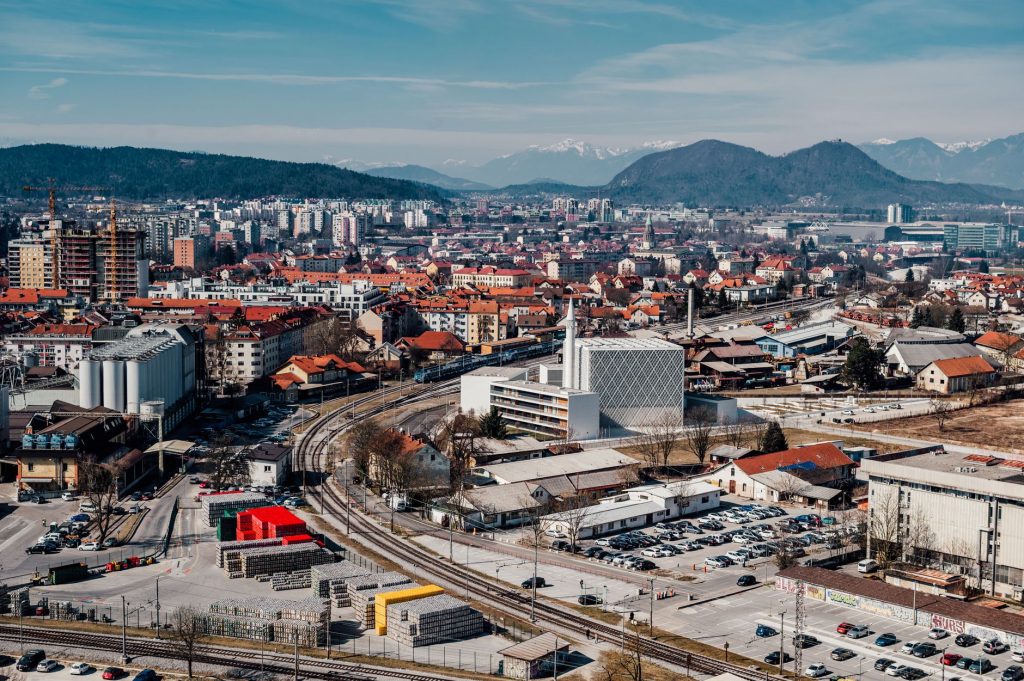
A car-free weekend in Ljubljana works best when your guesthouse is part of the travel plan, rather than simply somewhere to sleep. A riverside address can be lovely until you are pulling a suitcase through busy pedestrian streets, while a room closer to the station may make both ends of the weekend easier. The right compromise depends on your luggage, arrival time and willingness to walk.
I would choose one base for the whole stay and plan the first and last journeys before booking. That means checking the actual entrance, agreeing how to leave bags and deciding what happens if transport is delayed. You can then spend the middle of the weekend exploring instead of moving between rooms.
Start with your arrival and departure
Write down where you expect to arrive in Ljubljana: the railway station, the bus station or a transfer drop-off. If you are flying, separate the airport journey from the final journey to the guesthouse. An airport connection that reaches the city does not necessarily leave you beside your accommodation.
Next, note your departure point and how early you need to be there. For a short stay, an awkward final morning can outweigh the pleasure of being slightly closer to the river. Someone leaving early with a large case has a different ideal base from someone departing after lunch with a backpack.
Use a walking route between the arrival point and the property’s entrance, rather than judging the straight line on a booking map. Look for crossings, turns and the final approach. Treat the suggested walking time as a starting point: luggage, rain and finding an unfamiliar doorway all add friction.
Compare three kinds of guesthouse location
Closer to the railway and bus stations
A station-side base deserves consideration if you arrive late, leave early or dislike carrying luggage. Your arrival and departure walks can be simpler, and you can explore the centre without a suitcase. This is particularly useful when the room itself matters more than having the historic streets immediately outside.
Check the exact street, though. Proximity to transport does not tell you whether a room is quiet, whether the pavement route is convenient or whether the entrance is obvious after dark. Ask which direction the bedroom faces and read the property’s access description carefully.
Between the stations and the riverside centre
For a first weekend, I would begin the search in the area between the stations and the central riverside streets. This offers a useful compromise: you can aim for a manageable arrival walk while staying within walking reach of the places you came to see. Compare individual addresses rather than relying on a broad neighbourhood label.
Put both journeys on the map: station to guesthouse, then guesthouse to a central landmark such as Prešeren Square. If the first looks comfortable with bags and the second looks pleasant without them, you have a promising base. Still check hills, stairs and access to the actual room.
Within the pedestrian centre or Old Town
Choose a central pedestrian address if stepping straight into the historic streets is your priority. Ljubljana’s riverside centre lends itself to wandering, stopping for a drink and returning to your room between outings. Being nearby can also make a relaxed evening easier.
The trade-off comes at the edges of the stay. Do not assume a taxi or transfer can stop at your door. Vehicle access can be restricted, and the permitted drop-off may leave a final walk. A central room can also face lively evening activity. Confirm access and room position before treating the address as an automatic upgrade.
Separate vehicle drop-off from luggage storage
These solve different problems. Vehicle drop-off tells you where a driver can leave you; luggage storage tells you what happens to your bags before check-in or after checkout. A guesthouse may offer one without the other, so ask about both explicitly.
For drop-off, request the nearest suitable stopping point and directions from there to the entrance. Ask whether the route includes steps or an awkward surface for wheeled luggage. If you need step-free access, confirm the entire route into the room, including thresholds and any internal staircase.
For storage, establish the hours, collection arrangements and whether someone must be present. A small guesthouse may not have a continuously staffed reception. Self check-in can help with a late arrival, but it does not automatically provide somewhere to leave a suitcase the following afternoon.
- Before check-in: can you leave bags, and from what time?
- After checkout: can you collect them at your planned departure time?
- Access: who lets you in, and what happens if your arrival is delayed?
- Location: are the room, reception and bag storage at the same address?
Build a simple arrival plan
Before leaving home, save the address, entrance instructions and a map you can use offline. Keep the property’s contact details somewhere accessible. If the booking name differs from the sign at the door, make a note of both. For a small guesthouse, an entrance photograph supplied by the host can be more useful than another map pin.
Plan to reach the guesthouse or agreed bag store first, rather than dragging luggage through an ambitious sightseeing route. Once your hands are free, make the first outing easy: walk towards the river, find your bearings around the central bridges and stop for something to eat. Leave activities with fixed entry times for when arrival uncertainty has passed.
If you arrive before bag storage opens, decide in advance whether to adjust your journey or arrange another storage option. Do not build the day around an unconfirmed favour. Likewise, tell the host about a late arrival while you still have time to resolve access questions.
Use the same base throughout the weekend
A single guesthouse gives the weekend a useful rhythm. Keep your essentials in a small day bag and leave the rest behind. You can spend one part of the day around the riverside and Old Town, then choose another walk, a museum or a quieter break according to the weather and your energy.
Use the return journey as part of the booking decision. If you expect to come back for a rest before dinner, a central address may earn its keep. If you normally leave after breakfast and return only to sleep, the station-side option may suit you just as well. The cheapest room is less appealing if its location repeatedly disrupts your plans.
Make departure a planned final outing
On the last day, work backwards from your train, coach or airport connection. Allow time to collect bags, use the bathroom if available and reach the correct departure point. Keep a comfortable margin for unfamiliar crossings and finding your platform or stop; do not use an unloaded sightseeing pace to estimate a walk with luggage.
If storage is confirmed, finish with a walk or meal that brings you naturally back towards the guesthouse. Avoid ending across town simply because checkout has left a gap in the day. If storage is unavailable, an earlier onward departure may be more enjoyable than spending hours managing a suitcase.
Before booking, you should be able to describe both ends of the stay in a sentence: how you reach the door, where the bags go and how you leave. Once those details are settled, choosing between station convenience and pedestrian-centre atmosphere becomes much easier. Your base supports the weekend from the first arrival to the final walk out.