Japan has a reputation for being expensive, and parts of it genuinely are. But the country also offers several accommodation styles that can make a modest travel budget stretch further. Capsule hotels, manga cafes, compact business hotels, and simple traditional inns each solve a different problem. The trick is choosing the right one for your night, rather than assuming the smallest advertised rate means the best deal.
I would mix accommodation types across a trip: a capsule for a short solo stop, a business hotel when privacy matters, and a budget ryokan for a slower stay. Before booking, compare the total cost, the journey from the station, and what you need to feel rested the next morning.
Capsule Hotels: Not Just for Salarymen Anymore
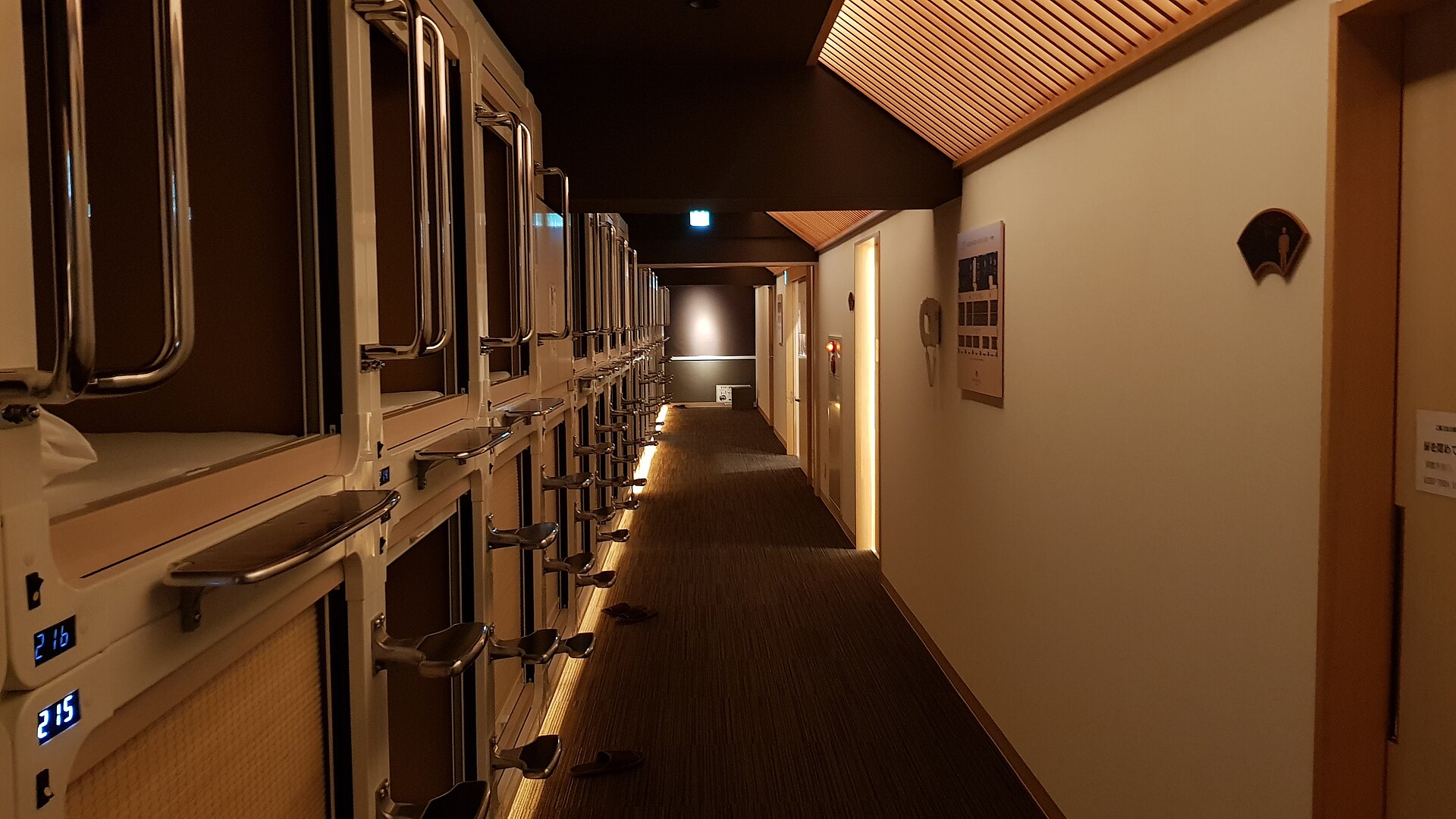
Capsule hotels can be a practical choice for solo travelers who want a proper bed without paying for a private room. Designs range from simple sleeping pods to larger cabin-style spaces. Names such as Nine Hours and First Cabin are useful starting points, but check the individual property rather than expecting every location to offer the same facilities.
A capsule usually buys you a sleeping space, with bathrooms and other facilities shared. A curtain or screen may provide visual privacy without blocking sound. If you are a light sleeper, bring earplugs and consider whether people arriving late or setting early alarms will leave you too tired to enjoy your day.
- Check whether your chosen floor or section admits you; some properties separate guests by gender or restrict admission.
- Read the luggage policy. Your suitcase may stay in a locker or designated storage area, away from your capsule.
- Look for power outlets, ventilation details, and the actual sleeping-space dimensions instead of judging comfort from wide-angle photographs.
- For consecutive nights, ask whether you must vacate the sleeping area during daytime cleaning and whether luggage can remain stored.
Pack toiletries, sleepwear, and tomorrow’s clothes in a small pouch before settling in. You will avoid repeatedly opening your suitcase in a shared area. If communal bathing is part of the appeal, check the bathing arrangements and any tattoo policy before committing.
Manga Cafes: The Overnight Secret
Manga cafes, or manga kissa, are primarily places to read comics and use computers. Some also sell overnight time packages, making them an option for a gap between accommodations. Manboo! and Kaikatsu Club are names to investigate, but booth styles, shower access, and overnight rules depend on the branch.
Choose carefully between a reclining chair and a flat booth. A flat surface can make resting easier, but neither guarantees the comfort or quiet of a hotel. Check whether the space is enclosed, whether lights remain on nearby, and whether there is a nonsmoking area. Bring an eye mask and keep valuables close.
Before paying, ask when your package begins and ends, how extra time is charged, and whether showers, towels, or blankets cost extra. Have your passport available and ask what registration or membership is required. Do not assume that a drinks station means meals are included or that every branch has a shower.
This is most useful as a planned fallback for one night, rather than the foundation of an entire holiday. For a midnight flight arrival, first check whether you can actually reach the branch after landing. Transport schedules, immigration, and baggage collection may make an airport-area hotel a more workable choice.
Business Hotels: Your Reliable Budget Baseline
Japanese business hotels deserve a place in any budget comparison. Chains such as Toyoko Inn, APA Hotel, and Super Hotel are starting points for finding compact private rooms. A private bathroom and a door you can close may be worth paying a little more for, especially after several nights in shared accommodation.
Read the room description closely. Check bed width, smoking status, bathroom facilities, and whether breakfast is included in your particular plan. A small double bed may feel cramped for two people with luggage. Compare the price of a twin room before deciding that the cheapest double is a bargain.
Compare the hotel’s direct booking page with booking platforms, using identical dates, occupancy, meals, and cancellation conditions. Direct booking is worth checking, but it is not automatically cheaper. If using a translated Japanese booking page, take extra care with payment terms and save the confirmation somewhere accessible offline.
Location can outweigh a small room saving. Look at the walk from the station exit, not just the distance from the station name on a map. For an early departure, somewhere within an easy walk of your departure station can reduce stress and the temptation to pay for a taxi.
Budget Ryokans: The Traditional Experience Without the Price Tag
A traditional inn does not have to mean an elaborate dinner and a private hot-spring bath. Simpler, family-run ryokans can offer tatami rooms and futon bedding with fewer extras. Smaller towns around places such as Takayama, Nikko, and the Izu Peninsula are worth considering when that style of stay fits your route.
Check whether the rate is per person or per room, and enter the correct number of guests before comparing totals. Room-only, breakfast, and dinner plans are different purchases. A low starting rate may exclude meals, while a meal package can make sense somewhere with limited evening dining nearby.
Ask about arrival deadlines before booking a dinner plan. Traditional inns may serve meals at fixed times, and arriving late can mean missing the dinner you paid for. Mention dietary requirements in advance and wait for confirmation; a small kitchen may have limited flexibility.
Shared bathing also needs a little preparation. Wash and rinse before entering the communal bath, keep towels out of the water, and follow the inn’s posted rules. Check whether bathrooms are shared, whether a bath can be reserved privately, and whether the property actually has an onsen. Traditional accommodation does not automatically include hot-spring water.
Remove shoes where instructed and keep them off the tatami. If sleeping on a floor-level futon or climbing stairs would be difficult, ask about bedding and access beforehand. These details matter more to a comfortable stay than decorative photographs.
Hostels: A Useful Base for Longer Stops
Hostels offer another balance of savings and comfort, particularly when you want a kitchen or somewhere to meet other travelers. K’s House is one name to include in your search. Compare individual properties for dorm layout, lockers, curtains, kitchen access, and quiet hours.
A kitchen can help with food spending, but check what equipment and refrigerator space are available. Simple breakfasts, supermarket groceries, or a convenience store meal can be useful between meals out. Label stored food, clean up promptly, and follow the hostel’s rules about eating in sleeping areas.
For two travelers, compare the combined cost of dorm beds with a private hostel room and a business hotel. Factor in towel rental, luggage storage, and the transport needed to reach the property. Sharing a private room sometimes makes more practical sense than booking separate beds.
Timing Matters More Than Category
Cherry blossom travel, Golden Week, autumn foliage, and local events can put pressure on accommodation. Their effect varies by destination and date. Avoid assuming that an entire month is cheap: October can be busy in popular areas, and New Year travel can complicate an early January stay.
If your schedule allows, compare nearby dates and weekday nights before changing accommodation categories. Reserve the busiest stops first, then build the flexible nights around them. Check cancellation deadlines carefully so that a provisional booking does not become an unexpected expense.
Finally, make a short checklist for every stay: total price, guest eligibility, arrival deadline, luggage arrangements, and the route from your previous stop. A budget bed works best when you can reach it easily, understand the rules, and wake up ready to explore Japan.