You know that feeling when the person two rows back starts coughing like a diesel engine, and you suddenly realize you’re breathing the same air for the next six hours? That’s the moment most people wish they’d thought ahead. But here’s the stat that should wake you up: a 2018 study by Auburn University found that a sneeze can spread droplets across three rows of seats in under 30 seconds. And that was pre-COVID. The plane’s HEPA filters catch viruses, sure, but they don’t catch the guy who sneezes into his hand then touches the armrest you’re about to grab.
This isn’t about being paranoid. It’s about being prepared. Here are the nine things I do — and the exact products I use — to make flying safer without turning into a full-time germophobe.
Step One: Upgrade Your Mask Game (Stop Using Surgical Masks)
Surgical masks are better than nothing, but they leak. Badly. The gap at the nose bridge lets unfiltered air straight in. If you’re serious about not catching what the guy in 14B has, you need a respirator-style mask that seals.
The mask that actually works: 3M Aura 9205+ N95
This is the gold standard. The 3M Aura 9205+ ($2 per mask on Amazon, sold in boxes of 20) has a three-panel design that folds flat and creates a real seal across your nose and chin. It’s NIOSH-approved, which means it filters at least 95% of airborne particles. The braided head straps are more comfortable than the rubber bands on cheaper masks. One box lasts a full round-trip if you change every 8 hours.
One thing people screw up: they wear the same N95 for a whole vacation. Don’t. The elastic degrades. Swap to a fresh one every 8-10 hours of wear.
When you can skip the mask
If you’re flying to a destination with empty airports and good ventilation — think Iceland in February — you can probably drop the mask once you’re seated. But for crowded hubs like Heathrow or JFK, keep it on through boarding and deplaning. That’s when the viral load is highest.
Step Two: Disinfect Your Zone in 90 Seconds
The tray table is the dirtiest surface on a plane. A 2015 study by Travelmath found tray tables have 2,155 colony-forming units per square inch. For context, the toilet flush button has 265. You’re eating off that thing.
The $3 solution that works
Pack a pack of Clorox Disinfecting Wipes (the ones with bleach, not the gentle kind) in a Ziploc bag. As soon as you sit down, wipe down the tray table, the seatbelt buckle, the armrests, and the window shade handle. Let it air dry for 60 seconds. That’s it. The bleach kills norovirus, influenza, and cold viruses in 30 seconds of contact time.
Don’t wipe the seatback screen. The alcohol in the wipes can strip the oleophobic coating. Use a dry microfiber cloth instead.
What about the air vent?
Point the overhead air vent directly at your face and set it to medium. The airflow creates a cone of clean air around your head and pushes other people’s germs away. This is not a myth — it’s basic fluid dynamics. The HEPA-filtered air from the vent is cleaner than the air in the cabin.
Step Three: The Noise-Canceling Double Duty
Noise-canceling headphones aren’t just for blocking out crying babies. They also stop you from touching your face. If you’ve ever caught yourself rubbing your eyes or picking your nose on a long flight (don’t lie, we all do it), you know that’s a direct vector for infection.
Why the Sony WH-1000XM5 is my pick
The Sony WH-1000XM5 ($350) has the best active noise cancellation on the market, period. But the real safety feature is the physical barrier. When you’re wearing over-ear headphones, you can’t touch your ears or the sides of your face. The foam earcups also block out ambient noise, which means you keep the volume lower — protecting your hearing. Battery life is 30 hours on a single charge.
Budget alternative: Anker Soundcore Life Q30 ($80). 90% of the noise cancellation for 25% of the price. Battery life is 40 hours.
| Headphone | Price | Battery Life | Noise Cancellation Quality |
|---|---|---|---|
| Sony WH-1000XM5 | $350 | 30 hours | Best in class |
| Anker Soundcore Life Q30 | $80 | 40 hours | Very good for price |
| AirPods Pro 2 | $250 | 6 hours (plus case) | Excellent, but earbuds |
Step Four: Hydrate Like Your Immune System Depends On It (It Does)
Cabin air has humidity levels of 10-20%. That’s drier than the Sahara. Dry nasal passages = cracked mucous membranes = easier for viruses to enter your bloodstream. Your immune system works best when your mucus membranes are moist.
Two things to do
1. Drink water, not alcohol or coffee. Alcohol and caffeine are diuretics. They dehydrate you faster. Stick to plain water. Aim for 8 ounces per hour of flight. Bring an empty 32-ounce Nalgene bottle through security and fill it at a water fountain near your gate.
2. Use a saline nasal spray. A product like Ayr Saline Nasal Mist ($6 at CVS) keeps your nasal passages moist. Spray once in each nostril every two hours. It’s not a drug, it’s just salt water. But it stops your nose from drying out and cracking.
Step Five: Stop Your Bags From Growing Legs
Theft on planes is rare but real. The most vulnerable moment is when your bag is in the overhead bin and you’re asleep. A professional thief can open a zipper, grab a wallet, and close it in under three seconds.
The lock that actually stops them
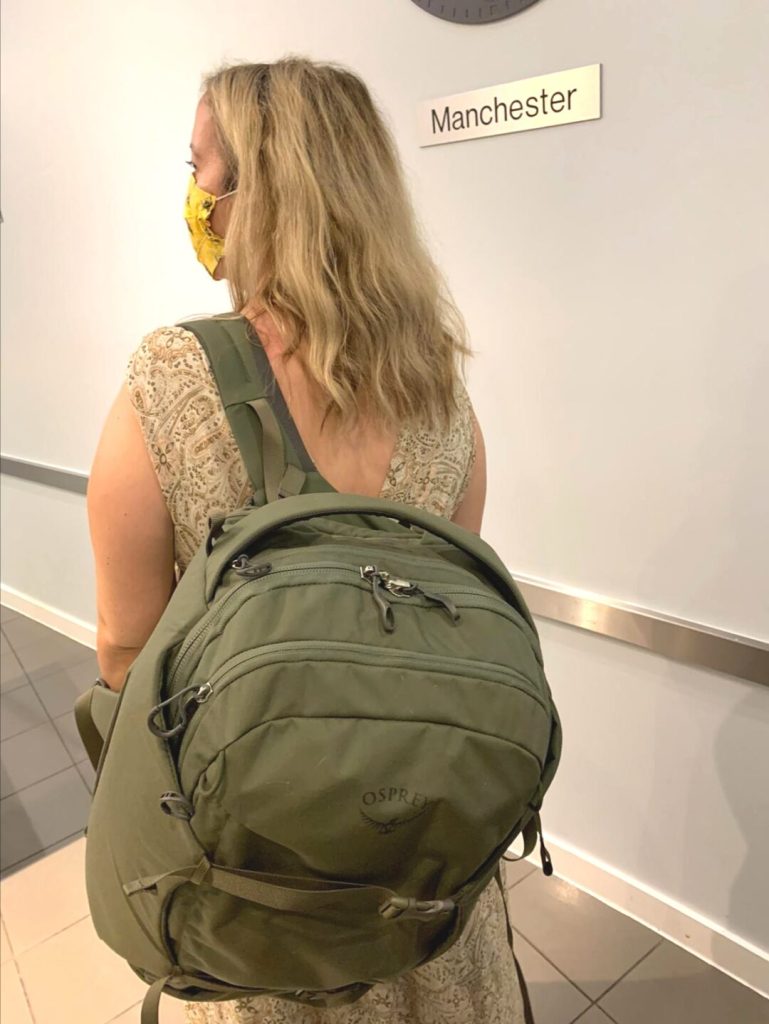
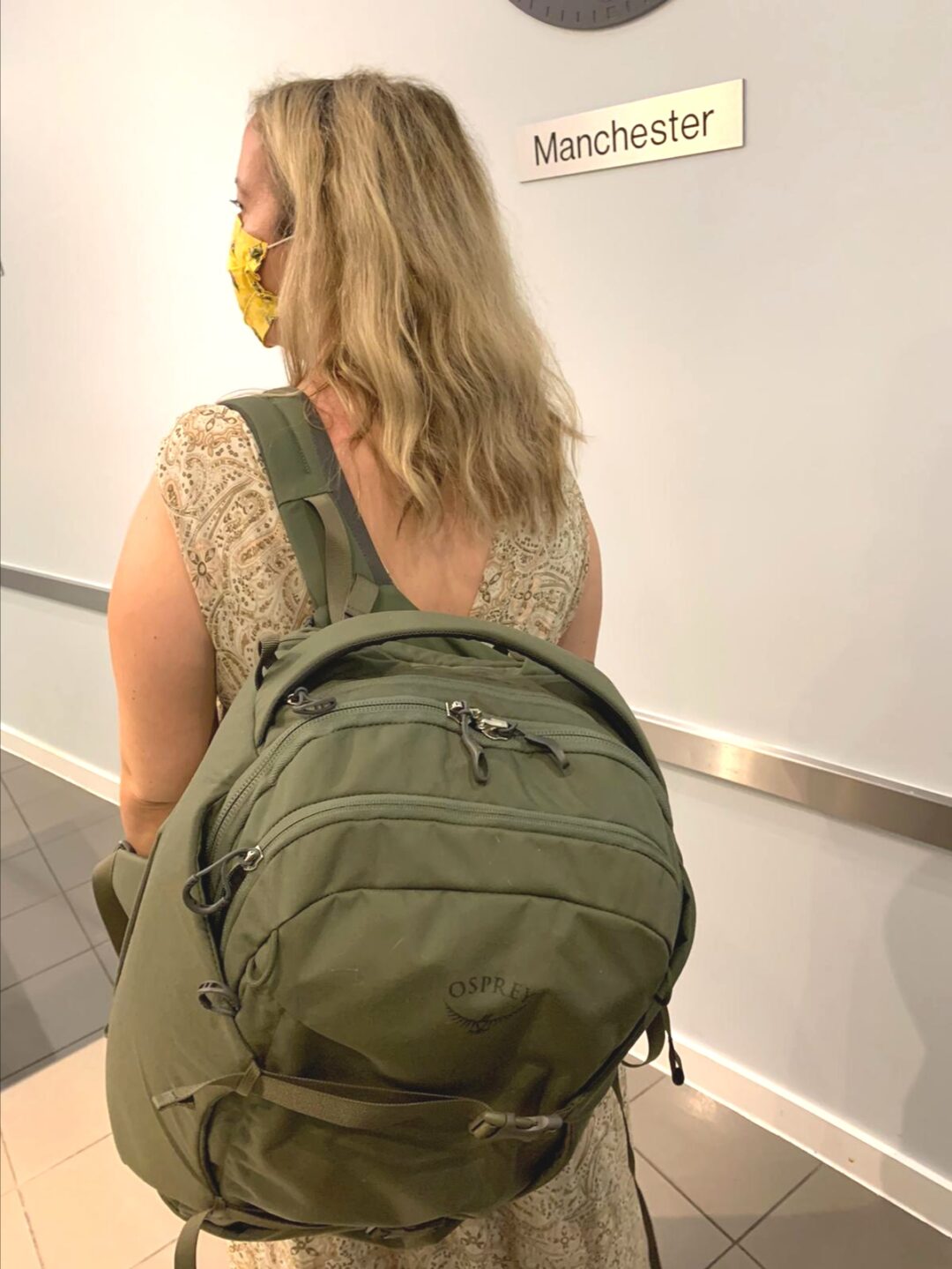
The Pacsafe Travelsafe ($30, available on Amazon) is a portable safe that looks like a mesh bag with a lock. You wrap it around your backpack or suitcase, then lock it to the seat frame or the overhead bin handle. The stainless steel mesh is cut-resistant. A thief would need wire cutters and 30 seconds of uninterrupted time — which they don’t have on a plane.
When you don’t need it: If you’re flying short-haul (under 3 hours) and you’re awake the whole time, skip the safe. Just keep your valuables in a cross-body bag under your jacket.
The tracker for peace of mind
Slip an Apple AirTag ($29) or a Tile Pro ($25) into your checked luggage. If the airline loses your bag, you can see exactly where it is. The AirTag uses the Find My network — it pings off nearby iPhones. The Tile Pro uses its own network, which is smaller but still useful in airports.
Step Six: The Seating Strategy Nobody Talks About
Where you sit matters more than you think. A 2018 study from the University of Bristol found that the risk of infection is highest in the middle seat because that person interacts with both neighbors. The window seat has the lowest risk — fewer people walk past you, and you’re not in the aisle where people brush against you.
My recommendation
Book a window seat in the front third of the plane. The front rows get fresh air from the engine bleed air first. The back of the plane gets recirculated air that’s passed through more people. Also, the front rows board first and deplane first, which means less time stuck in the aisle breathing on each other.
If you can’t get a window seat, at least sit on the left side of the plane. Why? Most people are right-handed and tend to lean right when they sleep. The left side of the aisle gets less shoulder contact.
Step Seven: Don’t Touch Your Phone During the Flight
Your phone is a petri dish with a screen. A 2017 study from the University of Arizona found that phones carry 10 times more bacteria than a toilet seat. When you pull out your phone on a plane, you’re transferring that bacteria to your hands, then to your face.
The simple fix
Bring a paperback book or a Kindle. The Kindle’s screen is sealed plastic — much harder for bacteria to survive on. Plus, you won’t be tempted to check Instagram every 10 minutes, which means fewer touches. If you must use your phone, wipe it down with a Clorox wipe before the flight. Just don’t use bleach wipes on the screen — use a 70% isopropyl alcohol wipe instead.
Step Eight: The Pre-Flight Immune Boost That’s Not a Scam
There’s no magic pill that prevents colds. But there is one supplement that has real data behind it: zinc lozenges. A 2012 Cochrane review found that zinc lozenges (taken within 24 hours of symptom onset) reduced the duration of the common cold by 33%. The key is the zinc ions stay in your throat and interfere with viral replication.
The exact product
Cold-Eeze zinc lozenges ($8 at Target, 27-count bag). Start taking them the day before your flight and continue every 3-4 hours during travel. The zinc acetate formulation is the one that works — not the zinc gluconate. Check the label.
Important: Don’t take zinc on an empty stomach. It causes nausea. Eat a small snack first.
Step Nine: The Deplaning Protocol
The moment the seatbelt sign turns off, everyone stands up and crowds the aisle. That’s when the viral load spikes. People are talking, breathing heavily, and packed shoulder-to-shoulder.
Wait 3 minutes
Stay seated until the first 10 rows have cleared. The air in the cabin is still being filtered, and the crowd density drops by 60% in those three minutes. Then stand up, put your mask on (if you took it off), and walk out calmly. You’ll miss the bottleneck at the jet bridge.
One more thing: Wash your hands with soap and water as soon as you get to the terminal bathroom. Hand sanitizer is okay, but soap and water physically remove the virus particles. Scrub for 20 seconds. Sing “Happy Birthday” twice if you need a timer.