A Singapore coffee shop can look like one busy restaurant until you try to order. One stall is frying noodles, another is serving rice with dishes, and someone else controls the drinks. Tables sit between them, apparently shared by everyone. The trick is to treat your meal as a small assembly job: find a seat, understand how each stall works, and bring the separate orders together.
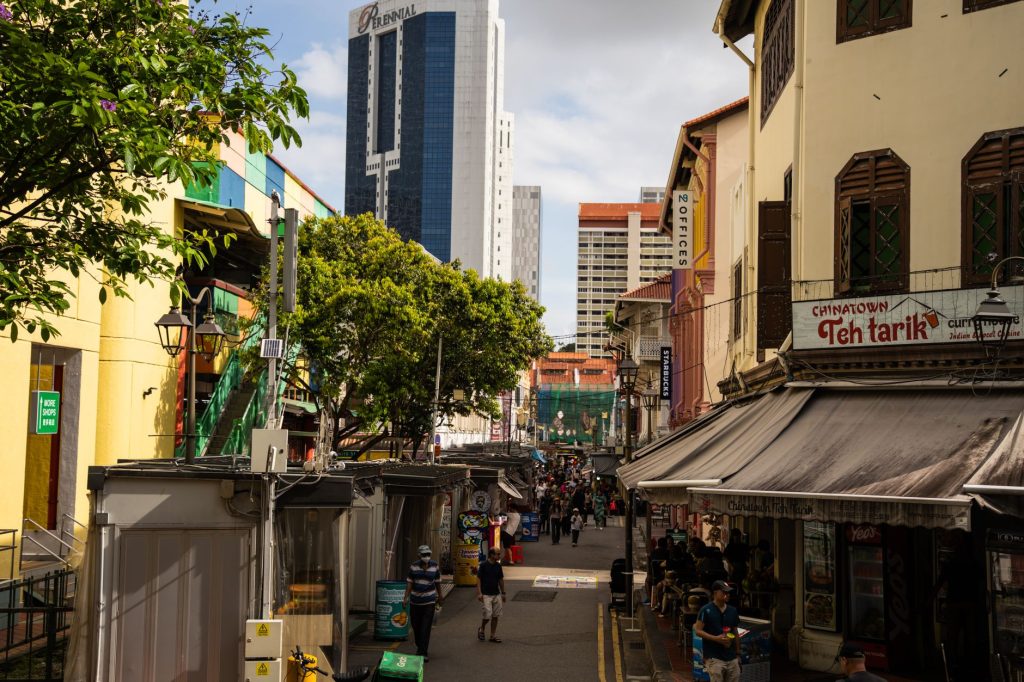
These neighbourhood eating places are often called kopitiams. Some are open-sided spaces beneath housing blocks; others occupy older shophouses. They overlap with hawker centres in the way you order from individual stalls, but a coffee shop is usually a smaller operation. For an inexpensive, satisfying meal, navigating that arrangement matters more than arriving with a long list of dishes.
Read the room before joining a queue
Pause just inside and look for three things: the food stalls, the drinks counter, and the place where used trays and crockery go. Notice whether customers wait at stalls holding trays or return to their tables after ordering. A queue might be for placing orders, collecting them, or both, so a quick “Is this the ordering queue?” can save an awkward wait.
Menus belong to individual stalls. You generally cannot sit down and order dishes from across the room through one server. The person approaching your table may take drinks orders only. Opening hours also vary between stalls: a coffee shop can be functioning while the particular stall you wanted is closed or still preparing.
Before committing, check that your chosen stall is serving the dish you want. Look at its displayed menu and ask about anything unclear, including portion size and whether additions cost extra. This keeps a budget meal predictable without needing to know every local dish in advance.
Find a seat without claiming somebody else’s
At quieter times, choosing a table is straightforward. When the room is busy, look carefully before sitting. A tissue packet, umbrella or other small item may mean someone has reserved the place while ordering food. This practice is commonly called chope. A chair that looks empty is not necessarily available.
Do not move somebody’s belongings. If a table is partly occupied, ask, “Is anyone sitting here?” and indicate the seats you mean. Sharing a table is normal in busy spaces, but it still starts with permission. Keep bags off spare chairs when others need somewhere to sit.
With a companion, one person can remain at the table while the other orders, then swap. Alone, you can identify an available place before ordering, but keep valuables with you. Some shops have table numbers used for food delivery; note yours if there is one. Do not assume every stall offers delivery simply because the tables are numbered.
Order one stall at a time
Choose a main dish first. A bowl of noodles, chicken rice, or rice with selected dishes can make a complete meal without further coordination. If you want several things, establish what each portion includes before adding sides. Ordering independently at three stalls can easily leave you with more rice, soup or food than you intended.
At the front of the queue, give the dish name or point to the menu, then specify the choices offered. A noodle stall might ask about noodle type, soup or dry preparation, and chilli. A rice stall may ask which meat or accompanying dishes you want. You do not need to deliver a fluent speech: answer each question clearly and let the stallholder guide the sequence.
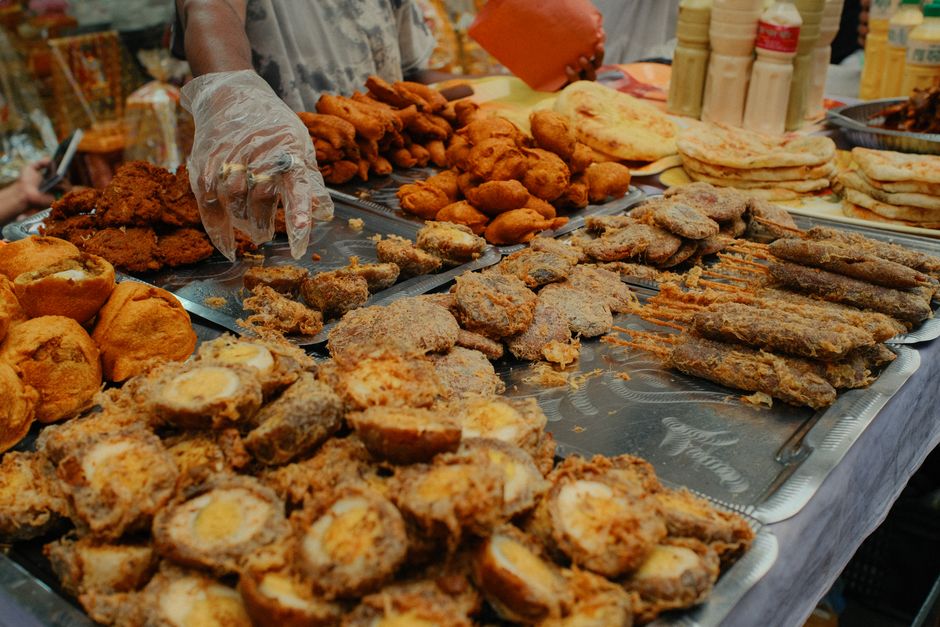
At a stall displaying trays of cooked dishes, wait until the server is ready before pointing out your selections. Ask how the total is calculated if you are unsure. Different dishes and portions may be charged differently, so the number of items alone does not tell you the final bill.
- Confirm whether you should wait for the food or return to collect it.
- If delivery is offered, give the table number or clearly indicate your seat.
- Ask when to pay if the stallholder has not made it clear.
- Keep any collection token or buzzer until your order is ready.
For eating at the shop, say “having here” if asked. For takeaway, “take away” is perfectly understandable; you may also hear dabao. Making that distinction early helps the stall use the right plate, bowl or container.
Expect separate bills and uneven timing
Food and drinks usually involve separate payments, and each food stall handles its own bill. Carry some Singapore-dollar cash, including smaller notes, rather than depending entirely on a payment method displayed at one counter. A QR payment sign does not automatically mean a visitor’s banking app can use it. Ask before ordering if you need a particular payment option.
There is no single kitchen coordinating everyone’s meal. One person may receive rice while another is still waiting for noodles. That is part of the arrangement, not necessarily a missed order. For a group, let people begin while their food is hot, or choose dishes from one stall if eating together matters more than variety.
When collecting food, take the utensils and condiments you need from that stall’s designated area. Look for spoons, chopsticks, forks and small sauce dishes rather than assuming they will arrive at the table. Carry hot soup carefully and keep the route between stalls clear while deciding where to go next.
Make the drinks order separately
The drinks counter is often a separate operation within the coffee shop. In some places, a worker comes around taking orders; elsewhere, you order at the counter. Watch the pattern or ask. You can order food from a stall and buy your drink separately without trying to combine the transactions.
For a first coffee order, a few terms are useful. Kopi commonly means coffee with condensed milk. Kopi o is black coffee with sugar, while kopi c uses evaporated milk and sugar. Ask for kosong if you want no added sugar, or siew dai for less sweetness. Condensed milk itself is sweet, so “no sugar” does not make a condensed-milk drink unsweetened.
For tea, the corresponding starting word is teh. Add peng for iced, or simply explain your preference in English: “Iced black coffee, no sugar” is a useful order. Say the whole order together, including hot or iced, and check what is available if you want something beyond the displayed drinks.
Share the table, then finish the job
Once the food arrives, keep your dishes within your part of a shared table. Leave room for the next person’s tray, and avoid spreading bags or phones across the surface. If ordering dishes to share, ask for extra bowls or plates rather than taking crockery from an unattended stack whose purpose is unclear.
Before leaving, gather your used dishes, utensils and tray. Look for the return point you noticed on arrival, follow its signs, and use separate marked sections where provided, including halal and non-halal returns. Different operators may organise clearing differently; if the destination is unclear, ask a worker where to put your things. Do not assume that a cleaner passing nearby means you should leave everything behind.
Check the table for tissues and small rubbish, take your belongings, and leave the seats available for the next customers. The whole visit becomes easier once you stop expecting a single restaurant service: each stall supplies its part, you connect the orders, and a little attention to the shared space keeps the meal moving.