Your first decision at an Ethiopian restaurant is often less about choosing one dish than working out how the table wants to eat. Several stews and vegetables may arrive together on a wide platter lined with injera, the soft, tangy flatbread that also serves as your utensil. Once you understand that arrangement, the menu becomes much easier to navigate.
You do not need to recognise every dish name before sitting down. A better approach is to establish how sharing works, choose a starting combination, ask specific questions about heat, and check the amount of food before adding extras. Here is the ordering sequence I would follow for a relaxed first meal.
Start by asking how the platters work
Before everyone selects a separate main course, ask: “Are these dishes served together on a shared platter, or does each person get their own?” Restaurants handle this differently. Some offer combination platters for a stated number of people; others let you choose individual dishes that the kitchen arranges together.
Sharing is a useful introduction because you can try contrasting flavours without committing to a whole plate of each. But it is a choice, not an obligation. If someone prefers a separate plate, has an allergy, or does not want meat juices touching their vegetables, say so before ordering. Ask whether the kitchen can serve their food separately rather than trying to divide a communal platter at the table.
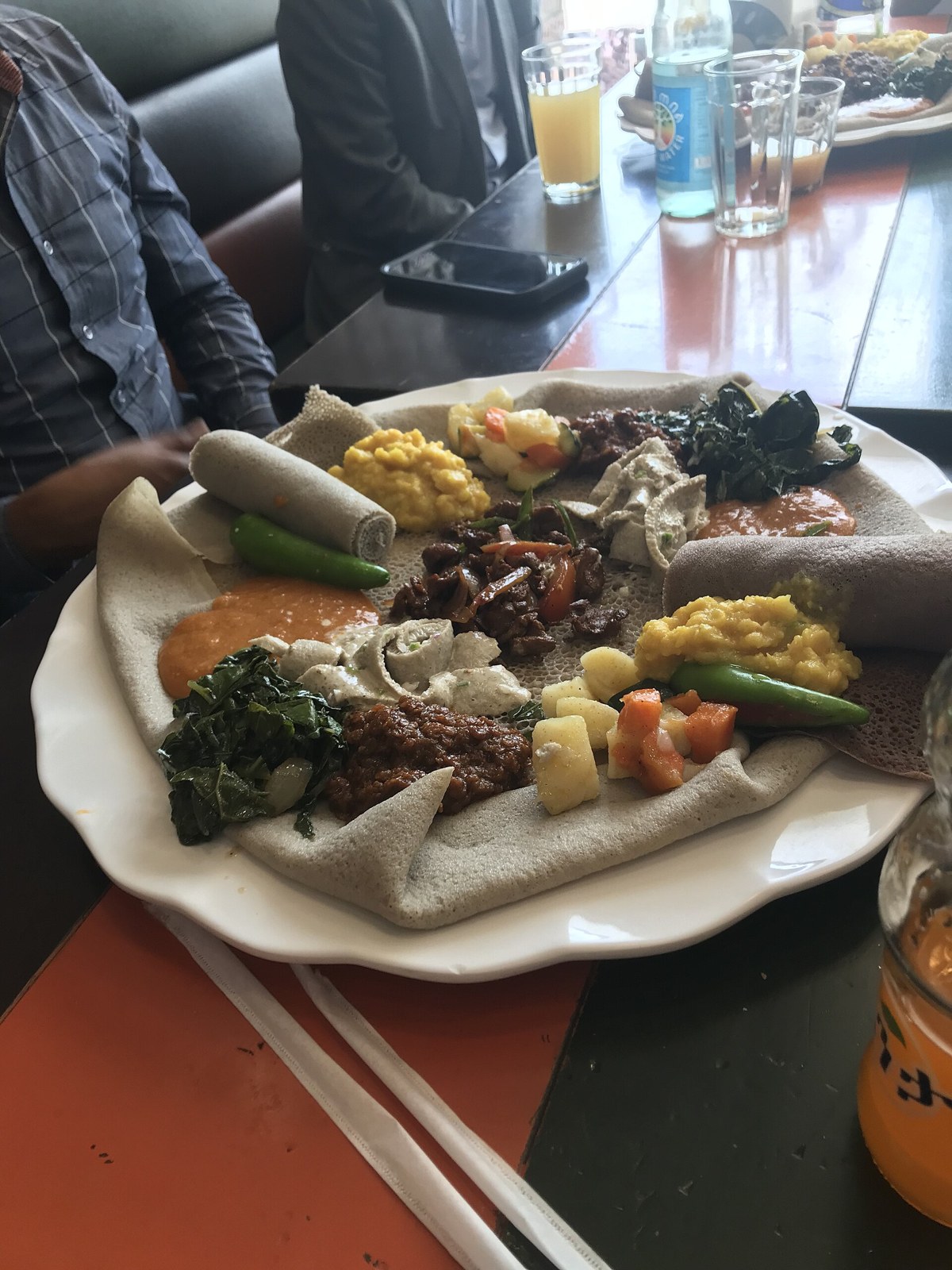
Also check what a combination includes. The menu might specify several vegetable preparations, a meat dish, salad and injera, but the exact selection can vary. “What comes on this platter today?” is more useful than assuming the photograph or a familiar dish name tells the whole story.
Understand injera before choosing extras
Injera is central to the meal. It has a spongy surface that catches sauces and a lightly sour flavour that balances rich stews. You tear off a manageable piece and use it to pick up a small mouthful of food. Extra rolls or folded pieces may come alongside the platter.
Ask whether injera is included and how additional servings are handled. That matters more than immediately ordering another main: you may need more bread to finish the sauces already on the table. The injera underneath the food becomes soaked with those sauces and is part of the meal too.
If you avoid gluten, do not assume injera is suitable just because teff appears in its description. Restaurants may use a blend that includes wheat or other grains. Ask about the actual ingredients and preparation, including cross-contact if that matters for your needs. Similarly, check ingredients in the dishes themselves rather than treating the bread as the only concern.
Choose a starting combination for the table
For a first visit, look for a combination that gives you variety without making the order complicated. A vegetable combination can introduce different textures through lentils, split peas, greens, cabbage or other vegetables, depending on the kitchen. If the group eats meat, you might choose a mixed combination or add one meat dish to a vegetable platter.
The aim is balance: something with a generous sauce, something gentler, and a few contrasting vegetables. You do not need to collect every recognisable name on the menu. Ask the server which available combination provides that balance and whether its portions suit your group.
Menu words can help you ask better questions. Wot or wat commonly refers to a stew; tibs generally describes sautéed pieces of meat. Shiro is typically a smooth preparation made with ground pulses. These are starting points, not guarantees of ingredients, texture or heat. Descriptions and spellings differ, so let the restaurant explain its version.
Ask about spice in specific dishes
“Is Ethiopian food spicy?” is too broad a question to settle your order. Heat varies between dishes, and a platter can contain both fiery and mild elements. Instead, point to the combination you are considering and ask which parts contain chilli and which are the gentlest.
You may see berbere, a spice blend that commonly includes chilli, or alicha, often used for milder preparations. Neither word replaces a conversation about the kitchen’s recipe. If you enjoy aromatic spices but little chilli heat, say exactly that. “I like plenty of flavour, but I need low chilli heat” gives the server something concrete to work with.
Ask whether heat is already cooked into a stew or can be adjusted. A kitchen may be able to leave a hot condiment on the side while being unable to change a prepared sauce. For a table with mixed tolerances, choose mild shared components and ask for spicy sauces separately where possible. Keep an intensely hot dish in its own bowl if its sauce would otherwise spread across the platter.
Check dietary details before confirming
A vegetable selection is a promising place to start for a meat-free meal, but ask whether it is vegan if that is what you need. Clarified butter or spiced butter may be used in some preparations. Explain your requirement plainly: no meat, dairy or other animal ingredients, rather than relying on “vegetable” to cover everything.
Some menus also include raw or lightly cooked meat preparations. If you want all meat thoroughly cooked, make that clear when discussing your choices. Do not assume a familiar-looking name or a brief menu description settles how the dish will arrive.
For allergies, give the server the specific ingredient and ask what the kitchen can accommodate. A shared bread-lined platter brings food into close contact, so separate service may be necessary. Resolve that before choosing a combination, when the kitchen still has room to suggest a workable order.
Confirm portions before adding another dish
A large platter can look like one main course even when it is intended for several diners. Equally, a combination described for two may not suit every pair of appetites. Tell the server how many people are eating, whether you want a light meal or a substantial dinner, and what else you plan to order.
A useful question is: “With the injera included, is this enough for us, or would you suggest one extra dish?” If you want to keep spending under control, check the listed cost of additions and whether extra injera carries a charge. You can make a sensible decision without guessing how far the platter will stretch.
It may be possible to order more later, but ask about preparation time. An extra portion of an available stew might be straightforward; another dish could take longer. Confirm the initial order aloud so everyone knows which combination, extras and separate plates are coming.
When the food arrives, take small bites and settle in
Wash your hands before eating. If you are eating by hand, use your right hand where comfortable, tear a small piece of injera and gather a little food with it. Start with modest mouthfuls while you learn how the bread holds the sauces. Ask for cutlery if you prefer it; enjoying dinner matters more than struggling with an unfamiliar technique.
With a communal platter, take food from the area nearest you and leave room for others. Use a fresh piece of injera for each bite. Begin with a gentler dish, then try a little of a hotter one rather than loading several unknown sauces into your first mouthful.
As the meal goes on, eat the sauce-soaked injera beneath the dishes too. If you need more bread, ask while there is still food to scoop. By then, the order has done its job: everyone has something they can enjoy, the portions make sense, and you have space to discover which flavours you would like to return to next time.