A Georgian bakery can be an excellent place to put together a simple lunch, even when you cannot read a single label. The difficult part is often the first minute: trays of similar-looking pastries, bread disappearing into paper bags, and a queue that seems to know exactly where to stand. You do not need to memorise the whole menu. Start with the shape, ask about the filling, and establish whether the item in front of you is a whole portion or something sold in pieces.
This approach works whether you are in Georgia or visiting a Georgian bakery elsewhere. The selection and service will vary, so treat familiar names as useful clues rather than guarantees. Your aim is modest: one satisfying main item, perhaps something fresh alongside it, and a clear understanding of what you are paying for.
Take a moment before joining the queue
Look for three things: where people order, where they pay, and where they collect their food. In a small bakery, all three may happen at the same counter. Somewhere busier, you might pay a cashier first and take a receipt to the person serving bread. Watch one complete transaction if you can, without blocking the display or doorway.
Then scan the trays. Separate plain bread from filled bread in your mind. Long loaves, flat rounds, folded parcels and open boats give you a rough map of the selection, although shape alone cannot confirm what is inside. Labels may name the bread without explaining its filling. A quick question now is more useful than a confident guess.
If there are tables, check whether they belong to the bakery and whether counter orders can be eaten there. Do not assume the presence of a chair means there is table service. Keep your order simple while you work out the system.
Use shape to narrow down your choice
Long bread with tapered ends
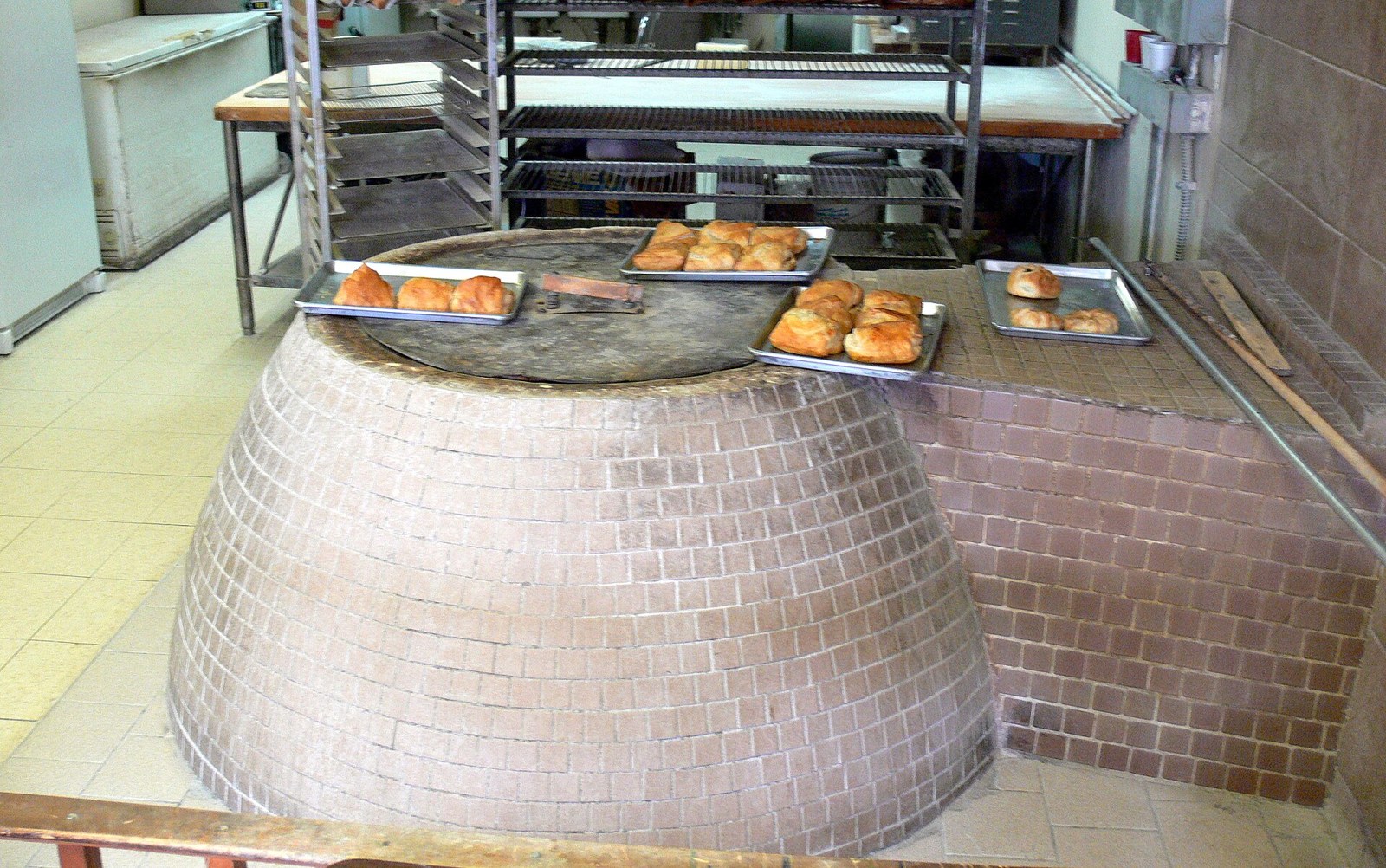
A long Georgian loaf with pointed ends may be shotis puri, often shortened to shoti. It is associated with baking in a tone, a traditional oven. You may see a baker attaching dough to the oven wall or lifting finished loaves out, but not every shop has its oven in view.
Think of this as bread for accompanying other food, rather than a filled lunch on its own. Ask whether the loaf is sold whole and whether a smaller amount is available. If you are buying for one person, a full loaf may be more bread than you want to carry around that afternoon.
Round or folded cheese bread
Khachapuri is a broad name for Georgian cheese bread, not a promise of one particular shape. Imeruli is commonly a round bread with cheese enclosed inside. Megruli commonly has cheese inside and on top. Other styles and bakery adaptations exist, so pointing at the actual item is more reliable than relying on a name alone.
A round cheese bread might be sold whole, as a wedge, or in another portion chosen by the bakery. Ask before ordering “one”. That could mean one slice or an entire round. A folded, flaky cheese pastry may be penovani khachapuri; check the filling, because other pastries can share a similar envelope shape.
An open boat
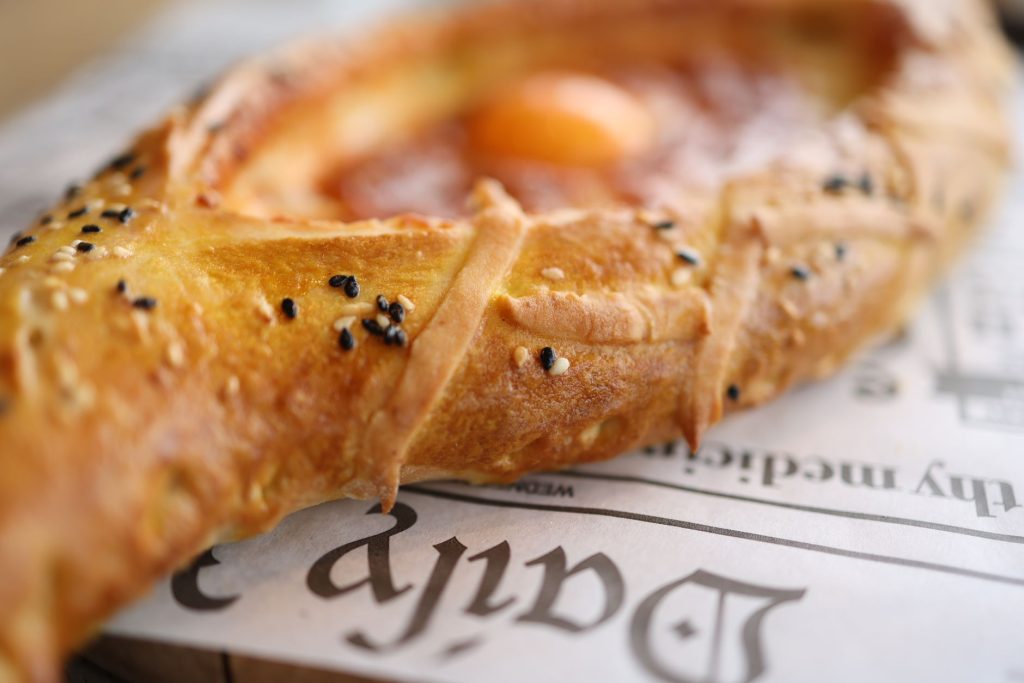
The recognisable boat-shaped Adjarian khachapuri usually has an open cheese centre, with egg and butter often added during preparation or serving. It can be a substantial meal and may be made to order. A display bakery will not necessarily offer it, even if it sells several other kinds of khachapuri.
If you see it on a menu, establish whether it is available now, how long it takes, and whether there is somewhere suitable to eat it. An open, freshly finished boat is less convenient for a walking lunch than an enclosed pastry.
A filled round or sealed parcel
Lobiani is bread filled with beans, commonly mashed and seasoned. It can be a useful alternative when you do not want cheese, but ask about the preparation if you avoid animal products. Bean filling does not by itself establish that the dough, fat or other ingredients meet your needs.
You may also encounter meat-filled breads, including kubdari, associated with Svaneti. Ask which meat is used rather than assuming from appearance. Sweet pastries can look much like savoury ones, too. The question “cheese, beans, meat or sweet?” is a practical starting point, supported by pointing if there is a language barrier.
Confirm the filling before the portion
Once something catches your eye, point to that specific item and ask a short question: “What is inside?” If the answer is unfamiliar, follow with the ingredient you need to establish. “Does it have meat?” is easier to answer than a long explanation of everything you might eat.
For an allergy, appearance and a translated dish name are not enough. Explain the ingredient clearly, using a written translation if you have one, and ask whether staff can confirm the ingredients and possible cross-contact. If they cannot, choose something else. Removing visible cheese or picking nuts off a pastry does not resolve an allergy concern.
Next ask, “Is this one portion?” and indicate the whole item or slice. You can also ask staff to show you the size before they wrap it. If the bread is priced by weight, find out how the amount is chosen. Check the price for the quantity you actually want rather than assuming a displayed figure covers the whole tray or round.
Follow the counter sequence
- Choose one main item. Point, confirm its filling and specify the quantity. Keep a second choice in mind if the tray has just sold out.
- Say whether you are eating in or taking away. This helps staff choose packaging and explain any collection arrangements.
- Ask about heating or waiting. Some items are ready to hand over; others may need warming or baking. Confirm the wait before paying if you are in a hurry.
- Pay where directed. If you receive a receipt or collection number, keep it until your order arrives. Ask which payment methods are accepted if that matters to your purchase.
- Check the handover. Make sure you have the intended quantity, then ask for a napkin and, if needed, cutlery or a bag.
There is no need to deliver every question in a single speech. A calm exchange of pointing, short questions and confirmation usually works better. Stand aside while waiting so the next customer can reach the counter, but remain close enough to hear your order called.
Build lunch around the bread
For a straightforward lunch, start with one filled bread and see what else is available. A cheese or bean filling already gives you more than plain bread alone. If the bakery sells a simple tomato and cucumber salad, that can provide a fresh contrast. Otherwise, you could buy fruit or vegetables separately from a nearby food shop. Check whether any salad comes dressed if you prefer it plain.
Plain shoti works differently: pair it with something to eat alongside it, such as cheese or beans, depending on what is available. Avoid buying a large loaf plus several rich pastries simply because the individual items look manageable. Ask for a smaller portion first where possible; you can order more if you are still hungry.
Before leaving, find somewhere practical to eat. Hot filled bread can release steam when torn open, and cheese can spill from a cut edge. Open the wrapping carefully and let it cool enough to handle. For takeaway, ask how to store anything you will not eat soon. The successful order is not the most elaborate one: it is the bread you understand, in a portion you want, with enough time and space to enjoy it.