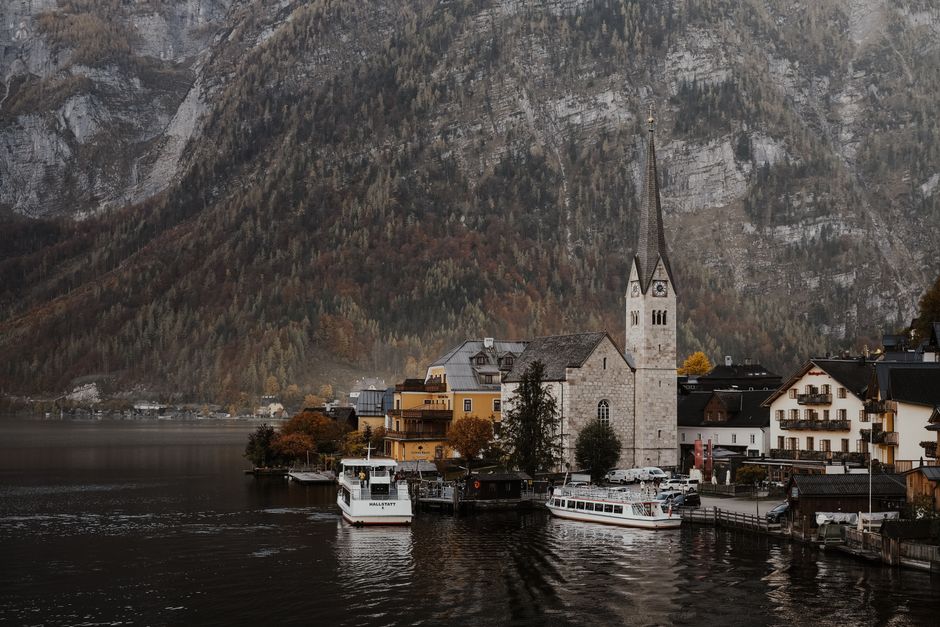
Germany has a strong second-hand clothing culture, driven by environmental awareness and a love for durable, well-made garments. For a traveler on a budget, vintage stores offer a way to pick up unique pieces — often for under €20 — without the markup of tourist boutiques. This guide covers five German cities where you can find concentrated vintage districts, with specific streets, price ranges, and one mistake to avoid in each location.
1. Berlin: The Raw Edge of Friedrichshain
Berlin’s vintage scene is decentralized, but the Friedrichshain district near Boxhagener Platz (Boxi) is the most walkable cluster for budget hunters. You are not looking for curated designer vintage here; you are looking for heavy cotton, military surplus, and 90s sportswear.
Boxhagener Straße between Simon-Dach-Straße and Grünberger Straße
This stretch contains five second-hand shops within 400 meters. Humana (Boxhagener Str. 96) sells by weight — roughly €3 per kilogram for mixed textiles. A winter coat typically costs €8–€12. Picknweight (Boxhagener Str. 70) operates on the same model but with better organization: jeans are sorted by waist size. Expect to pay €15 for a pair of Levi’s 501s in good condition.
Common mistake: Shoppers grab items from the front rack. Berlin locals know that the back corner of each store (often labeled “unsorted”) holds the best finds — deadstock 80s Adidas jackets and unworn GDR-era workwear. Check that section first.
Sunday flea market at Boxhagener Platz
Every Sunday from 10:00 to 18:00, private sellers set up tables. Prices here are lower than storefronts because sellers avoid shop overhead. A wool blazer costs €5–€10. Cash only. Arrive by 11:00 for the best selection; by 14:00, most good items are gone.
2. Munich: High Quality, Lower Quantities in Glockenbachviertel

Munich is expensive. Vintage shopping here requires more patience. The Glockenbachviertel neighborhood, south of the city center, has a small but dense cluster of curated second-hand stores that focus on quality over quantity. You will pay €25–€40 for a piece here, but the garments last.
Vintage & Rags (Müllerstraße 42) is the anchor. They specialize in 1960s–1980s German and Italian leather jackets. A genuine calfskin jacket from the 1970s runs €60–€90 — cheaper than a new synthetic jacket from a department store. The owner inspects every item for moth damage and missing buttons before it hits the floor.
Failure mode: Do not expect fast fashion brands here. Munich vintage stores reject Zara and H&M items. If you bring in a fast fashion piece for trade, they will refuse. Focus on labels like Windsor, Strenesse, or Bogner — German brands from the 70s and 80s that were built to last.
General tip for all cities: Check the inside seams of every jacket and pair of trousers before buying. Dry cleaning in Germany costs €8–€15 per item. A €5 shirt with a stain you cannot remove becomes a €20 mistake after cleaning. If the tag says “nur chemische Reinigung” (dry clean only), factor that cost into your decision.
3. Hamburg: The Sternschanze Weighted-by-Kilo Stores
Hamburg’s Sternschanze district (Schanze) is the epicenter of budget vintage. The street Lagerstraße has three large “Kilo-Läden” (weight-based stores) within a two-minute walk. These are not curated — they are warehouse-style spaces where you dig through bins.
| Store Name | Address | Price per kg | Best Find |
|---|---|---|---|
| Humana Kilo-Store | Lagerstraße 34 | €3.50 | German military pullovers (Bundeswehr) |
| Vintage Kilo Sale | Lagerstraße 12 | €4.00 | 90s band t-shirts (Nirvana, Metallica) |
| Second Hand Kilo Shop | Lagerstraße 8 | €2.90 | Cotton bedsheets (usable as fabric) |
Verdict: For pure budget, the Second Hand Kilo Shop at €2.90/kg is the best option. A full outfit (shirt, trousers, jacket) typically weighs 2–3 kg, costing €6–€9 total. The tradeoff is time: you must sort through bins that are not organized by size or color. Set aside 90 minutes.
What to avoid: Synthetic blends from the 1990s. They pill after one wash and do not regulate temperature. Stick to cotton, wool, or linen. If you cannot find a fabric composition tag, ask an employee — most speak basic English and can identify materials by touch.
4. Leipzig: The Unpolished Gems of Plagwitz
Leipzig is cheaper than Berlin or Munich. The Plagwitz district, a former industrial area, now hosts a growing vintage scene in repurposed factory buildings. Karl-Heine-Straße between Zschochersche Straße and Erich-Zeigner-Allee has four vintage shops within 500 meters.
Vintage Flohmarkt Plagwitz (Karl-Heine-Straße 99) is a permanent indoor market with 12 vendors. A vendor named Klaus specializes in East German (DDR) workwear: blue cotton overalls for €12, canvas tool bags for €5. These items are not fashionable in the conventional sense, but they are built from 100% cotton with triple-stitched seams — stronger than most modern clothing.
When NOT to buy in Leipzig: Do not buy shoes from the open bins at the flea markets. Leipzig’s damp climate causes mold growth in leather soles. Inspect every shoe under bright light. If you see green or black spots inside, walk away. Stick to stores that keep shoes indoors, like Second Love (Karl-Heine-Straße 72), where each pair is inspected before sale.
General tip: Carry a small measuring tape (€2 at any hardware store). German vintage sizing differs from modern European sizing. A 1970s German size 40 jacket fits like a modern size 36. Measure the chest and shoulder width before buying. Returns are rare in German vintage stores — most sales are final.
5. Cologne: The Ehrenfeld Flea Market and Belt Stores

Cologne’s Ehrenfeld district holds a flea market every Saturday from 8:00 to 16:00 on the Bürgerpark grounds. Entry is free. This market is less touristy than Berlin’s Boxhagener Platz and has more household textiles — tablecloths, curtains, and wool blankets that can be repurposed as scarves or bags.
Belt stores: Two shops on Venloer Straße — Kleidermarkt (Venloer Str. 45) and Vintage Affairs (Venloer Str. 89) — carry large selections of leather belts from the 1970s and 1980s. Prices range from €5 to €15. A full-grain leather belt from this era, with a brass buckle, costs €10 and lasts decades. Compare that to a new leather belt from a department store, which costs €30–€50 and often uses bonded leather that cracks within a year.
Failure mode: Do not assume that “vintage” means “high quality.” In Cologne, some vendors import unsold stock from Eastern European thrift stores and sell it as “German vintage.” These items are often poor quality polyester blends. Check the label for “GDR” or “Made in Czechoslovakia” — those are genuine vintage. If the label says “Made in China” with a modern font, it is not vintage.
You started this search wanting affordable, unique clothing without supporting fast fashion. In these five districts, you can build a functional wardrobe — a winter coat for €12, leather boots for €20, a wool blazer for €8 — while spending less than €50 total. The key is knowing which streets to walk, which bins to dig through, and which stains to walk away from.