Most people think solo travel anxiety means you’re not cut out for traveling alone. That you lack confidence or guts. That’s wrong. The real problem isn’t you — it’s the gap between what you imagine going wrong and what actually happens. I spent two years convincing myself I’d get lost, run out of money, or end up lonely in a foreign city. Then I booked a flight to Japan and found out almost none of those fears were real.
What Solo Travel Anxiety Actually Feels Like (And Why It Lies)
Three weeks before my flight, I couldn’t sleep. My brain cycled through worst-case scenarios on repeat: missed trains, lost luggage, no one to help if I got sick. That’s the pattern. Anxiety inflates probabilities. You think “I’ll get lost” feels like a 70% chance when it’s closer to 5%.
I made a list of everything I was afraid of. Then I looked up how each scenario would actually play out in Japan.
- Getting lost: Google Maps works perfectly. Free SIM cards cost $15 for 7 days at Narita Airport. Every train station has English signs.
- Running out of money: Japan is cash-heavy, but 7-Eleven ATMs accept foreign cards. I withdrew ¥10,000 ($66) every three days. Never got stuck.
- Being lonely: Capsule hotels have common areas. Hostel bars exist. I met more people in one week in Tokyo than in a month at home.
The anxiety didn’t vanish overnight. But every time I survived a “scary” thing — buying a train ticket alone, ordering food without speaking Japanese — the fear shrunk. By day four, I was annoyed I’d wasted two years worrying.
The Cost of Staying Home vs. Going
Staying home cost me nothing financially but cost me experiences I can’t get back. The trip cost roughly $1,200 for 10 days: $550 round-trip flight from Los Angeles, $35 per night at a capsule hotel in Shinjuku, $20 per day on food from convenience stores and ramen shops. Fear is expensive. The trip was cheap.
Why Japan Is the Best Destination for Nervous Solo Travelers
Japan works because it removes the main triggers of travel anxiety: uncertainty and lack of support. The country is designed for solo movement.
Public transport is idiot-proof. The Tokyo Metro has color-coded lines, numbered exits, and English announcements on every train. Google Maps tells you which car to board for the fastest transfer. I never waited more than 4 minutes for a train.
Safety is near-absolute. I left my phone on a park bench in Ueno. Came back 20 minutes later — a woman was standing next to it, waiting for me to return. Crime rates in Tokyo are among the lowest in the world. Walking alone at midnight feels safer than walking through downtown Seattle at 8 PM.
Convenience stores are everywhere. FamilyMart, 7-Eleven, and Lawson are on almost every block. They sell hot meals, snacks, drinks, toiletries, and have ATMs and restrooms. When anxiety hits and you need a quiet, familiar space, a konbini is your safe harbor. I ate onigiri (rice balls with filling) for breakfast every morning — ¥120 each, less than $1.
Packing List That Kills Anxiety
I packed light — one carry-on backpack. Here’s what actually mattered:
- Suica card (pre-loaded IC transit card): ¥2,000 deposit, tap in and out of trains, buses, and convenience stores. No ticket machines needed.
- Portable Wi-Fi hotspot: $5 per day from Japan Wireless. Unlimited data. Never lost connection.
- Two pairs of comfortable walking shoes: You’ll walk 15,000–20,000 steps daily. Blisters ruin trips.
- A small notebook: Write down train times, addresses, and phrases. Writing calms the brain.
Don’t overpack. Lugging a heavy suitcase through Shinjuku Station at rush hour will spike your anxiety more than anything. I saw a woman crying because her rolling bag kept getting stuck in crowds. Travel light or stay home.
My 10-Day Japan Itinerary (With Real Costs and Timings)
This is the exact schedule I followed. No overplanning, no panic. Each day had one main activity and free time.
| Day | City | Main Activity | Cost (¥) |
|---|---|---|---|
| 1 | Tokyo (Shinjuku) | Arrive, get Suica + SIM, walk around Shinjuku | ¥3,500 |
| 2 | Tokyo (Shibuya) | Shibuya Crossing, Meiji Shrine, Harajuku | ¥2,800 |
| 3 | Tokyo (Asakusa) | Senso-ji Temple, Nakamise Street, river cruise | ¥3,200 |
| 4 | Kyoto | Shinkansen to Kyoto (2h), Fushimi Inari shrine | ¥14,000 |
| 5 | Kyoto | Bamboo Grove, Kinkaku-ji, Nishiki Market | ¥3,500 |
| 6 | Kyoto | Free day — rented a bike, explored random streets | ¥2,000 |
| 7 | Osaka | Train to Osaka (30min), Dotonbori, Osaka Castle | ¥3,800 |
| 8 | Osaka | Universal Studios Japan (booked ahead) | ¥9,800 |
| 9 | Tokyo (return) | Shinkansen back, last shopping in Akihabara | ¥14,000 |
| 10 | Depart | Narita Airport, fly home | ¥2,500 |
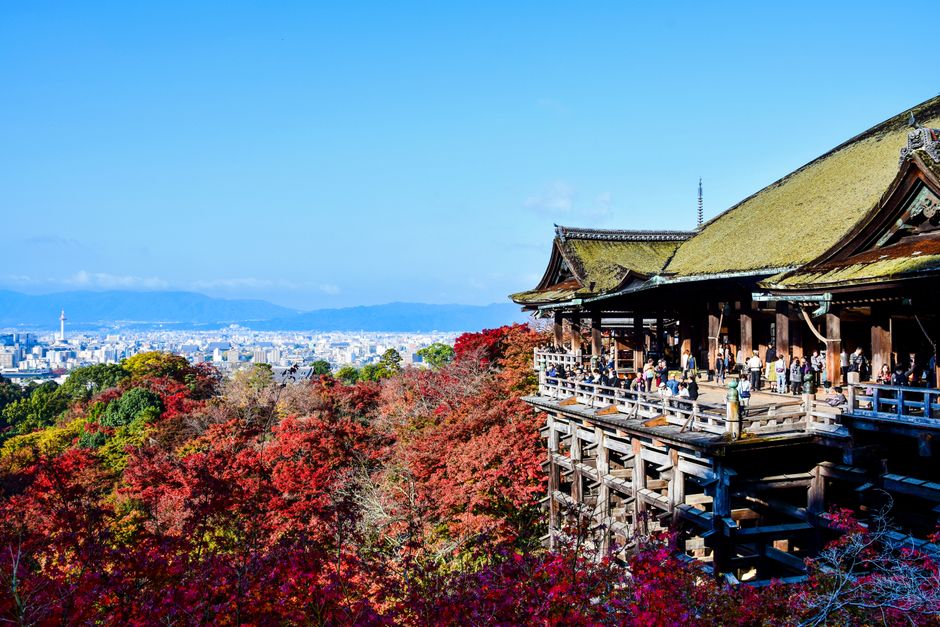
Total spent on transport, food, and activities: roughly ¥58,000 ($380). Accommodation was separate — I stayed in capsule hotels and hostels, averaging ¥4,000 per night. The Shinkansen (bullet train) was the biggest single cost, but it’s worth it. Don’t skip Kyoto. The contrast between Tokyo’s neon chaos and Kyoto’s quiet temples reset something in my brain.
Three Mistakes That Made My Anxiety Worse (And How to Avoid Them)
I made errors. You don’t have to.
Mistake #1: Overplanning the first day. I scheduled three activities for my arrival day. Landed at 2 PM, jet-lagged, overwhelmed. By 5 PM I was sitting in a 7-Eleven eating a sandwich, too tired to move. Fix: Day 1 should have one thing only — get to your accommodation, eat something, walk one block, sleep.
Mistake #2: Staying in a hotel instead of a hostel. Hotels isolate you. In a capsule hotel or hostel, you walk past people in common areas. Someone will say hi. I met a German guy at my hostel who showed me the best ramen spot in Shinjuku. That doesn’t happen in a private hotel room. Fix: Book a shared dorm or capsule for at least the first two nights.
Mistake #3: Trying to speak perfect Japanese. I studied phrases for weeks. In practice, I froze. Japanese people don’t expect foreigners to speak the language. Pointing, smiling, and saying “sumimasen” (excuse me) works for 90% of interactions. Fix: Learn five phrases: sumimasen, arigatou, kore kudasai (this please), ikura desu ka (how much), and hai (yes). That’s it.
One more thing: Don’t buy the JR Pass for a 10-day trip. It costs ¥50,000 for 7 days. My individual Shinkansen tickets cost ¥28,000 total. The pass only saves money if you’re doing multiple long-distance trips in a short window. I almost wasted $160.
The Moment I Knew I’d Changed
Day six in Kyoto. I’d planned to visit the Bamboo Grove at 8 AM. I woke up at 7, looked at the rain outside, and decided not to go. Instead, I rented a bicycle from the hostel for ¥1,000 and just rode. No map. No plan. I found a tiny temple with no tourists, sat on a bench for an hour, and watched a cat sleep.
Back home, I would have called that “wasting time.” In Japan, it felt like the whole point. That’s when I realized: solo travel anxiety isn’t about being afraid of the world. It’s about being afraid of your own company. Japan gave me permission to be still, to make mistakes, to change plans without apologizing.
I came home and immediately booked my next trip. Solo. Different country. Less fear.
The anxiety didn’t disappear forever. But now I know it’s a liar. And I know what’s on the other side of it: a bike ride through Kyoto in the rain, a cat on a temple bench, and the quiet confidence of knowing you can handle whatever comes next.