A split stay in Copenhagen can solve a real problem: perhaps your first room is only available for part of the trip, or you want a few central days followed by a quieter base. It can also turn an otherwise relaxed holiday into an exercise in carrying bags. Before booking two places, I would ask one question: what will the second address let me do that the first one cannot?
The answer needs to be more useful than a change of scenery. A better room arrangement, access to a kitchen or a location that suits the second half of your plans can justify moving. A small saving on the room alone may disappear once you include transport, luggage storage and the hours between checking out and settling in again.
Give each base a clear job
Start with your actual days, rather than a map full of appealing neighbourhoods. Mark the places you expect to visit and group them loosely. If most of your plans sit within easy reach of one base, staying put will usually make more sense. Copenhagen does not require a new hotel every time you explore a different district.
A central base near the main station might suit an arrival by train and days around the historic centre. A second stay in Nørrebro or Østerbro could suit a slower stretch built around neighbourhood walks, cafés and time indoors. These are examples of different trip rhythms, not guarantees that any particular street will be quiet or convenient. Check the exact address, including its walk from public transport.
Write a one-sentence purpose for each booking. “Easy arrival and sightseeing” followed by “kitchen, laundry and slower mornings” is a coherent plan. “Two attractive rooms we could not choose between” is a weaker reason to spend part of a day moving.
Compare the whole cost of changing lodging
Put the two-booking plan beside the cost of keeping one suitable room for the whole trip. Compare the final amounts, including cleaning charges, breakfast arrangements and any fees shown before payment. Then add the likely moving costs. Even a short journey becomes less straightforward if you need paid storage at one end or a taxi because the bags are awkward.
There is also a practical value to keeping your room. You can leave wet shoes to dry, return for a rest and buy groceries without wondering how to carry them across town. On a short break, those conveniences may matter more than a slightly cheaper second booking.
- Move for a concrete gain: a more suitable room, useful facilities or a location that supports several days of plans.
- Question small savings: calculate what remains after transport and storage.
- Protect short trips: if the change consumes your only flexible morning, one base may be better value.
Confirm the gap between the two doors
Do not assume that checking out of one place means you can immediately enter the next. Read both sets of booking conditions and note the departure deadline and the earliest guaranteed access time. An offer to request early check-in is useful, but it is not the same as a confirmed room.
Ask each property a specific luggage question before committing: can it hold your bags on the transfer day, during which hours, and is there a charge? A staffed reception and a self-check-in apartment can offer very different arrangements. An entry code does not necessarily provide somewhere to leave luggage before the accommodation is ready.
Keep the answers with your booking details. If neither property can help, identify a separate storage option and check its opening hours, bag restrictions and collection deadline. Avoid relying on an unverified locker being available when you arrive. The storage plan should work even if early access is refused.
Choose where the bags will wait
There are two sensible ways to organise the gap. Leave luggage at the first property and spend the intervening hours nearby, or take it to the second property before beginning your day. Choose the option that avoids returning across town purely to collect bags.
For example, if your morning plans are close to the first base, leaving everything there may be easiest. If you are moving towards the area where you intend to spend the afternoon, dropping bags at the second address can remove an unnecessary return journey. Confirm that someone will actually receive them at your expected arrival time.
Keep a small day bag separate from the stored luggage. Carry booking information, identification, medicines, valuables, a charger and whatever layer you need for the weather. Include a snack if your meal timing is uncertain. You should be able to spend several comfortable hours away from both rooms without reopening a suitcase.
Plan the transfer as a journey with luggage
Check the route between the exact addresses, not just between their nearest stations. A journey that looks simple on a transport map may involve stairs, a long pavement walk or several changes. Look at station access information if you need lifts, and consider how comfortably everyone can manage their own bags.
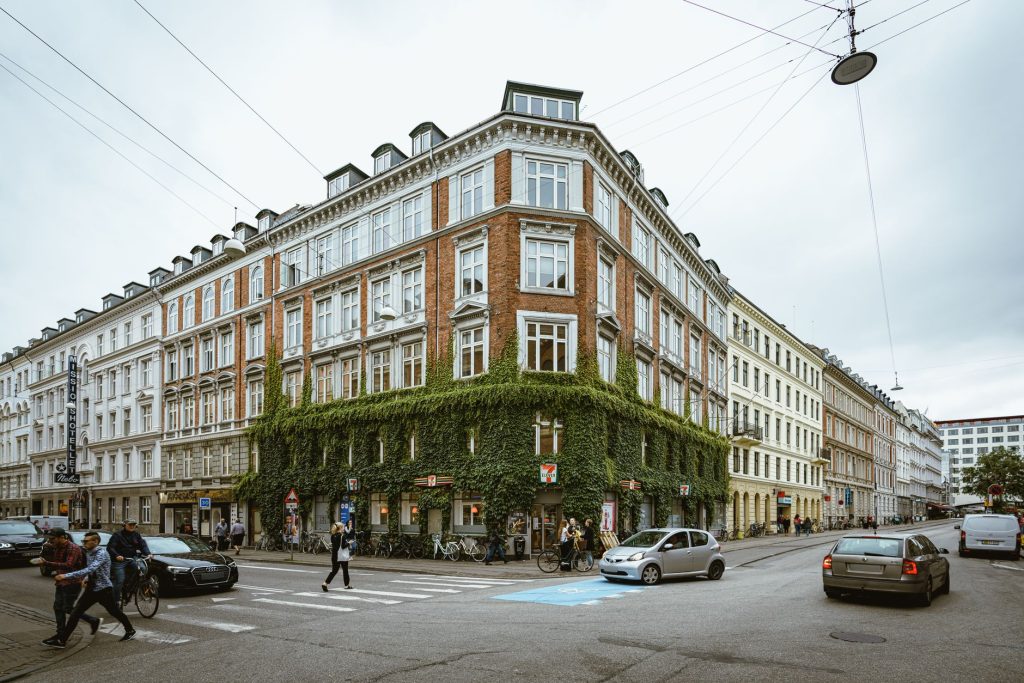
In Copenhagen, bicycles are part of everyday street life, so keep luggage and waiting companions clear of cycle tracks while checking directions. Stop somewhere out of the flow before consulting your phone. A wheeled case is easier to handle when you are not also balancing loose shopping bags and breakfast leftovers.
Check public transport tickets and journey information for your particular transfer before travelling; do not assume an existing ticket covers it. If a taxi makes the move manageable for your group, include it in the original comparison. The sensible choice is the one that gets everyone and their belongings to the next base without exhausting the afternoon.
Put laundry on the right side of moving day
Laundry can be a good reason to split a stay, especially if the second booking gives you access to a washing machine. Verify what “laundry available” means. It could describe a machine inside the accommodation, shared facilities with restricted hours or a paid service. Ask about detergent, drying arrangements and whether you need to book a slot.
I would avoid washing a full load on the final evening at the first base unless reliable drying is available. Clothes that remain damp at checkout become luggage you must keep separate, then unpack immediately. Washing after arrival at the second base usually gives you more flexibility.
Pack enough clean essentials to get through transfer day and the following morning. If you plan to use a laundrette, check its location and access arrangements in advance, then allow time to stay with or collect the load. Do not build the entire evening around laundry until you know how the facilities work.
Make moving day deliberately light
Pack most things the evening before, leaving out only breakfast items, toiletries and the clothes you will wear. Keep cables together and do a final sweep of drawers, sockets, bathroom shelves and the fridge. If you have bought food, decide what can travel easily and finish anything awkward before departure.
Give the transfer day one modest outing rather than a chain of timed commitments. A walk and a relaxed lunch are easier to adjust than a prepaid activity immediately after the expected check-in time. Save your second property’s address and entry instructions somewhere accessible without depending entirely on a fresh internet connection.
Once inside, deal with essentials first: put food away, unpack damp items and confirm the sleeping arrangements. Then enjoy the benefit that prompted the move. If you cannot name that benefit clearly before booking, keep one Copenhagen base and spend the saved effort exploring from it.