Philadelphia works well as a city break without a hired car, but the right lodging address depends on more than its distance from the sights. Your arrival station, the streets you want to explore and the journey home after dinner all matter. A room that looks convenient on a regional map can create an awkward daily commute; a slightly less central room can work beautifully if its walking routes suit your plans.
I would plan a train-based stay backwards: establish where the arrival train leaves you, choose a compact area for accommodation, then check the return journey from an ordinary evening out. That gives you a useful framework for comparing rooms without assuming that every property advertised as “near transport” offers the same convenience.
Start with the station on your ticket
For many intercity passengers, the starting point is 30th Street Station, west of the Schuylkill River. It is a major arrival point, but it is not in the middle of the historic district. Before booking accommodation, plot the actual journey from the station entrance to the property, including any local connection and the final walk with luggage.
If you are arriving on a SEPTA Regional Rail service, a different station might put you closer to your room. Suburban Station and Jefferson Station are useful central reference points. Check which stations your particular service serves rather than assuming that every train passes through the same places. Your destination on an intercity ticket and your most convenient local station may be different.
Coming from Philadelphia International Airport introduces another version of this decision. Look at the airport rail connection alongside the accommodation address, and confirm the service pattern for your arrival day. A late landing, checked baggage or a delayed flight can change how comfortable a rail-only arrival feels. Have a fallback journey in mind before setting off.
Choose a walking area before choosing a room
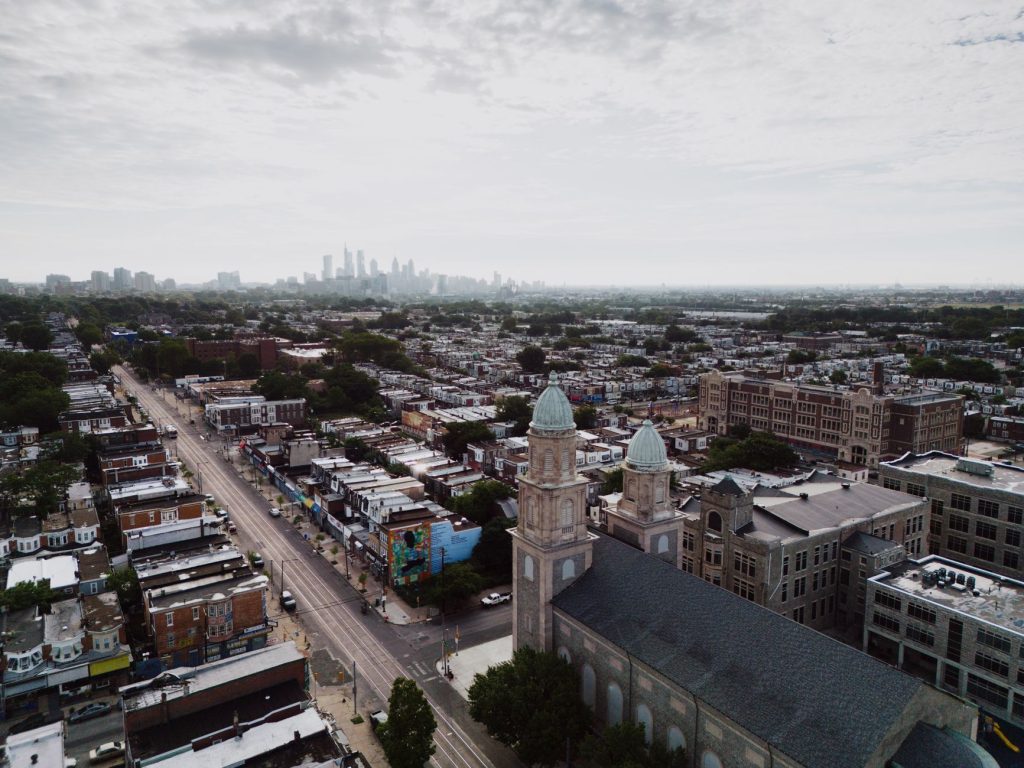
For a first visit, start by comparing three broad areas: the western part of Center City, the central streets around City Hall and the eastern side towards Old City. These are planning areas, not promises that every block or property will suit you. Read the full address, inspect its position on a map and consider where you will spend your time.
Western Center City for the arrival connection
Lodging on the Center City side of the Schuylkill can make sense when you want a manageable connection with 30th Street and walks towards Rittenhouse Square or central shopping streets. Check the river crossing and the distance from its eastern end to your door. “Close to 30th Street” can mean different things on opposite sides of the river, especially with a suitcase.
Central streets for a flexible base
The area around City Hall can be a useful compromise when your plans spread in several directions. You can organise separate walks towards the historic sights, the museums along the Benjamin Franklin Parkway and neighbourhoods farther south. Properties near a central rail station may also simplify arrival, although a station name alone does not tell you which entrance is closest.
Old City for history on foot
If Independence Hall and the surrounding historic streets anchor your trip, staying farther east can reduce repeated journeys across town. The trade-off is the transfer from an arrival at 30th Street. Work through that connection once before booking. Also examine the immediate surroundings: a room above a busy evening street may feel very different from one a few blocks away.
Compare the complete cost of each base
A lower room rate is only one part of an affordable stay. Compare the full accommodation charge, then add the journeys you would actually make. A distant room can lose its advantage if it creates extra trips every morning and evening, particularly when several people are travelling together.
Use a simple comparison for each realistic option:
- Arrival: How many changes and how much luggage-carrying are involved?
- Daily walking: Can you reach one substantial cluster of activities on foot?
- Evening return: Is the trip home straightforward after your likely dinner time?
- Useful facilities: Would a fridge, breakfast or access to groceries reduce other spending?
- Booking conditions: Are the final charges and cancellation terms clear?
For an apartment or room rental, check the exact check-in process. A cheap arrival becomes less convenient if you must collect keys at another address. For a hotel, ask about luggage storage if your train arrives before the room is ready. Either detail can affect how much of the first day you can comfortably use.
Make the evening journey part of the booking decision
Daytime sightseeing is often easier to organise than the final journey home. Pick a plausible evening destination, such as dinner in Chinatown or a walk around Rittenhouse Square, and trace the return to each accommodation option. Consider the whole route, including the walk from the stop to the door.
Do not build the plan around catching the final possible service. Check the relevant timetable for the day you travel, including weekends, and leave a margin. Regional Rail, subway and bus journeys are different transport choices; proximity to one does not guarantee a convenient connection to another. Confirm fares and payment arrangements through official operator information before travelling.
Street conditions and your own comfort matter too. Read recent accommodation reviews for practical comments about noise, entrances and the surrounding blocks, while treating individual opinions cautiously. If the planned walk feels too long or unfamiliar after dark, budget for an occasional taxi or ride service. Avoiding a hire car does not require making every journey by train.
Build days around clusters, not cross-city zigzags
Once you have chosen a base, group activities geographically. One day might centre on Old City and the Independence historic area. Another could follow the Benjamin Franklin Parkway towards the Philadelphia Museum of Art. A third could combine central streets, a market visit and a neighbourhood walk. Check opening arrangements separately, especially for attractions with timed entry.
This approach helps control both transport spending and fatigue. You are less likely to pay for a ride simply because lunch is across town from the morning activity and dinner is back where you started. Keep a meal option near your accommodation as well, so an unexpectedly tiring day does not require another substantial journey.
Be realistic about walking. A route that looks short on a screen can feel longer in rain, summer heat or winter wind. Leave room for an indoor stop, and identify a public transport alternative for the longest stretch. Comfortable shoes and a lighter day bag can contribute more to a pleasant car-free visit than an ambitious sightseeing checklist.
Rehearse departure before you settle in
Before the trip, save the accommodation address, arrival instructions and the route back to your departure station somewhere accessible offline. Check the return ticket carefully: leaving from 30th Street requires a different final journey from boarding at a central Regional Rail station. Allow for retrieving stored bags, finding the correct station entrance and locating your train.
The most useful lodging choice is the one that makes the ordinary parts of the visit easy: arriving with bags, finding breakfast, returning after dinner and catching the train home. Choose around those moments and Philadelphia becomes a collection of manageable walks, with rail connections supporting the trip rather than dictating every hour of it.