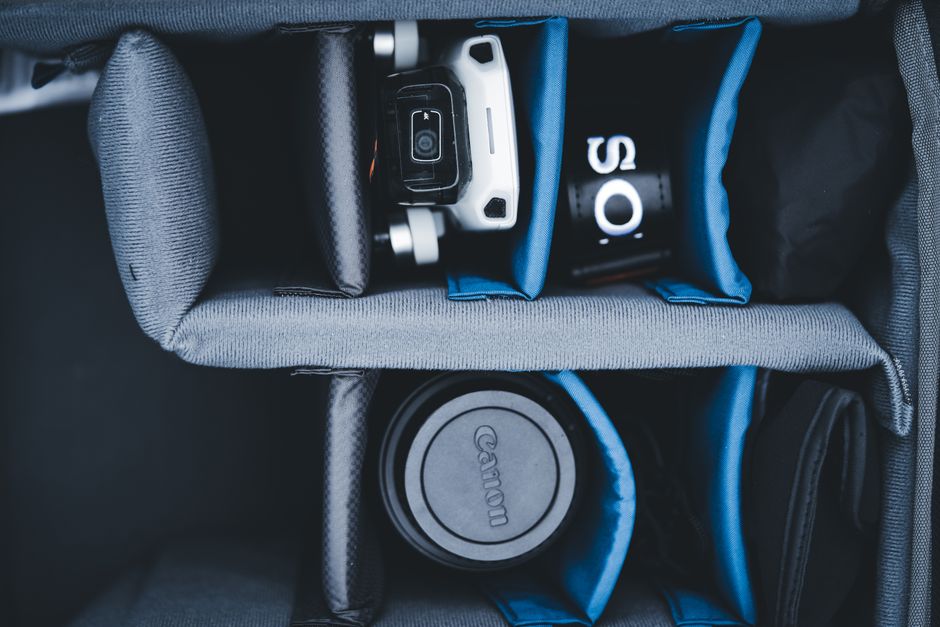
You’re staring at a full-sized laptop, a mirrorless camera body with two lenses, five days of clothes, and a pair of sandals. The question isn’t whether you can fit it all — it’s whether the bag you choose will survive a year of hostels, budget airlines, and monsoon rain without blowing a zipper.
I’ve spent the last six months testing both the Peak Design Travel Backpack 45L and the Nomatic Travel Bag across 14 countries. This is a direct comparison on durability, organization, airline compliance, and what actually matters when your backpack is also your office.
What You’re Really Buying: Coverage Against Failure
Think of a travel backpack like an insurance policy. You’re not paying for the bag itself — you’re paying for the guarantee that your gear arrives intact and accessible. The Peak Design 45L and Nomatic Travel Bag both offer strong coverage, but the policy terms differ dramatically.
Peak Design 45L: The All-Risk Policy
Peak Design gives you a lifetime warranty that covers everything except intentional damage. The bag itself uses 400D nylon canvas with a weatherproof DWR coating. I’ve stood in a Bangkok downpour for 20 minutes — the interior stayed bone dry. The internal dividers are modular and lock into place via a compression system that doesn’t sag over time.
Key specs: 22 x 13 x 9 inches when expanded, 4.5 lbs empty. Fits under most airline seats when compressed to 35L. The side-access laptop compartment fits a 16-inch MacBook Pro with room for a tablet.
Nomatic Travel Bag: The Named-Peril Policy
Nomatic’s warranty is limited lifetime — it covers manufacturing defects but not wear-and-tear from heavy use. The bag uses a lighter 300D ripstop nylon. It’s 3.9 lbs empty and measures 22 x 14 x 9 inches at full 40L expansion. The internal organization is aggressive: 20+ pockets including a dedicated water bottle sleeve and a shoe compartment.
Here’s the catch: the Nomatic bag is not waterproof. The zippers are not sealed. After 10 minutes in heavy rain, moisture seeped through the top zipper on my test unit. That’s a risk if you’re working in tropical climates.
| Feature | Peak Design 45L | Nomatic Travel Bag |
|---|---|---|
| Weight (empty) | 4.5 lbs | 3.9 lbs |
| Max carry-on size (expanded) | 22 x 13 x 9 in | 22 x 14 x 9 in |
| Water resistance | DWR coating, sealed zippers | DWR coating only, unsealed zippers |
| Warranty | Lifetime (all damage) | Limited lifetime (defects only) |
| Laptop compartment | Side-access, 16-inch | Rear-access, 17-inch |
| Internal organization | Modular dividers (3 included) | 20+ built-in pockets |
| Price (MSRP) | $299.95 | $329.99 |
Verdict: If you travel to places with unpredictable weather or rough handling (think bus rooftops in Vietnam), the Peak Design’s warranty and water resistance justify the weight penalty. For climate-controlled hotel nomads, the Nomatic’s lighter build and pocket density win.
The One Mistake That Wastes $300
Most digital nomads buy a bag based on capacity alone. They see 45L and assume it fits every airline. That assumption has stranded people at gates in Europe and Asia.
The Peak Design 45L measures 22 x 13 x 9 inches in its expanded state — that’s compliant with most international carry-on limits (including Ryanair’s 22 x 16 x 8 inch sizer, barely). But when fully packed, the bag is 9 inches deep. Budget carriers like Spirit Airlines (18 x 14 x 8 inches) will make you check it.
The Nomatic Travel Bag at 40L expanded hits 22 x 14 x 9 inches. That 14-inch depth is a problem. It fails the sizer test on EasyJet, Wizz Air, and AirAsia. I watched a traveler at Kuala Lumpur airport get charged $65 at the gate because his Nomatic bag was 1 inch too deep.
Here’s the rule: never buy a bag based on its expanded volume. Check the sizer dimensions of the three airlines you fly most. If you’re on budget carriers, the Peak Design 45L compressed to 35L (22 x 13 x 7 inches) is the safer bet. The Nomatic’s 40L mode is a gamble.
When the Nomatic Bag Fails (and When Peak Design Overcomplicates)
I’ll be direct: the Nomatic bag’s shoe compartment is a liability. It sits at the bottom of the bag and shares space with the main compartment. If you pack wet shoes, moisture wicks into your clothes. The compartment also steals 3L of volume — you lose that space permanently.
The Peak Design’s modular dividers solve this: you can configure a dedicated shoe zone that’s sealed from the rest of your gear. But those dividers take time to set up. If you repack daily, the Nomatic’s fixed pockets are faster. The Peak Design also has a stiffer frame — it’s harder to stuff into an overhead bin that’s already tight.
Another failure mode: both bags use YKK zippers, which is good. But the Peak Design’s zippers are larger and have a more positive lock. The Nomatic’s zippers are smaller and harder to grip with cold hands. In a rush at 5 AM, that matters.
When NOT to buy the Peak Design: If you’re a one-bag minimalist who doesn’t carry camera gear or a second pair of shoes. The bag’s 4.5 lbs is heavy for a 45L pack. The Osprey Farpoint 40 ($185, 3.3 lbs) is lighter and more comfortable for long walks.
When NOT to buy the Nomatic: If you work in humid or rainy climates. The lack of sealed zippers is a dealbreaker. Also avoid it if you need to pack bulky items like a tripod or a drone — the fixed pocket layout doesn’t accommodate odd shapes.
Compressed Verdict: Pick Your Risk


For the digital nomad who needs maximum gear protection and flies international carriers (not budget), the Peak Design Travel Backpack 45L is the better investment. The lifetime warranty and water resistance are worth the extra 0.6 lbs and $30 premium.
For the nomad who prioritizes organization and weight savings and stays mostly in dry, urban environments, the Nomatic Travel Bag delivers more pockets per pound. But you’re accepting a higher risk of gate-check fees and moisture damage.
Neither bag is the right choice if you’re on a tight budget. The Osprey Farpoint 40 ($185) gives you 90% of the functionality at 60% of the cost. The Cotopaxi Allpa 35L ($200) is better for travelers who pack light and want a clamshell opening without the weight.
My pick: for a year of Latin America and Southeast Asia, I’d take the Peak Design 45L and compress it to 35L for budget flights. The peace of mind from the warranty and water resistance is worth more than the extra pocket space.