You booked the flight to Punta Arenas. You bought the waterproof jacket. Now you’re staring at a map of Torres del Paine and your brain is melting. There are 4 different campsites, 3 refugio booking systems, and someone on Reddit said you need to carry 8 liters of water per day. You have 37 browser tabs open and zero confidence.
This is the exact moment most people either overpack by 10 kilos or give up and book a day hike. Don’t do either.
Patagonia’s multi-day treks — the W Trek (about 75 km) and the O Trek (about 130 km) — are some of the most accessible long-distance hikes on the planet if you plan them right. The problem is the planning itself feels like a second hike. Here’s how to untangle it.
1. Pick Your Route Before You Pick Your Flights
Most first-timers default to the W Trek. It’s 4 days, 3 nights, and hits the three iconic viewpoints: Grey Glacier, the French Valley, and the Towers. The O Trek adds a full loop around the back of the massif, taking 7–10 days. The W is easier to book. The O is emptier and wilder.
The W Trek in 4 days: what it actually looks like
Day 1: Bus from Puerto Natales to Laguna Amarga, then hike 3 hours to Las Torres camp. Day 2: Hike to the base of the Towers and back (6–7 hours round trip). Day 3: Cross to the French Valley and continue to Los Cuernos or Paine Grande. Day 4: Hike to Grey Glacier viewpoint and take the catamaran back. Total distance: about 75 km with 1,500 meters of elevation gain.
The O Trek: when to choose it
Choose the O if you’ve done a 5+ day hike before and want solitude. You’ll need 8 days, carry a tent and stove for the first 4 nights (no refugios on the back side), and cross the John Gardner Pass (1,200 m elevation). The views of the Southern Patagonian Ice Field from the pass are worth every gram in your pack.
Verdict: If you’re not sure, book the W. It’s the safe bet for a first multi-day trek. You can always come back for the O.
2. Book Your Accommodation 4 Months Early — No Exceptions
This is where most plans fall apart. Torres del Paine requires reservations for every single night. You cannot show up and hope. Refugios (dorm beds with meals) book out 3–4 months in advance for peak season (November to March). Campsites (you bring your own tent) fill up 2 months before.
| Accommodation Type | Cost per night (USD) | What you get | Booking window |
|---|---|---|---|
| Refugio dorm bed + dinner + breakfast | $95–$130 | Bunk bed, hot shower, meal service | Open 5–6 months ahead |
| Refugio campsite (you bring tent) | $25–$40 | Flat ground, shared bathroom, kitchen access | Open 3–4 months ahead |
| Free camping zone (O Trek back side) | $0 | Nothing — carry everything | Permit required, no reservation |
Booking platforms: Las Torres Patagonia handles the east side. Vertice Patagonia handles the west side. They use separate systems. You’ll need to create two accounts. Yes, it’s annoying. Do it anyway.
Failure mode: Booking your flights before securing accommodation. If the refugios are full, you’re hiking day trips from Puerto Natales, not a multi-day trek. Book the beds first, then the flights.
3. The Gear List That Won’t Break Your Back
Patagonia’s weather is a liar. It can snow in January. It can hit 25°C at noon. The wind at the John Gardner Pass regularly hits 100 km/h. You need gear that handles all of it without weighing 20 kg.
The non-negotiable items
- Rain jacket and pants: A Gore-Tex shell like the Arc’teryx Beta AR ($600) or the cheaper Outdoor Research Foray ($225). No ponchos. The wind will shred them.
- Insulated mid-layer: A 700-fill down jacket (Patagonia Down Sweater, $229) or a fleece (R1 Air Hoody, $159). Not both.
- Trekking poles: Black Diamond Trail Pro ($110). The descent from John Gardner Pass is loose scree. Your knees will thank you.
- Sleeping bag rated to -5°C: The Sea to Summit Ascent AC II ($399, 900g) or the Therm-a-Rest Questar ($350, 1.1 kg). Refugios provide blankets, but they’re thin.
- Water filter: The Sawyer Squeeze ($45, 85g). Streams are everywhere. Carrying 3 liters all day is stupid when you can filter on the go.
What you can leave at home
Camping stove and fuel — if you’re staying in refugios. Cooking pot. More than 2 pairs of socks. A towel (refugios rent them for $5). A paperback book (use your phone).
Target pack weight: 10–12 kg including food and water. If your bag weighs 15 kg, remove something. The Osprey Atmos AG 65L ($270) is a common choice for this weight range.
4. Food Strategy: Refugio Meals vs. Self-Catered
Refugio dinners are hearty — lentil soup, pasta with meat sauce, vegetables, and a small dessert. Breakfast is bread, jam, butter, coffee, and cereal. You won’t starve. But lunch is your responsibility.
What to bring for lunch: Tortillas (they don’t crush), hard cheese (Edam or Gouda), salami, peanut butter, trail mix, and energy bars. The Clif Bar Chocolate Chip ($2.50 each) or the Pro Bar Meal ($3.50) work. Pack 3 days of lunch food in Puerto Natales. The grocery store Unimarc has everything.
Water: Carry 1.5 liters at a time. Filter from streams. The Grey Glacier meltwater is clean but cold. No need to treat it beyond the Sawyer filter.
Common mistake: Bringing dehydrated meals and a stove when you booked refugios. You paid for dinner. Use it. Save the weight.
5. Navigation and Permits: Don’t Trust Your Phone Alone
The trails in Torres del Paine are well-marked with wooden posts and colored markers. You won’t need a GPS for the W. The O has a few confusing sections near the backside where the trail crosses open pampas.
What to carry: A paper map from the CONAF ranger station (free, but limited) and a backup offline map on your phone. The AllTrails app ($36/year) has the W Trek and O Trek routes with GPS tracks. Download them before you leave Puerto Natales — there’s no signal in the park.
Permits: You need a CONAF permit to enter the park. Cost is about $35 USD for foreigners (2026 prices). Pay at the Laguna Amarga entrance with a credit card. No cash accepted. Keep the receipt with you — rangers check it at campsites.
Failure mode: Relying on the Wi-Fi at refugios to download maps. It’s slow and unreliable. Download everything in town.
6. The 3 Biggest Mistakes First-Timers Make
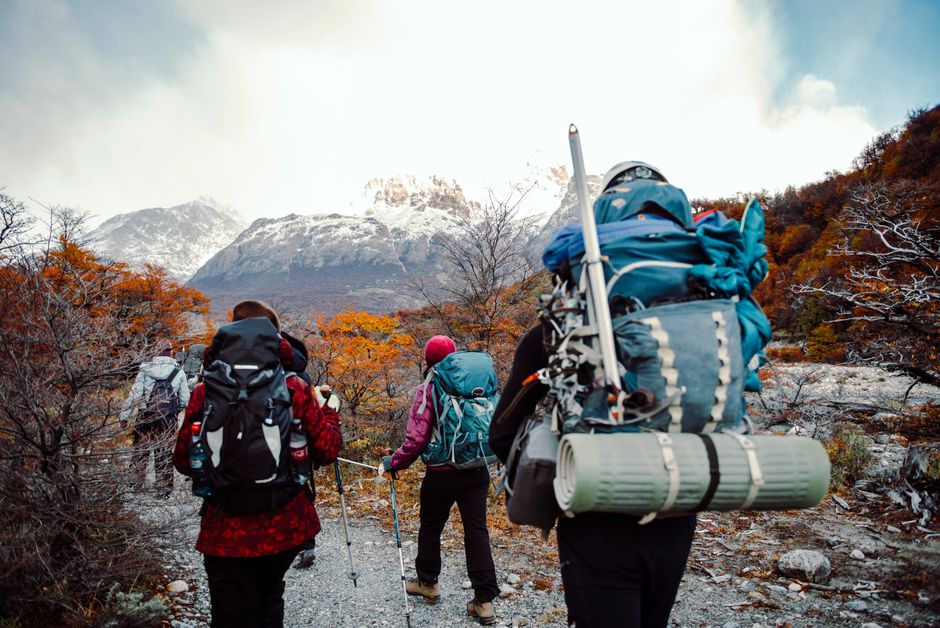
1. Overpacking clothes. You need one hiking outfit, one camp outfit, and a rain layer. That’s it. Wash socks in the sink. They dry in 2 hours in the wind.
2. Skipping the catamaran reservation. The catamaran across Lake Pehoé (Pudeto to Paine Grande) is the only way to start the W from the west side. It costs $35 and sells out daily in January. Book at the CONAF office in Puerto Natales or online via TurismoBus 48 hours ahead.
3. Underestimating the wind. The wind in the park averages 30 km/h and regularly hits 80 km/h. Secure your tent with extra stakes. Wear a buff over your face. Do not hike in a windbreaker — the wind will tear it. A hardshell jacket like the Arc’teryx Beta AR is not optional.
Verdict: If you make only one change to your plan, make it this: reduce your pack weight by 3 kg. You’ll hike faster, hurt less, and actually enjoy the views.
7. When NOT to Do a Multi-Day Trek in Patagonia
This is the honest section. A multi-day trek in Patagonia is not for everyone, and pretending otherwise leads to a miserable experience.
Don’t do it if:
- You’ve never carried a 12 kg pack for more than 2 days. Start with a 2-night hike in your local area first.
- You get cold easily. Refugios have heating, but the common areas are drafty. If you need 24°C to sleep, stay in a hotel in Puerto Natales and do day hikes.
- You have a fear of exposed heights. The John Gardner Pass has a 30-minute section with a 300-meter drop to the left. It’s not technical, but it’s exposed.
- You’re on a shoestring budget. A 4-day W Trek with refugios costs roughly $600–$800 per person including park entry, accommodation, meals, and transport. The O Trek costs $900–$1,200. If that stretches your budget, consider a 2-day trek in El Chaltén instead (free camping, no permits).
Alternative: If the W Trek feels too intense, try the 3-day hike to the base of Mount Fitz Roy in El Chaltén, Argentina. It’s shorter, cheaper, and requires no reservations. You can camp for free at designated sites. The views are just as good.
The single most important takeaway: Book your accommodation before your flights, keep your pack under 12 kg, and respect the wind — everything else is just walking.